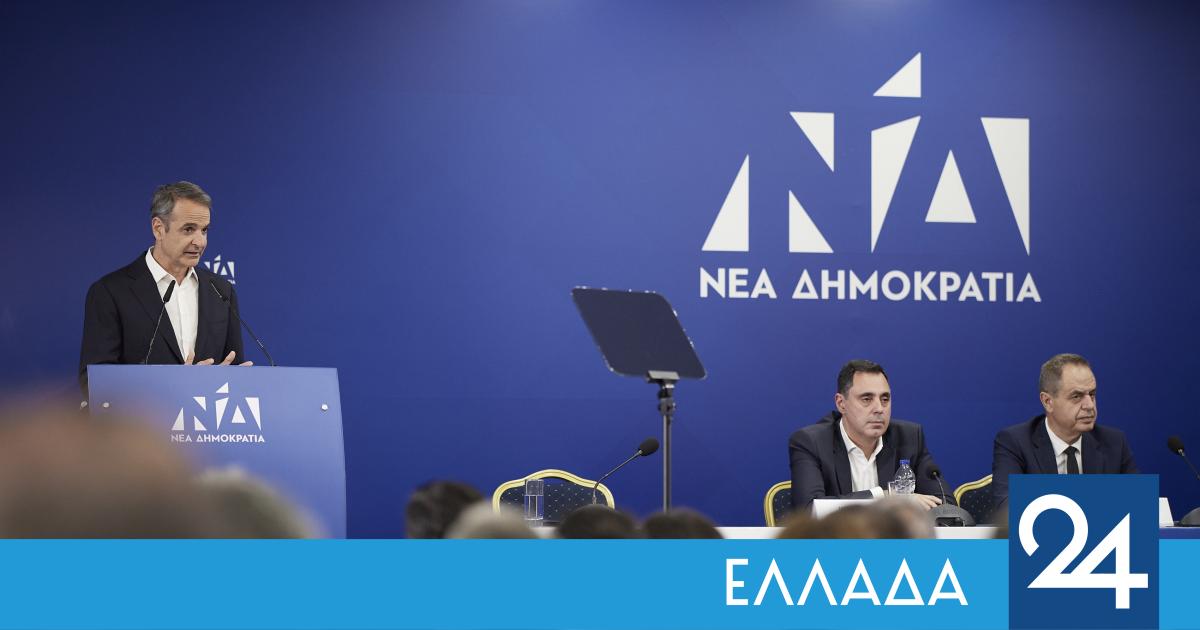
Prime Minister Kyriakos Mitsotakis devoted most of his weekly post to the six years of gov.gr’s operation and the digital transformation of the state, emphasizing that the platform has now become an integral part of citizens’ daily lives.
The Prime Minister noted that 2,257 digital services are currently available, more than 9 million citizens have been served, and over 431 million documents and certificates have been issued. As he emphasized, what matters most is not the numbers, but that it has been proven that the state can become faster, simpler, more transparent, and more citizen-friendly.
Mr. Mitsotakis noted that the effort continues with the new Unified Digital CRM Infrastructure, so that every request from a citizen or business is tracked in a unified manner, whether submitted via gov.gr, through a KEP, or via telephone service.
The Prime Minister also spoke at length about the Greek Police’s dismantling of a blackmail and bribery ring within Athens’ urban planning departments. Mr. Mitsotakis emphasized that the fight against corruption requires a plan, perseverance, and political will, while noting the transfer of the issuance and oversight of building permits to the new, unified, and digital Land Registry. As he said, there are no “sacred cows” or “untouchables.”
At the same time, he noted that 99% of the country’s cadastral mapping has been completed and that the goal is for Greece to have fully organized spatial planning and clear land-use designations by 2030.
Mr. Mitsotakis placed particular emphasis on health. The Prime Minister noted that the modernization of the state extends to the new National Health System (ESY), with a focus not only on infrastructure and equipment but also on the delivery of services. In particular, he referred to the National Telemedicine Network, noting that 329 of the 335 stations have been installed throughout the country and that by the end of June, doctors and patients will be able to connect in real time, regardless of distance.
At the same time, he referred to the 3,000 home monitoring systems for patients with chronic diseases, as well as the telemedicine equipment that the Mobile Health Units will have at their disposal.
The Prime Minister also highlighted the “wristband” system in Emergency Departments, noting that digital patient tracking is now in use at 73 hospitals. As he noted, in May alone, more than 280,000 cases at the connected hospitals had an average wait time below the annual average, while at KAT, the average wait time was 2 hours and 37 minutes.
In the same context, he noted that renovated Emergency Departments were delivered at the “Korgialeneio-Benakeio” and at the Kastoria Hospital, two Health Centers in Argos Orestiko and Litochoro, as well as the new Cardiology Clinic at the “Agioi Anargyroi” General Oncology Hospital in Kifissia.
He made special mention of the National Strategy for Palliative Care, noting that for the first time, Greece is implementing a comprehensive plan to support people with serious and life-threatening illnesses, as well as their families. As he noted, the first specialized beds will be established at the new Stavros Niarchos Children’s Hospital in Thessaloniki.
The Prime Minister then referred to the bills passed by Parliament. Regarding television licenses for regional stations, he emphasized that this resolves a long-standing issue spanning nearly three decades and establishes a stable operational framework with rules, transparency, and objective licensing criteria. He also noted that the same bill included a provision recognizing the prior service of journalists from ERT, the Athens-Macedonian News Agency (ANA-MPA), and the General Secretariat for Communication and Information.
Regarding migration, Mr. Mitsotakis noted that Greece is aligning itself with the new European Pact on Migration and Asylum, which provides for stricter protection of external borders, faster asylum procedures, and greater support for frontline states. He also mentioned that Greece, along with four other countries, is leading an initiative to create “return hubs” in third countries outside the EU, with the aim of concluding the first agreements in 2026 and having the facilities operational by 2027.
Referring to the constitutional revision, the Prime Minister noted that the Constitutional Revision Committee has been formed and criticized the opposition, particularly PASOK, for its stance on the process. As he stated, when discussing the Constitution, the goal must be to seek broader consensus.
In the area of employment, he announced 1,000 new positions for people with disabilities in the Regions, which are in addition to the 3,000 positions that already exist in the Municipalities.
Regarding the railway, the Prime Minister noted that signaling and remote control systems are now fully operational on the Thessaloniki-Eidomeni section, featuring 75 kilometers of new traffic control systems.
In the justice sector, the Prime Minister announced that the new Electronic Appeals Platform will become fully operational on September 1, with the aim of accelerating the resolution of thousands of pending cases.
In his post, he also mentioned the Pavlos Melas Metropolitan Park in Thessaloniki, the “Metropolis of Thessalonica” Museum, the redevelopment of the Pervola archaeological site in Rhodes, as well as Greece’s selection as the Guest of Honor at the Marché du Film of the Cannes Film Festival in 2027.
In closing, the Prime Minister referred to World Blood Donor Day, thanking volunteer blood donors and calling on more citizens to participate in voluntary blood donation.