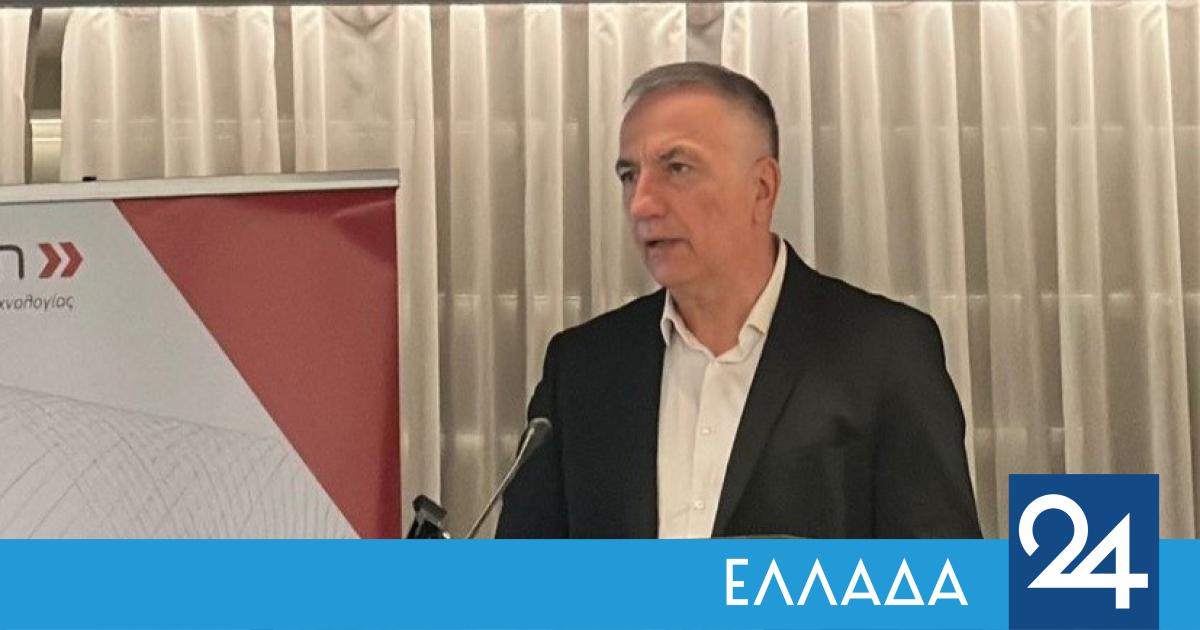
“Greek shipping can become the country’s greatest engine of growth, bringing in more investment, well-paying jobs, and higher incomes for the average Greek family,” stressed the Minister of Shipping and Island Policy, Vasilis Kikilias, in an interview with MEGA TV.
“It was our vision, and we put in a tremendous amount of effort, strategy, negotiations, and hard work to harness the immense power of the Greek merchant marine—which is the world’s largest, generating 8–9% of GDP in revenue and 200,000 well-paid jobs—to use and leverage it in any negotiations. To create conditions such that our children do not have to leave the country. Instead, let’s bring the discussion back into Greek families about how they can pursue careers in shipping or related fields, to secure their future, to be able to buy a home, to build a life for themselves, to fall in love, to get married, and to be happy,” the Minister stated.
Mr. Kikilias emphasized that shipping is not limited to a small circle of people, but serves as a pillar of development for Greek society as a whole, driving growth, new jobs, and added value to local economies. As he said, “I don’t want people to think that a few wealthy shipowners are simply passing great wealth among themselves and profiting. The added value that shipping brings to the country is enormous. The ocean-going shipping sector, along with shipyards, yachting, and marinas, combined with the growth and revenue generated by coastal shipping, transporting millions of tourists to our islands every year, as well as all the professions built around it, can bring tremendous prosperity and growth to a region. If one invests in port infrastructure, this translates into businesses in the health sector, logistics, catering, security, and so on. Just imagine, then, that at every port in the country, at every marina, at every anchorage, there would be the possibility for our children to have these opportunities. And for people’s property—that is, their plots of land and their homes—to increase in value. Isn’t that the dream of the average Greek family?”
Referring to international geopolitical developments, the minister pointed out that Greece possesses a unique strategic advantage through its shipping industry, which directly impacts energy security, transportation costs, inflation, and ultimately the cost of living for citizens. “Greece accounts for 60% of European shipping and 20% of global shipping with Greek-owned vessels. Eighty percent of global trade is conducted by sea. Therefore, how much energy will cost and how that cost will reach households, whether products will be expensive or cheap, whether we will have inflation, and whether we will have sufficient supplies, is directly linked to ocean-going shipping,” he said, adding that in the negotiations held at the IMO on the energy transition, Greece leveraged the strength of Greek-owned shipping, aiming for a realistic approach that would not burden the economy and societies.
Regarding coastal shipping, Mr. Kikilias emphasized that the top priority remains passenger safety and keeping ticket prices in check, noting that the government has already taken significant steps to support the sector and society. “For us in the coastal shipping sector, safety comes above all else. From Piraeus alone, 10,700,000 passengers travel to our islands every tourist season. We have not raised ticket prices. We did not do so last year, and we have not done so to date. This year, we allocated 60 million euros to support coastal shipping and ensure that ticket prices do not increase starting in March. I have spoken with the Prime Minister, the government leadership, and Kostis Hatzidakis, and we will see, over the course of the summer, what else we can do. “We won’t leave people like this. We will support both our coastal shipping and our tourism product, but in moderation—money doesn’t grow on trees,” he noted.
In light of the recent incident on the Blue Star 2, the minister emphasized that safety protocols were implemented immediately and strictly to ensure the protection of passengers and the safe continuation of the voyage.
To address illegal immigration, Mr. Kikilias praised the work of Coast Guard personnel and presented the latest data on migration flows and the initiatives undertaken in cooperation with Frontex and the Libyan authorities. “It is a modern-day slave trade. It is the most despicable, the most immoral thing anyone can do. The men and women of the Coast Guard are fighting these battles every day in the Aegean, day and night. Overall, compared to last year, we have seen a 23% decrease in the flow of migrants. We have seen a 62% decrease from Turkey and a 68% increase from Libya. We have agreed with Frontex that Frontex planes and drones will no longer fly over Crete or the sea. They will fly within twelve nautical miles of the Libyan coast. We are sending a permanent representative of the Coast Guard to Tripoli, and three vessels have been completed and handed over to the Libyan authorities to help them tackle illegal migration,”, he stated.
When asked about political developments, the Minister reiterated that the government will be judged solely on its work and its relationship with society. “The outcome will be judged solely by us, by our relationship with society, by our willingness to push forward and continue the reforms. By our vision and how we demonstrate our support for our fellow citizens, our children, and the next generation. By the issues of security, the economy, development, and inflation, and how we address them. No party, no new party formation, whatever they may be, can influence this relationship,” he concluded.