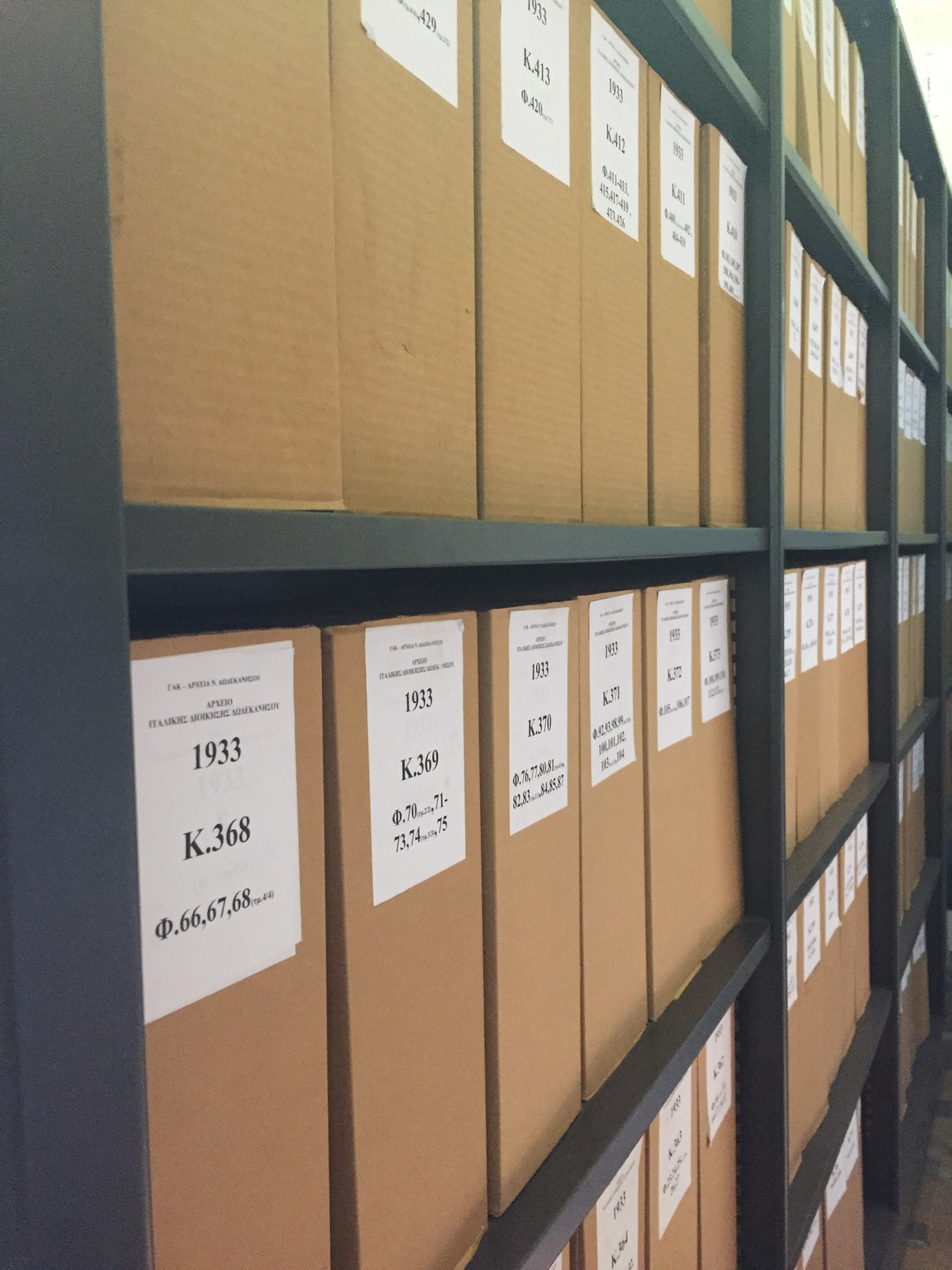
“Treasure” of priceless historical, social and cultural value, hundreds of years old, is carefully preserved in the building complex of the Historical Archive of the State, in the Medieval City of Rhodes.
These are administrative documents, historical documents, manuscript books, Ottoman formants and millions of other documents, which emerge from the depths of time in their appearance and smell, the history of a place and a nation, the struggle of our people, the faith in ideals, but also the suffering our ancestors went through, from the conquerors who “came dressed as friends, countless times”.
This place, exudes history and emanates lessons and awe from the study of millions of documents, many of which have not been touched by human hands for centuries. Particularly awe-inspiring are the church books. They bear on them the marks of time and the drops of the candles of the hidden schoolroom, which have become, through their writings, harbingers of hope for the resurrection of the nation.
Historical memory, after all, is the dynamic element that ensures a nation’s fruitful contact with its roots, its perspective for tomorrow and its uninterrupted continuity through time.

What the history file contains
As the head of the General Archives of the State, Mrs Irini Toliou, notes, speaking to APE – MPE, the head of the General Archives of the State, Mrs Irini Toliou, essentially, in these archives, the multi-faceted historical route of the Dodecanese is recorded, from the time of the Knights to the modern Greek administration.
The General State Archives – Rhodes Department maintains an extremely rich and diverse archival material, including:
* manuscripts and printed books from the 12th century
* Ottoman court records and administrative documents
* community and ecclesiastical documents
* the Italian Administration Archives (1912-1943)
* British Military Administration records (1945-1947)
* Greek administration records after 1947
* architectural drawings and large-scale technical files
* photographic collections and visual materials
These documents are key primary sources for the study of the history of the Southeastern Mediterranean.
The archive of the Italian administration of the Dodecanese, one of the most complete colonial archives extant today, is of particular importance.
As the Head of the General State Archives – Rhodes Department, Irini Toliou, points out, speaking to APE – MPE, this is an archival collection that “depicts in depth the functioning of the colonial administration, but also the everyday life of local communities within a complex historical context”.
How the Italian conquerors had faked thousands of Dodecanese
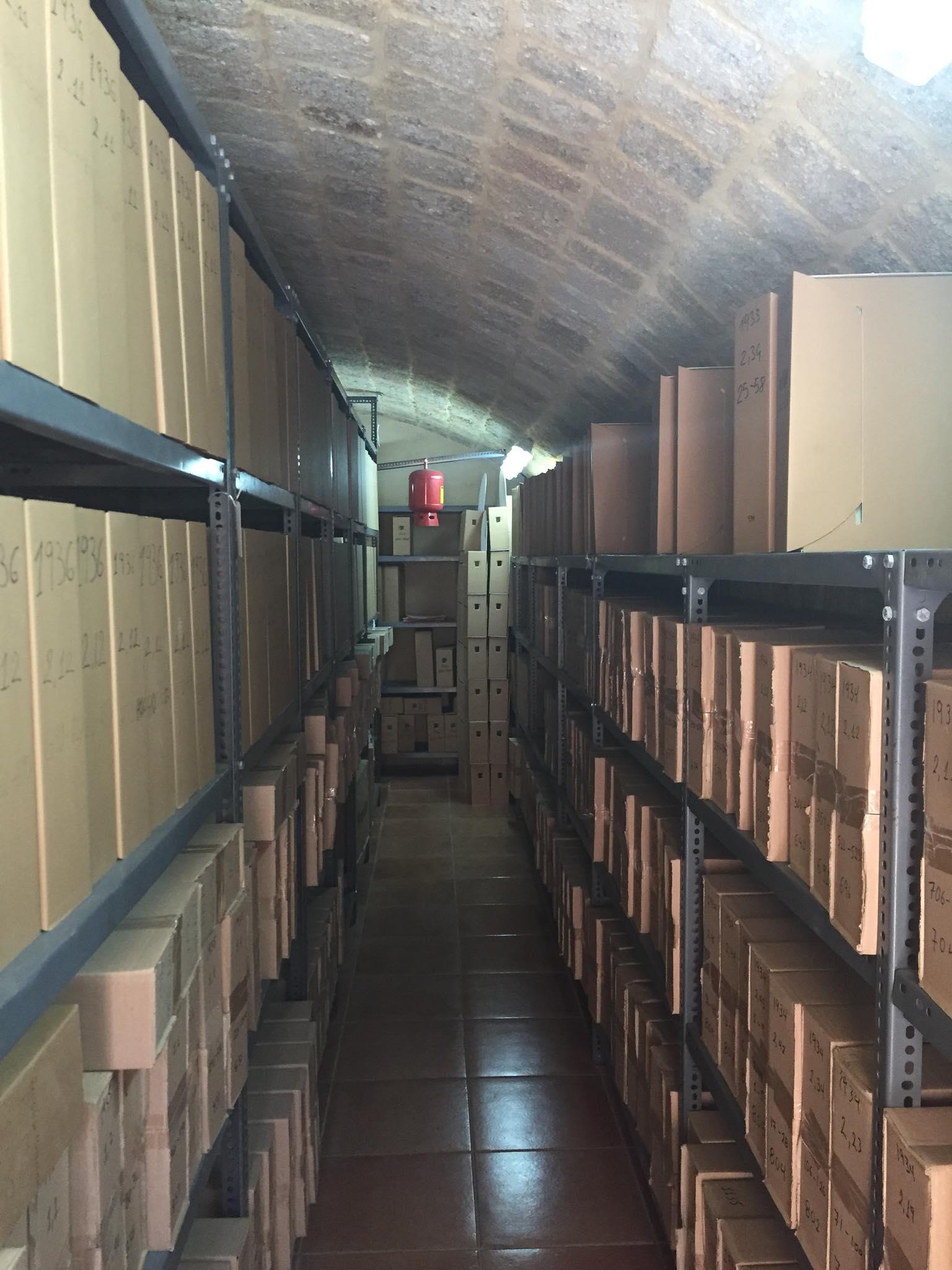
The Italian police archive Pubblica Sicurezza (1932-1943) corresponds to perhaps one of the most interesting archives preserved and classified to date: It consists of about 800 bundles of files. It includes files on individuals, mainly Dodecanese, which were painstakingly compiled by the officers of the then Italian Security Service. As a whole, this archive concerns patriots who did not “bow their heads”, who did not compromise with the regime and who made a real resistance in our islands, putting above all the Homeland and the Wholeness of our islands, when the Dodecanese were groaning under the boot of the conqueror.
These files were housed until a few years ago in a special building next to the Rhodes Security Sub-Directorate, while today they have been digitized and transferred to the General State Archives.
They also contain reports and data concerning information about those who did not… comply with the suggestions of the then Italian regime, professional activities of the inhabitants of the region, with details that are truly surprising even today, as well as data about the activities of the Orthodox priests in the Dodecanese and the demodidact teachers who existed in the villages of all the islands, who were forbidden to teach the Greek language.
A great material of many centuries
Thirty-six new archives have been added to the historical archive of Rhodes since 1992, the most important of which were: – The ceramics factory Ikaros, which operated from the Italian occupation and the factory of the Tobacco Industry of Rhodes, which also operated from the Italian occupation under the name TEMI (Tabacki Egeo Manifatoura Italiana). These two important archives were saved thanks to the initiative of the staff of the Dodecanese Archives, because both workshops had ceased to operate many years ago.
The Turkish firman decrees
Systematic research of these records shows that the decrees of the Turkish administration clearly show the anxiety of the conquerors to tame the disobedient people of Symi, who were asking for freedom, regardless of the sometimes threatening and sometimes pleading messages of the Turks. Moreover, from the patriarchal letters, monastic documents, public and private documents, one finds useful information about the economic situation of the island, its social composition, shipping, spongery and so much more.
A new era for research and access
The digitisation that has now advanced to a very significant degree is not just a technical upgrade. It represents a substantial change in the way historical research is approached.
Inside:
*reduces the need for physical access to documents
* original material is protected from deterioration
* scientific research is accelerated and finally,
* expanding access to researchers from Greece and abroad
Already, a significant part of the archival collections has been catalogued and digitized, and the process continues at a steady pace. This development is expected to transform the archives of the Dodecanese into a modern, digitally accessible knowledge hub, enhancing their role in the international scientific community.
All these unique archives are an essential tool for understanding the history and identity of a society. In the case of the Dodecanese, the archival material highlights a complex historical path, where different administrative and cultural systems shaped the evolution of the islands. The study of these documents allows for a more comprehensive and documented approach to the past, beyond stereotypes and simplifications.
.