Greece is ranked 11th in the world, according to the internationally recognized “Environmental Performance Index” of Yale and Columbia Universities, which uses scientific data and measurements to assess 180 countries in 58 areas of environmental and sustainability policy making. This was announced by a top administration official of the Ministry of Environment and Energy at a launch event for the book authored by a team of legal experts on protected areas.
Distinguished speakers from the fields of law, administration and legal science at the presentation event, based on the results of the book’s study, presented legally sound solutions for the effective protection of biodiversity and at the same time the proper planning of sustainable activities.
They also pointed out weaknesses in the institutional framework, which generate pending issues, delays and conflicts between public and private interests and explained how these open issues can and should be addressed, in accordance with the modern institutional and legislative framework of protected areas, with references to the relevant case law of national and European courts presented and illuminated in the publication.
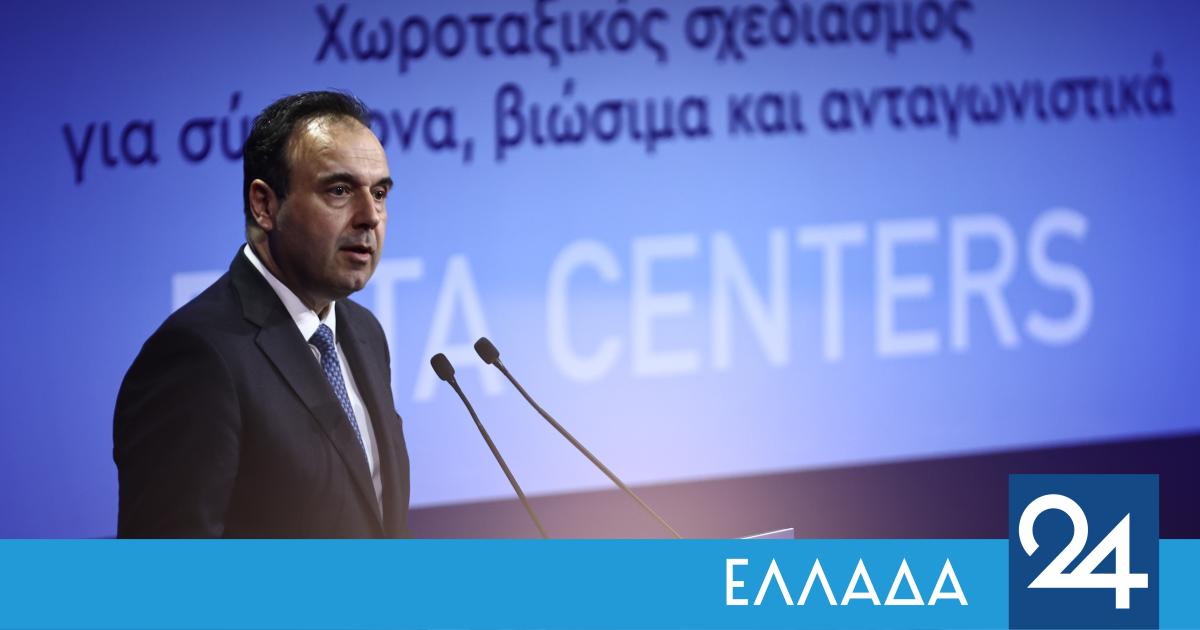
The Environmental Performance Index (EPI), an international assessment tool developed by the Yale Center for Environmental Law & Policy at Yale University, in collaboration with Columbia University, which uses scientific data and measurements for 180 countries in 58 sectors to assess environmental and sustainability policy-making, ranks Greece 11th in the world. Close – close with Sweden, Finland, Norway, Germany, Germany, Austria, and above France and 168 other countries around the world,” announced Dr. Alexandros Koulidis, an administrator at the Ministry of Environment and Energy, noting that:
“We weren’t always there. In this index we have moved up by 8.4 points in the ranking and by about 30 places in the international ranking in the last decade, the highest ranking is at 76 and we are at 67.3,” he said, stressing:
“The book confirms precisely this result and the high aims of our efforts, listing in a comprehensive and particularly apt filter, the most important provisions for the protection of protected areas”, while “through the content of the book, the feasibility of all these provisions is highlighted”.
Mr Koulidis also said that at the European Union level, affecting our country as well, new data are being formed for the siting of RES, energy networks, industry and other activities in Natura areas, where protection restrictions are otherwise in force. And that “sober approaches are needed, considering all factors” for the upcoming implementation of the statutory conservation targets in protected areas in our country.
“The book brings to the fore, as far as the subject it deals with is concerned, the quality of law and, in general, the principles that a favoured state should ensure in its legal system, in terms of equality, the rule of law and the protection of the environment, sustainable development, effective implementation and intergenerational solidarity and justice, which very recently, just last month, was included in the EU strategies”, stressed Dimitrios Vassiliadis, Counsellor of the Council of State.
And in the form of questions, he pointed out factors of “ineffective protection”, such as complexity of the institutional framework, lack of political will, weaknesses in the administration mechanism, strong conflicts of public interest with private interest, while noting that:
“The book has as its reference point the response to the climate crisis and legal security, and in the individual chapters it discusses it examines and answers questions about the adequacy and effectiveness of the current legal framework for both the protection and development of these areas.”
“We propose guidelines, so that in a transitional stage, until the completion and institutionalization of the Special Environmental Assessments for the Natura 2000 network sites, which are still pending, there are no legal uncertainties, which currently prevail and are constantly intensifying”, stressed Konstantinos Karatsolis Lawyer, Doctor of Law in Environmental Law and Urban Planning, editor of the book, underlining that: “one of the central ideas introduced in the book is that of ‘rolling planning'”
“Under “rolling planning”, until the institutional framework is completed, the Administration could develop plans and programs, each time according to mature scientific data and with an explicit review clause, after the final Presidential Decree for each region is issued.”
He stressed that:
“The question of approaching “rolling planning” is made on the basis of reference that in a state governed by the rule of law, we must have a confidence in the administration and in the scientific data it uses for its decisions.”
“The Greek natural environment deserves a stable, coherent and effective system of protection. A system that does not delay, does not leave gaps and does not create uncertainty. Nature protection and development should not be treated as enemies. They are two sides of the same need for a sustainable future”, described the central message of the publication by Iphigenia Tsakalogianni, Lawyer, expert in Environmental and Urban Law, author of the book. On the open issues to be addressed in protected areas, she noted:
“The conservation targets were issued amidst pending Special Environmental Assessments (SEAs). Regulation 2024/1991 requires restoration in areas not yet fully delineated.”
The book entitled: “Protected Areas – Legal Consideration of the Modern Framework – The Rational Allocation and Permissible Limits of Man-made Interventions” (published by “Legal Library”) is a second updated and enriched edition, signed by: Konstantinos Karatsolis, Lawyer Dr. in Environmental and Urban Planning Law, Iphigenia Tsakalogianni, Lawyer M.D., MSc Lecturer in Law, Eva Koloventzou Lawyer LLM.
The book presentation event for the book on protected areas took place in the “Legal Library” in Athens, in a crowded hall of the “Legal Library”, attended by an audience of lawyers, technicians, representatives of the academic community of management and entrepreneurship.