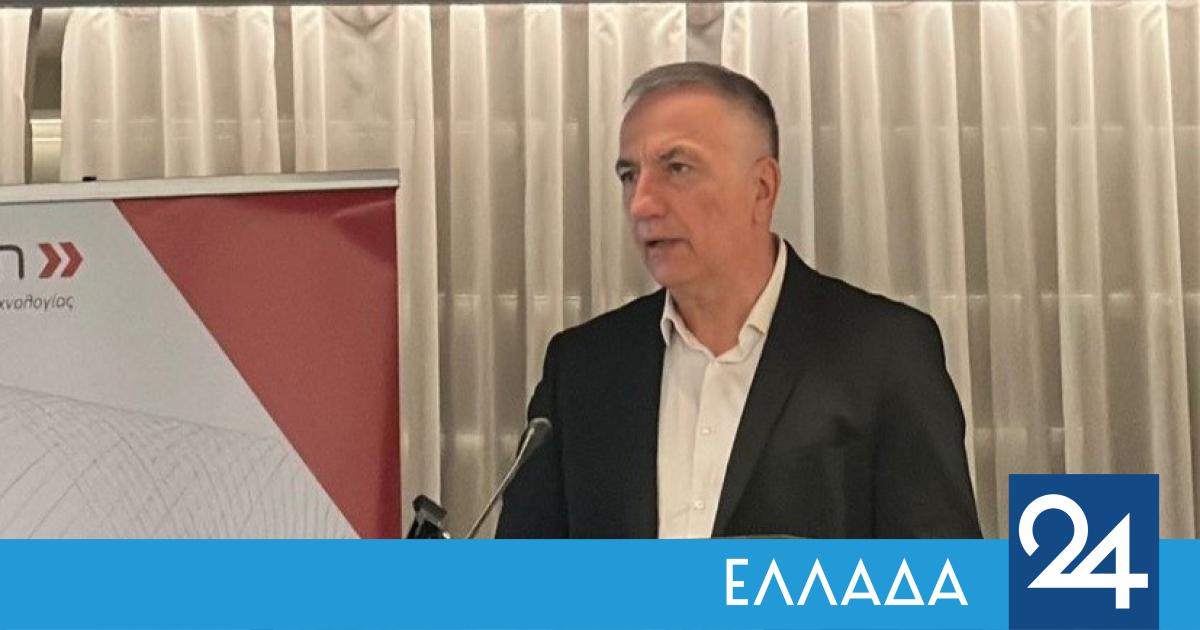
The government’s commitment to continue to support citizens, businesses and the credibility of the Greek economy was stressed by the Deputy Minister of Economy and Finance, George Kotsiras, delivering today, Thursday, on behalf of Minister Kyriakos Pierrakakis, the opening speech at the 12th Annual Tax and Business Forum, organized by the Hellenic-French Chamber of Commerce and Industry.
Cotsiras referred first of all to the excellent Greek-French relations, stressing that in the current environment of intense volatility, the strategic partnership between Greece and France and the cooperation between the two countries within the European Union is even more important.
Referring in particular to the economic impact of the war in the Middle East, the Deputy Minister of Economy and Finance pointed out that the duration and intensity of the crisis will obviously determine its economic footprint, stressing that the government is preparing for any eventuality.
As he noted, in the last six years, with Kyriakos Mitsotakis as Prime Minister, “we have managed to build a fiscal environment and an economy that is more resilient to such critical and difficult conditions.
“In the current international environment of uncertainty, credibility, fiscal responsibility and political stability are an important asset and a strong asset in order for our country to continue on a course that has strengthened it” at the diplomatic and economic level, the Deputy Minister of Economy and Finance noted, expressing confidence that “the business tax map for 2026 will change for the better in Greece, offering more security and prospects”.
The Deputy Minister of Economy and Finance also referred to the recent extraordinary measures to address the increased energy costs – the subsidy on diesel, the digital fuel card and the fertilizer subsidy – stressing the need for fiscal stability and support for society, while maintaining reserves for the future.
Then he focused on the government’s tax policy, which he said “combines the effort for further growth with social justice” and placed particular emphasis on the recent tax reform, which prioritises families with children, young people and the periphery.
In the business sector, tax interventions in recent years have focused, he said, on three main pillars: reducing the tax burden, incentivising investment and innovation, and simplifying and digitising procedures.
The Deputy Minister of National Economy and Finance pointed out that a large number of tax rates have been reduced over the past six years and “our intention is to proceed, treaties permitting, to further tax interventions of a business-related nature, which will be announced in 2026.”
At the same time, he referred to the tax incentives given in particular for the development of the defence sector, as well as for strengthening business transformation, innovation and business-to-business partnerships.
With regard to the simplification of procedures, he highlighted the codification and simplification of basic tax and customs codes and the use of technology to enhance transparency, facilitate everyday life and reduce tax evasion, with significant results for the benefit of society.
These firm directions of tax policy are confirmed, he said, by the new draft law of the Ministry of National Economy and Finance, which was recently put to public consultation and will come to Parliament after Easter.
We are proceeding “with the same method, in order to support citizens, workers, businesses, the very credibility and prospects of the Greek economy for the coming years” and “we are convinced that we will manage to cope with these difficult conditions”, with the Greek economy strong and society upright, he concluded.
.