From the cobbled Aegean islands to the cliffs of Meteora and the philharmonic orchestras of Corfu, Greek Easter remains a deeply experiential experience that combines faith, tradition and travel. And this year, many Greeks are preparing to leave the cities, seeking destinations where Holy Week retains its authentic character and the Resurrection takes on a special meaning.
When it comes to organised travel, however, Lysander Tsillidis, president of the Federation of Greek Associations of Travel & Tourism Agencies (FedHATTA), describes a cautious picture but notes that, despite international circumstances, the Easter exodus of Greeks is sustained, with interest directed to destinations with a strong religious and traditional imprint.
As it says, the market is moving slowly but will evolve gradually during Holy Week, with no sharp changes, while, importantly, no cancellations have been recorded.
Greek travellers are turning to familiar Easter destinations across the country, from Tinos, Nafplio and Tzoumerka to Mani, Meteora, Zakynthos, Corfu, Syros and Crete, choosing places where the customs and traditions remain alive and the devotion of Holy Week is authentically experienced.
As far as religious destinations abroad are concerned, this year Greeks are not travelling to Jerusalem, which is a benchmark for religious tourism, due to the situation in the region, but are turning to other destinations such as Cyprus, the Patriarchate of Alexandria and the Sinai region, where organised religious trips continue.
Patmos: the solemn atmosphere of the “island of the Apocalypse”
In this context, Patmos retains its special symbolism as the “island of the Apocalypse”, attracting visitors who wish to experience Holy Week in an environment of deep spirituality. As the mayor of Patmos, Nikitas Tsampalakis, points out, the island is preparing to welcome visitors from Greece and abroad, who will have the opportunity to experience “the unique solemn atmosphere” of the days. A special moment is the Holy Naptra ceremony on Maundy Thursday, a deeply symbolic institution that represents the humiliation and love of Christ, gathering every year a large number of believers.
“As the Municipal Authority, we have proceeded with the necessary planning and actions required so that the island is fully prepared to meet the increased needs of the season, ensuring proper operation, safety and the best possible experience for all,” the Mayor of Patmos told the Athens and Macedonian News Agency, noting that Patmos, with its deep religious tradition and unique natural beauty, is a destination that combines devotion, hospitality and authenticity.
Meteora: authentic Easter experience with high occupancy rates
In mainland Greece, Kalambaka and Meteora continue to be one of the top Easter destinations. The Mayor of Meteora, Lefteris Avramopoulos, stresses that “the municipality of Meteora, Kalambaka, the imposing Meteora, but also our villages, have long been one of the top Easter destinations in our country, attracting thousands of visitors from Greece and abroad every year. And this year, we are fully prepared to welcome them in the best possible way, offering a high level of hospitality and authentic experiences in every corner of our land.”
The unique atmosphere of the region, combined with the deep religious devotion that Meteora exudes, create the ideal environment for experiencing the Greek Orthodox Easter in an authentic and touching way.
The Holy Monasteries, the customs and traditions, the Holy Week services and the living tradition, both in the city and in the villages, make up a truly unique experience.
As far as tourist traffic for the Easter holidays is concerned, occupancy rates in accommodation are already at a high level, reaching 80%, while a further increase is expected in the coming days.
Corfu: impressive customs and strong demand
The picture is particularly vivid in Corfu, one of the country’s most iconic Easter destinations. According to Dimitris Amvrosiadis, Public Relations Officer of the Corfu Hoteliers Association, interest in the island remains strong, with demand boosted recently by last-minute bookings. Occupancy rates for the four days of Holy Week reach 85%-90%, while the presence of visitors from Greece and the Balkan countries, mainly Orthodox, who choose Corfu to experience Easter is significant.
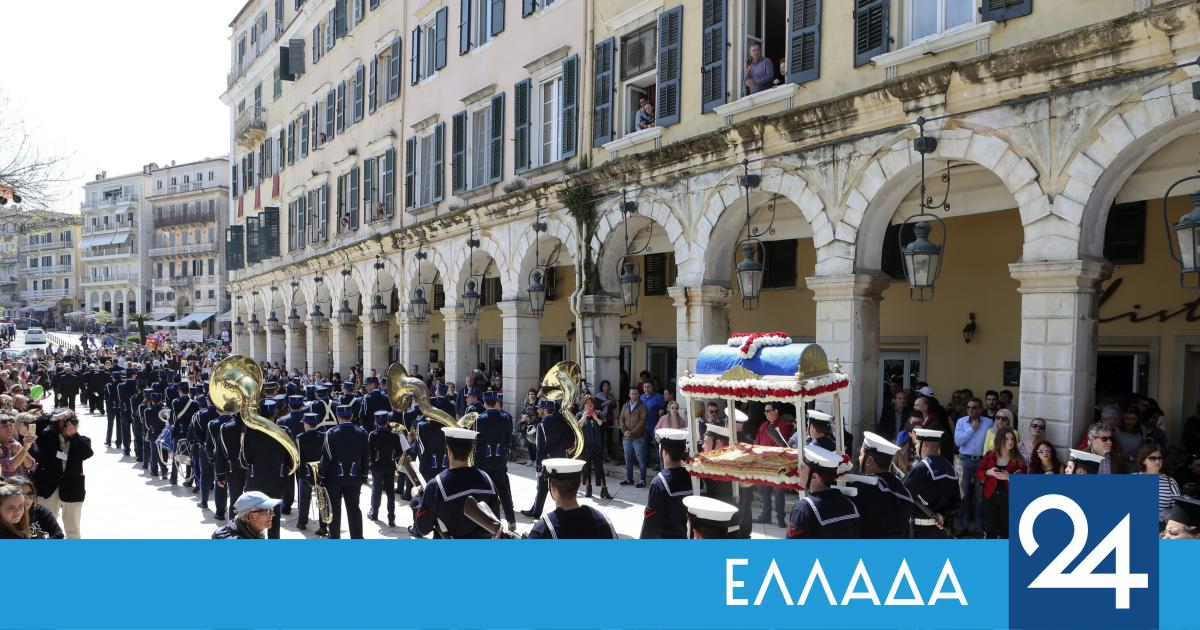
The island’s rich programme of events, from Palm Sunday to the Resurrection, with the philharmonic orchestras, the processions of the Epitaphs and the unique customs of Holy Saturday, compose an experience that goes beyond the limits of a simple getaway and turns into a profound cultural and emotional experience.
“Many visitors choose to come mainly for the highlights, such as the Epitaphs and the Resurrection, but miss the whole Easter atmosphere that develops throughout Holy Week. In fact, from Palm Sunday onwards, the atmosphere on the island is solemn, with the philharmonic orchestras sounding everywhere and creating an atmosphere worth experiencing,” he notes.
In general, according to Amvrosiadis, the year started with strong interest and a high flow of bookings early on, even before the carnival season, for both Easter and the summer season. However, recent developments in the Middle East have led to a temporary slowdown in demand, with travellers appearing more cautious and delaying their decisions. Recently, however, there has been renewed mobility, with a strong trend towards last-minute bookings, a phenomenon that is more pronounced this year than in previous years.
In terms of air connectivity, flights have already started since the beginning of March, enhancing access to the island. In particular, connections to London resumed on 3 March, while flights from Central European markets such as Poland, Switzerland, Germany, France and Italy have been added since the end of the month, with the German market showing particular momentum.