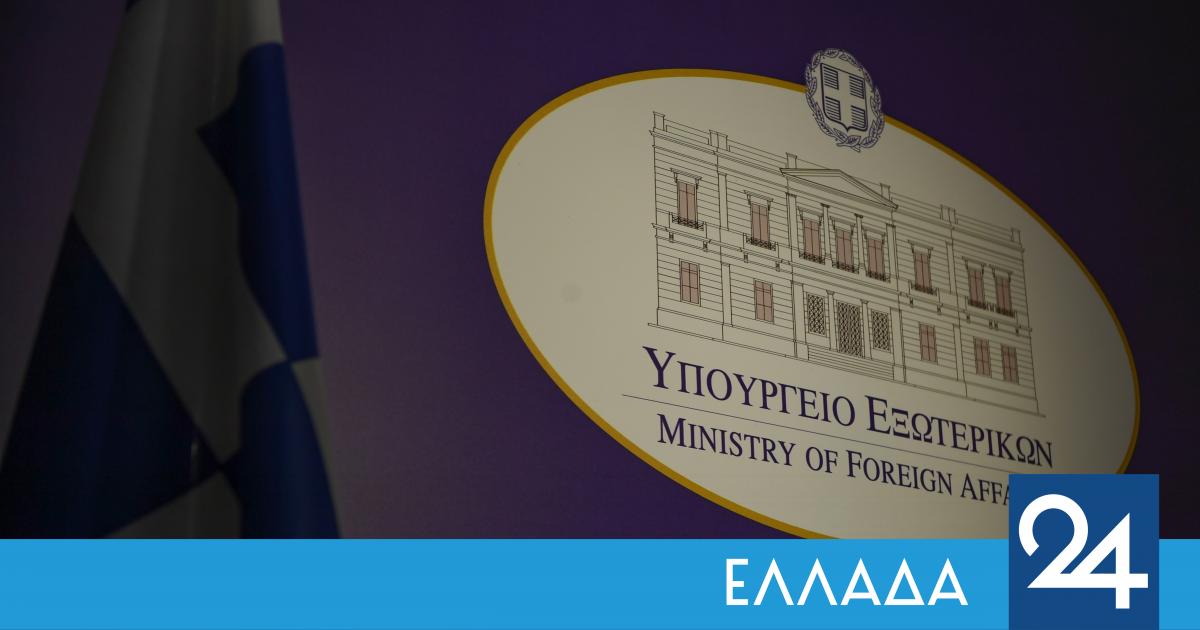
Giorgos Gerapetritis sent a clear message to Turkey regarding the bill being drafted for the so-called “Blue Homeland”, stressing that any such initiative can only have force within the country and not at the international level. As he stressed at the Energy Transition Summit, the only binding framework for maritime zones remains the Law of the Sea and customary international law. At the same time, he pointed out that Greece is preparing for every possible eventuality in a highly unstable geopolitical environment.
Athens’ message on the “Blue Homeland”
Referring to the Turkish draft law that attempts to institutionalize Ankara’s positions in the Aegean and Eastern Mediterranean, the Foreign Minister clarified that unilateral actions of this type cannot create legal effects against other states. He also stressed that although Turkey has not ratified the UN Convention on the Law of the Sea (UNCLOS), its basic principles are now customary and binding on the entire international community.
As noted, when a state unilaterally attempts to regulate issues that, under international law, require bilateral or multilateral consultation, such decisions are limited to its domestic legal order and do not acquire international force. He also stressed that stability and peace in the region require cooperation and not the imposition of unilateral concepts at the expense of neighbouring countries.
Communication channels and geopolitical uncertainty
According to diplomatic sources, the Greek side has already expressed to Ankara its reservations about the promotion of the bill, noting that such initiatives make it difficult to maintain the climate of de-escalation in the Aegean.
At the same time, Athens believes that the situation is still under control, as direct channels of communication between the two countries remain active, an element that so far acts as a deterrent against new tensions.
Gerapetritis described the current international situation as extremely unpredictable, due to wars, energy developments and constant geopolitical upheavals. He said that Greek diplomacy is working on alternative scenarios and strategic responses both for relations with Turkey and for the overall architecture of cooperation in the Eastern Mediterranean.
What the Turkish draft law provides
According to information published in the Turkish press and international media, the bill attempts to transform the “Blue Homeland” from a political doctrine into an institutionalized domestic framework, regulating issues such as the EEZ, the continental shelf and the casus belli for possible extension of Greek territorial waters.
In addition, it is envisaged that any economic, research or environmental activity in areas Ankara considers to be under its maritime jurisdiction will require Turkish permission, even in zones that remain disputed.
The Greek side insists that such unilateral moves cannot affect the sovereign rights of other states, which derive from international law, reiterating that Athens remains committed to solutions through the Law of the Sea and international justice.