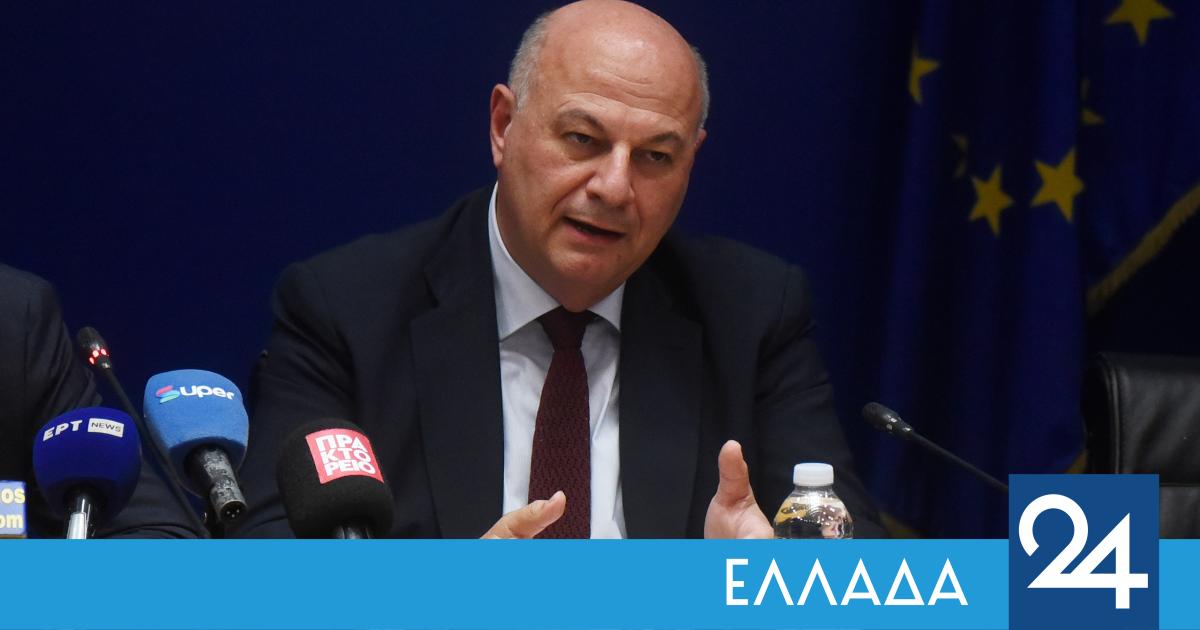
The need for immediate and substantial support for the primary sector, amidst the pressures caused by the international situation, as well as the operation to contain foot-and-mouth disease in Lesvos, was mentioned by the Minister of Rural Development and Food, Kostas Tsiaras, in an interview with ERT.
The Minister described the situation on the island as particularly critical, noting that the government’s priority is to prevent further spread of the disease outside the island of Lesvos.
He also noted that the Ministry has activated all available mechanisms, implementing strict biosecurity measures in full compliance with European regulations.
“The presence of the political and service leadership in Lesvos is continuous, with the aim of coordinating actions and effectively managing the crisis. This is the moment when either we will be able to contain the disease to the record we have or a huge problem will be created for the Greek livestock industry,”
Mr. Tsiaras stressed that the authorities had been mobilised in time as soon as the first cases of foot-and-mouth disease appeared in Cyprus, noting that the necessary planning and preventive interventions had started since then.
According to a statement, he placed particular emphasis on the importance of the next few weeks, which he described as crucial for the course of the Greek livestock sector.
He warned that the successful containment of the disease at its current extent will determine whether wider repercussions on the industry can be avoided. “What is at stake is far greater than anything else. That is, we need to close the cycle of foot-and-mouth transmission and stop it there.”
He said he is in continuous cooperation with the Ministry of Finance to activate support measures, while he assured that the envisaged compensation for the loss of livestock and income will be paid as scheduled.
“Compensation will be paid, which is provided for both death with livestock and compensation for loss of income. We are not discussing these. These are established procedures,” he commented.
Mr. Tsiaras appealed for calm and strict adherence to biosecurity measures, adding that the nature of the disease necessitated an extended period of heightened vigilance in order to definitively limit transmission.
Referring to the market ahead of Easter, the Minister of Rural Development and Food appeared reassuring about the adequacy, noting: “At the moment, based on the indications we have, it doesn’t look like there will be any problem.”
However, he stressed that increased controls are absolutely necessary, recalling that a second laboratory has been activated to carry out the necessary checks before animals enter slaughterhouses.
At the same time, he linked the need to strictly implement the measures to the experience of smallpox, explaining that the Easter period is crucial to avoid repeating mistakes that cost dearly last year.
He said, “the big gamble to be able to close the smallpox cycle is the Easter season.”
In the same context, Mr. Tsiaras also referred to the pressures on the primary sector as a whole from the price increases in key inputs, such as fertilizers and diesel, due to the international crisis.
He said the Ministry was monitoring the price developments on a daily basis in collaboration with the Ministry of Finance in order to take meaningful support measures and assured the farmers that just as the government supported farmers during the energy crisis caused by the war in Ukraine, the same logic would be applied to provide similar support now.
“The government is here to support the rural world. Right now, we are collecting all the data that we need, seeing that there are indeed appreciations, to what extent they are and where this whole thing will possibly end up,”
Finally, when asked about the progress of the implementation of the commitments made by the government to the farmers in the mobilisations, he replied that they have either been implemented or are in the process of being implemented. Specifically, on rural electricity, he said the new tariff will be implemented from April 1, 2026, while the refund of the VAT on rural oil at the pump from November 1.