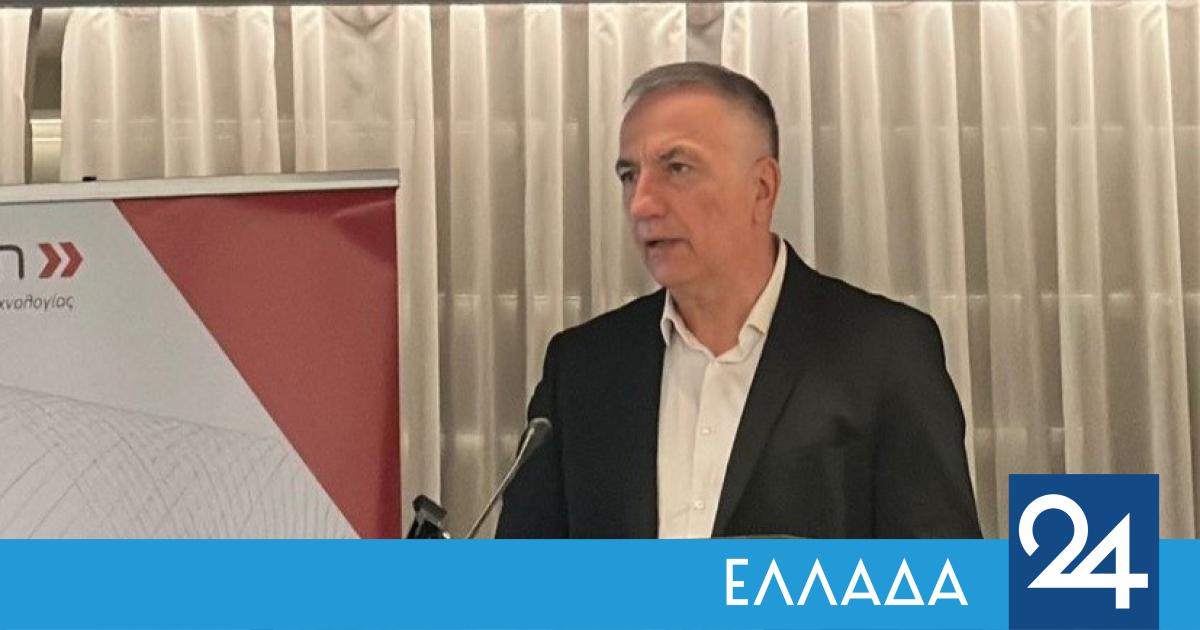
“Technology transfer is the bridge that connects the knowledge generated in our universities and research centers with the real needs of the market. As a government, we set a strategic goal from the outset: to redefine our production model. “A model based on the Knowledge Economy and outward orientation,” emphasized the Deputy Minister of Development, responsible for Research and Innovation, Stavros Kalafatis, speaking at an event organized by the PRAXI Network, a unit of the Foundation for Research and Technology – Hellas (FORTH), on the topic: “Early Stage Finance and the Role of Technology Transfer Offices.”
As Mr. Kalafatis pointed out, the results of this policy are now tangible and measurable:
* We increased total spending on Research and Innovation to 1.54% of GDP, a remarkable 68% increase compared to 2018.
* We have strengthened the country’s research capacity at universities and research centers by 36%, creating 20,000 new highly specialized jobs.
* At the same time, we are creating a stable and attractive environment with strong incentives, such as increasing the tax credit for R&D expenses up to 315%, the institutional framework for “Business Angels,” and the modern operational framework for creating spin-offs.
“However, as he emphasized, innovation is not born and does not end in laboratories. It requires mechanisms to guide it safely to the market. This is precisely where the role of Technology Transfer Offices (TTOs) and Networks, such as the PRAXI Network, with its remarkable thirty-year contribution, comes to the fore.”.
Sectoral Scientific Council for Technological Entrepreneurship
He also noted: “We didn’t start from scratch, but we are building on solid foundations. Public investment in Technology Transfer structures now spans two programming periods, with a total budget reaching 40 million From the initial phase of 15 million, we moved to full national coverage with an additional 25 million euros, establishing Technology Transfer Units in 31 organizations. Today, 35 organizations across the country are collaborating in a structured manner across all 13 regions of the country.
At the same time, the creation of the new Sectoral Scientific Council for Technological Entrepreneurship of ESETEK signals our commitment to transforming the now-mature Technology Transfer Offices into active drivers of innovation,” noted Mr. Kalafatis. He then referred to three critical pillars:
* Institutional Framework and Common Standards: The TES proposals, such as the model Intellectual Property Rights Assignment Agreement, are crucial. The adoption of common rules reduces bureaucracy and provides clarity for researchers and investors.
* Intellectual Property Management: We must train our ecosystem to manage knowledge as a valuable asset, ready for commercial exploitation.
* Sustainability and Early-Stage Finance: Linking research with the capital markets and venture capital funds is our big bet. For research to attract high-risk capital, it must learn to “speak” the language of investment. And in this, Technology Transfer Offices are the essential translators.
“Technology transfer is not a simple, dry technocratic process. It is the key tool for definitively transforming the brain drain into brain gain. It is our proposal for fair and sustainable development that will permeate all of society. At the Ministry of Development and the General Secretariat for Research and Innovation, we remain steadfast supporters of every effort that bridges research with production. We can work in a spirit of cooperation to make Greece a center of innovationin practice,” the Deputy Minister emphasized.