Six years after the activation of gov.gr, the public debate around the country’s digital transformation has moved from the stage of planning and announcements to the phase of evaluating the results.
Nowadays, the focus is not only on the new technologies or digital services that are constantly being added, but mainly on the real benefits for citizens, businesses and public institutions.
The evidence that has been gathered shows that the digitisation of the state is becoming a reform with significant economic, social and environmental impacts. The evaluation of 39 projects involving digitisation and simplification of administrative procedures records annual savings of more than €562 million. At the same time, more than 43,000 tonnes of carbon dioxide emissions are avoided and more than 205 million sheets of paper are saved each year.
Beyond the numbers, the benefits are reflected in the daily lives of citizens, as travel is reduced, delays are reduced and administrative burdens that were previously considered an integral part of dealing with the public sector are eliminated.
The path to the digital state
The strategy to modernise the public administration was launched in 2019, with the aim of drastically tackling bureaucracy through the use of technology.
In this context, the Ministry of Digital Governance has undertaken the creation of a single system of digital services, promoting the interconnection of information systems and the development of common operating standards between public bodies.
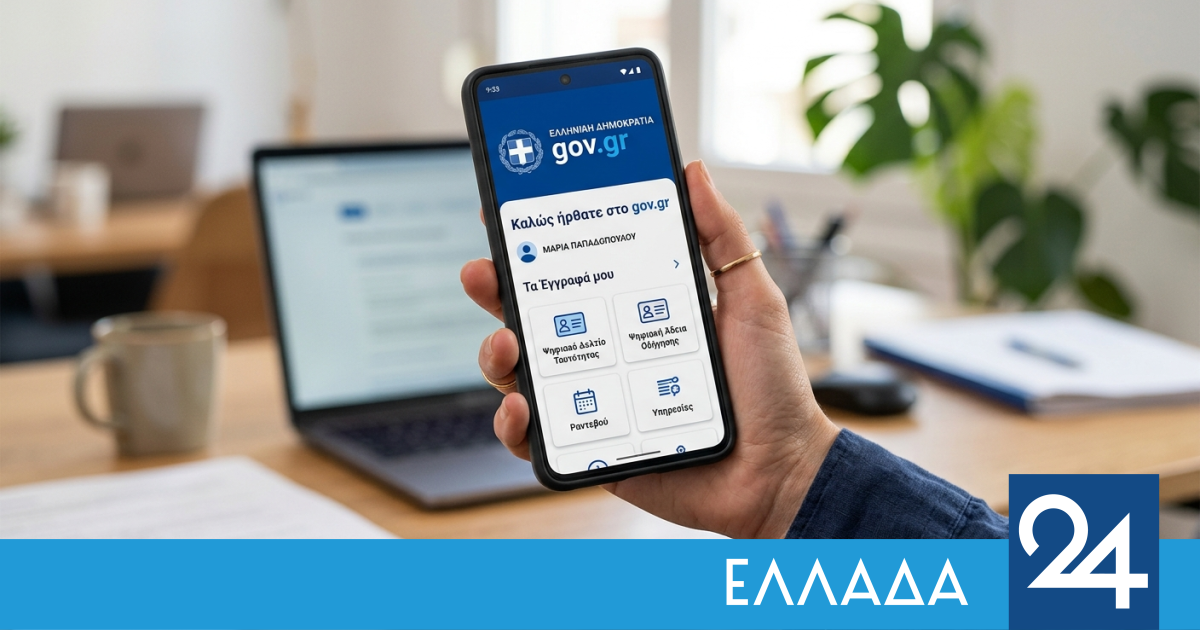
The central tool of this effort was gov.gr, which served as the single digital portal of the state and changed the way citizens are served by the state.
As the Minister of Digital Governance, Dimitris Papastergiou, points out, the biggest change is not only in the number of services that have been moved online, but mainly in the new philosophy of operation of the public administration. According to him, the state is now called upon to adapt to the needs of citizens and not the other way around, through a model that emphasises transparency, trust and the effective use of data.
Results in numbers
The first comprehensive evaluation of twenty gov.gr digital services reveals significant benefits. Total savings are estimated at around €312 million per year, while the time to complete procedures has been reduced by 88% for citizens and businesses and up to 97% for public services.
At the same time, each year around 19 million citizen journeys are avoided, more than 62 million sheets of paper are saved and carbon dioxide emissions are reduced by around 33,000 tonnes.
The acceptance of the services by citizens remains particularly high, as most people identify speed of service, ease of use and avoiding physical presence in public services as key advantages.
Similarly positive results are obtained from the evaluation of ten widely used administrative procedures, such as issuing tax administration certificates, renewing unemployment cards, granting benefits and issuing military service certificates.
These interventions reduce administrative costs by more than €70 million per year, reduce millions of citizen journeys and make a substantial contribution to reducing paper consumption and environmental burdens.
The importance of digitising records
Special emphasis is also placed on the conversion of the physical records of the public sector into digital form. This is an extensive project involving some 1.2 billion pages of documents from critical sectors such as Justice, Health, the Land Registry and the Immigration and Asylum services.
This intervention is estimated to generate an annual financial benefit of around €180 million, while significantly reducing paper consumption and the environmental footprint of the public administration.
But beyond the savings, digitisation creates the basis for faster information retrieval, better data management and more effective collaboration between different services. At the same time, it paves the way for harnessing technologies such as Artificial Intelligence and big data analytics.
New service infrastructures
The CRM project – Unified Digital Infrastructure for Citizen and Business Service is moving in the same direction.
This initiative aims to integrate the tracking of requests and contacts with public services, seeking to significantly improve the citizen experience and make the service more direct and efficient.
The importance of measuring results
One of the most important elements of the reform is that its results can now be evaluated using objective criteria.
To date, 39 evaluations of actions have been completed and ten more are underway. At the same time, more than 4,200 administrative procedures have already been recorded in the National Register of Procedures “Mitos”.
This systematic mapping allows for the first time the Greek public sector to accurately monitor its operation, evaluate its interventions and design policies based on real data.
The National Centre for Documentation and Electronic Content plays a decisive role in this effort, applying internationally recognised evaluation methods and contributing to the creation of a permanent mechanism for measuring the effectiveness of public policies.
The six-year anniversary
The six-year anniversary of gov.gr will be the focus of the event “6 years of gov.gr: Click and done!”, which will take place on 9 June 2026 at Technopolis of the Municipality of Athens.
Prime Minister Kyriakos Mitsotakis will also participate in the event, underlining the symbolism of an initiative that has been linked to the digital modernization of the Greek state.
The event will be held at the Athens City Hall in Athens, Greece.
Six years after its launch, gov.gr is no longer assessed not only by the number of services it offers. Its real value is reflected in the reduction of bureaucracy, the savings of resources, the improvement of service to citizens and the ability to measure the results of one of the biggest reforms the Greek public administration has ever known.