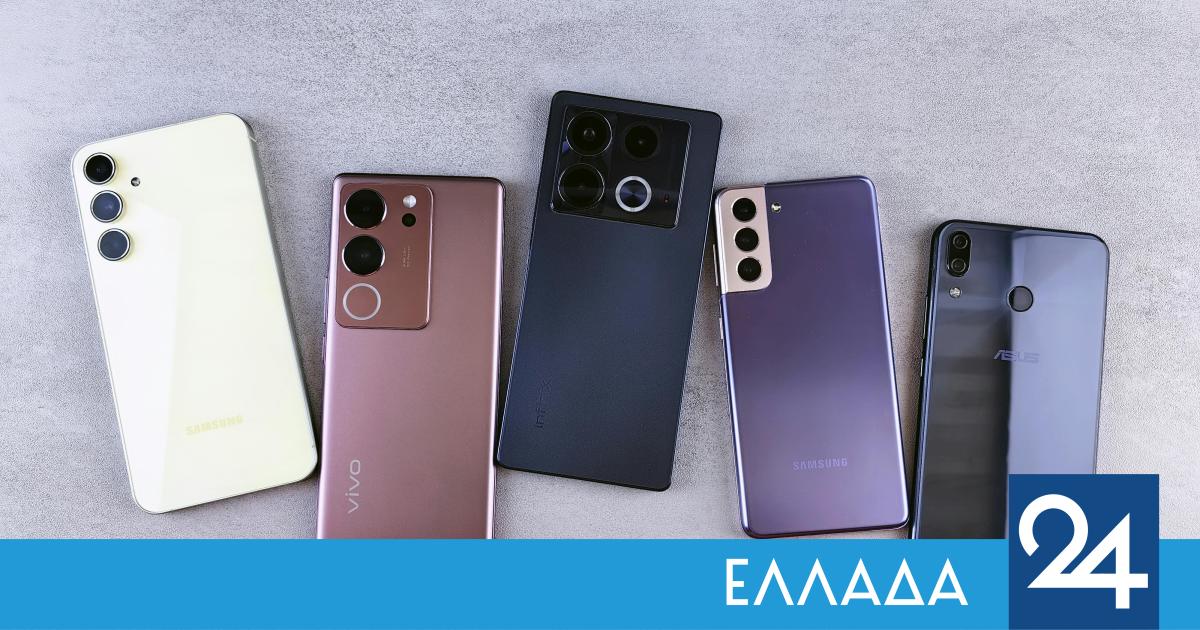
The smartphone market continues to evolve at an impressive rate. Devices are getting more powerful, cameras are improving, batteries are lasting longer and artificial intelligence capabilities are becoming more deeply integrated into everyday life. Nevertheless, a paradox dominates the international mobile market. Consumers are delaying switching devices, failing to take advantage of protection services and often even avoiding trade-in of their old phones.
According to a new white paper presented by international mobile operator GSMA and based on research by SquareTrade, the explanation lies in what is called the “Confidence Gap”, the gap in confidence between a consumer’s intent and their final decision.
This phenomenon, as noted, is not a demand problem. Users still want better devices, upgrades and greater security. The problem lies in the complexity of the experience. The more the user’s journey is fragmented between different providers, one company for the device, another for insurance, another for data protection and another for swapping the old device, the more confusion and less trust.
The more the user’s journey is fragmented between different providers, one company for the device, another for insurance, another for data protection and another for swapping the old device, the more confusion and less trust.
More than 3.5 years of keeping the same device
Survey shows that many consumers are now keeping their phones for more than 3.5 years. Not because new devices aren’t attractive, but because the process of buying and upgrading seems more complicated than ever. Uncertainty around the true value of a device, protection coverages, upgrade costs or even personal data management acts as a deterrent. At the purchase stage, the so-called Confidence Gap occurs when a consumer is unable to assess the overall value of owning a device.
The plethora of options, models, storage, financing plans, protection packages, trade-in possibilities, often creates information overload. As the white paper states, consumers tend to choose what seems cheapest at the time, but underestimate factors that affect the total cost of use over time.
Of particular interest is the growing market for refurbished devices. Although demand is strengthening due to lower costs, confidence remains limited. Battery condition, actual quality of the device and long-term reliability continue to raise consumer reservations. The problem is even more pronounced at the daily use stage. The smartphone has become a key tool in personal and professional life. According to survey data, 75% of users worldwide consider their mobile phone critical to managing their finances, while 72% say it is their gateway to the world around them.
Despite this reliance, protection remains low. Nearly two-thirds of users say they are concerned about identity theft or data loss if their device is stolen or lost. However, just 8% have signed up for identity protection services and only 12% have purchased some kind of insurance coverage for their digital security. The white paper also records that 45% of users do not pay for backup or data recovery services, even though they use their mobile device for highly sensitive activities. This contradiction accurately captures the Confidence Gap: consumers are aware of the risk, but find it difficult to navigate a complex and fragmented ecosystem of services.
The situation becomes even more apparent at the trade-in and device upgrade stage. While 72% of consumers think that trading in old handsets is cost-effective, almost half say they never trade-in when they change devices. The main reason is a lack of confidence in the process. 68% are concerned about the handling of personal data when trading in a device, while 38% say this very concern reduces the likelihood of participating in a trade-in program.
The drawer economy
This creates what the survey calls the “Drawer Economy”. Billions of old appliances sit idle in homes and offices around the world, instead of being returned to the market through recycling or reuse. The figures are indicative. In the United States, consumers keep an average of 1.8 old appliances, while in markets such as India and Italy the number exceeds two devices per user. The GSMA estimates that more than 5.3 billion mobile phones remain unused globally, representing both huge untapped commercial value and lost potential for the circular economy.
The white paper argues that the Confidence Gap has now become a major economic and environmental factor. When consumers feel confident, they switch appliances earlier, adopt protection services more often and participate more in trade-in schemes. Conversely, when uncertainty prevails, they delay decisions and keep older devices off the market. SquareTrade proposes a more unified service model as a solution, where purchase, protection, upgrade and device exchange operate as a single experience. According to the study, transparency, clarity and simplification of the process are critical to restoring trust.
The key conclusion of the white paper is that the next phase of mobile market development will not depend solely on the technology of new devices. It will depend on whether companies can reduce complexity and make consumers feel secure at every stage of the mobile lifecycle. For an industry increasingly reliant on subscription services, upgrades and the circular economy, trust is now becoming a key business indicator.