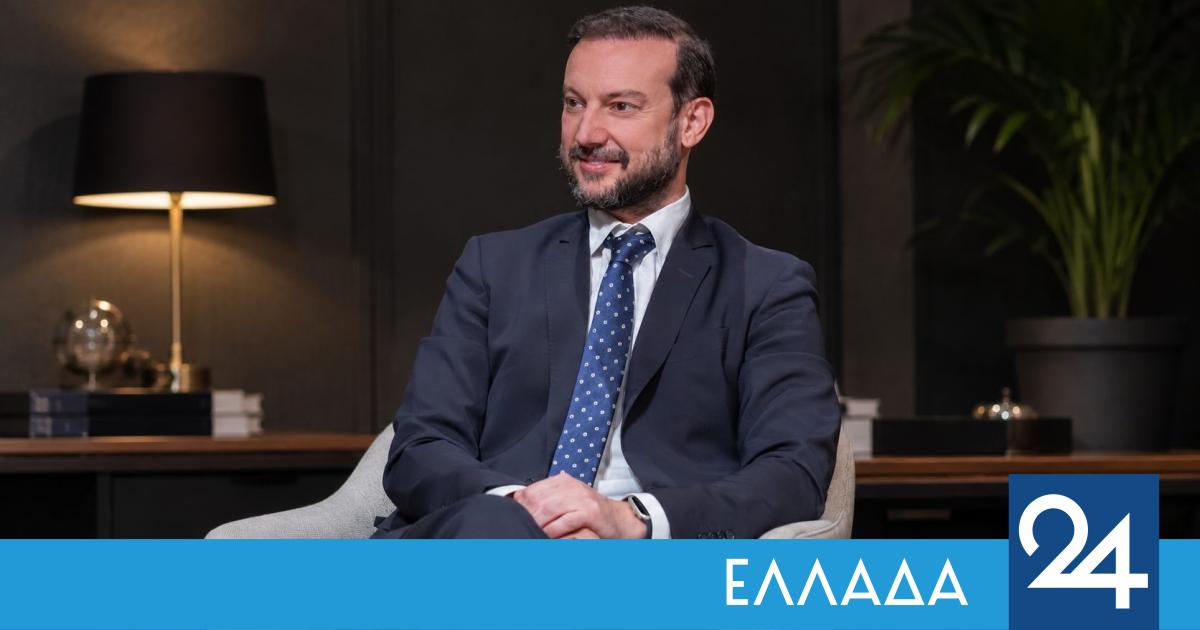
Spyros Sapounas, endocrinologist-diabetologist and President of the HOPE, announced his candidacy as an elector for the Panhellenic Medical Association (PIS), in view of the election process of June 14. The focus of his intervention is on the everyday life of the doctor, scientific reliability, the reduction of bureaucracy and innovation.
With a framework of proposals that attempts to connect the everyday experience of the doctor’s office with the institutional challenges of health care, Spyros Th. Sapounas, endocrinologist-diabetologist and President of the National Medicines Agency (NDA), announced his candidacy as an elector for the Panhellenic Medical Association (PIS) in the upcoming elections.
The election process is of particular interest for the medical world of Athens, as it takes place in a period of intense pressure for health professionals, with an increased administrative burden, constant changes in the institutional environment, financial pressures, the need for scientific information and an increasing demand for reliable communication with patients.
A nomination with reference to the everyday life of a doctor</h3
As Spyros Sapunas points out, the practice of medicine in Athens as a daily test, which is not limited to clinical responsibility towards the patient, but extends to managing bureaucratic requirements, protecting scientific dignity and maintaining sustainable conditions for the practice of the profession.
“The practice of medicine in Athens today is not just a profession, but a daily struggle for survival, scientific dignity and bureaucratic burnout,” he says, setting as a basic goal a representation in the PIS that, in his words, will not be limited to monitoring developments, but will intervene in their formation.
This report attempts to reflect a broader climate of concern in the medical field. The Athens Medical Association has recently highlighted issues such as the increase in medical fees and the removal of bureaucratic difficulties for residents, assistants and doctors of the NHS who practice in private practice.
Mid-career doctor and head of the EOF</h3
The central point of the nomination is to highlight a dual professional and institutional role. Spyros Sapunas says that, as a combat endocrinologist, he is aware of the pressures that physicians face in the day-to-day running of the practice. At the same time, as President of the EOF, he stresses that he has direct insight into critical issues that affect the health system as a whole.
EOF is the national body responsible for the protection of public health in relation to the circulation of pharmaceutical products, medical devices, supplements, biocides and cosmetics. Its responsibilities include the evaluation and approval of products, monitoring their safety and efficacy, controlling production and clinical studies, and providing information to health professionals and the public.
Through this institutional experience, the candidate highlights issues such as drug shortages, digital modernisation, the reliability of clinical trials and the need for stronger representation of the medical profession at national and European level.
First axis: Tackling medical misinformation
The first axis of the framework presented by Spyros Sapunas concerns the “restoration of scientific truth”, as he describes it. The candidate focuses on the spread of medical misinformation on social media and the consequences it can have for both patients and the prestige of the medical community.
This debate has taken on particular importance since the pandemic, but is no longer limited to infections or vaccinations. Nutritional advice without scientific evidence, questioning of treatments, misleading promises for chronic conditions and unchecked dissemination of drug claims create a complex environment for the patient and the treating physician.
In his proposal, Spyros Sapounas argues that PIS should take a more active role as an institutional guarantor of reliable medical information. This direction could include faster scientific interventions on issues of public interest, the use of digital channels, the production of evidence-based content and support for doctors when they are called upon to respond to widespread inaccuracies.
This is an issue that is not solely about the image of the profession. Misinformation can lead to delayed diagnosis, inappropriate treatment choices, mistrust of evidence-based interventions and greater burden on health services.
Second axis: Less paperwork, more time for the patient</h3
Cutting red tape is the second key pillar of the nomination. Spyros Sapunas notes that a doctor’s daily routine is burdened by procedures that take time away from clinical work and turn part of the medical practice into constant administrative management.
In this context, he highlights the need to transfer experience and know-how from the operation of bodies such as the EOF and EODY to services that directly concern the physician-member of the IUA. The proposal is captured in the slogan “less paperwork, more time for the patient”, which attempts to summarise a wider industry demand for more functional digital services.
Digitisation, however, does not automatically equate to simplification. To truly reduce physician burden, interoperable applications, limiting duplicate entries, clear audit trails, usable information systems and stable rules that don’t change without adequate preparation are needed.
The candidate’s proposal takes on particular importance at a time when the IAA is already making it a priority to enhance digital services for its members through e-services, information platforms and tools for health professionals.
Third axis: Stronger representation in health decisions
The third axis concerns the need for a stronger voice for the medical profession in decision-making centres. Spyros Sapounas proposes the operation of an effective “bridge” between the practising doctor, the state and the institutional bodies.
This position is linked to issues that remain consistently high on the agenda of doctors: fair remuneration, safe working conditions, transparent control mechanisms, avoidance of excessive administrative burdens and recognition of the role of doctors in the formulation of health policies.
For freelance doctors, the viability of private practice and compensation for services remain critical issues. For hospital and junior doctors, the focus is on working conditions, career prospects and preventing the exodus of scientific personnel abroad.
Sapuna’s candidacy attempts to place these demands in a more institutionally coordinated context. According to his statement, what is sought is not only the documentation of problems, but the ability of the medical profession to intervene with arguments, evidence and clear proposals before decisions affecting the profession and patient care are made.
Fourth axis: Continuing education and digital innovation
Continuing medical education and innovation complete the framework of the four axes of the nomination. Spyros Sapounas proposes the creation of modern digital tools by PIS, which will offer its members continuous and reliable scientific information, in line with the standards of international scientific organisations.
The proposal reflects the increasing demands of the medical profession. The speed at which therapies, biomarkers, personalised medicine, digital health data, artificial intelligence and the regulatory framework are evolving makes continuing education not only desirable but absolutely necessary.
Especially in therapeutic areas with rapid advances, such as diabetes, obesity, oncology, rare diseases and advanced therapies, physicians need access to selected, valid and practically usable knowledge. An institutional body that can organise digital training programmes, scientific databases and continuous information tools enhances not only the healthcare professional but also the quality of care.
Drug shortages and clinical research on the agenda</h3
The candidate’s reference to drug shortages and clinical trials, two areas directly linked to his institutional position at the EOF, is of particular importance.
Drug shortages are a problem with a direct impact on the daily practice of doctors and on patient safety. When a treatment regimen is discontinued or needs to be replaced due to limited availability, the physician is asked to manage not only the scientific choice, but also the patient’s distress.
Lists of restricted availability of pharmaceutical preparations are regularly posted on the official website of the National Agency for Medicines, with a recent posting for the list of 30 April 2026. This fact reflects the ongoing timeliness of the issue.
Again, ensuring a reliable environment for clinical trials is a major gamble for the healthcare system and the scientific community. Greece’s participation in clinical research can enhance patient access to new treatment options, create scientific added value and strengthen the role of physicians in international research networks.
The election and the message to Athens doctors
The candidacy of Spyros Sapounas is primarily addressed to the doctors of Athens, who are called upon to decide on their representation at a time when decisions on health care are gaining increasing economic, social and institutional weight.
He attempts to give the electoral process the character of a broader choice for the future of medical representation. “In the IAA elections, we don’t just choose representatives. We are choosing the level of influence we want to have on the future of healthcare,”
Source: healthpharma.gr / Kosmas Zakynthinos