The first student short film festival “Karpa Video Call” was implemented by the Region of Crete, focusing on the importance of training in cardiopulmonary resuscitation (CPR) and first aid, through the power of creativity and student participation. As Deputy Regional Governor of Crete George Pitsoulis told APE-MPA, “the thought of organizing the first student short film festival “Karpa Video Call” was born out of the need to approach the knowledge of CPR and prevention in a more direct and experiential way for children.” He even stressed that “we wanted to give students not just the role of a recipient of information, but the role of a creator and active citizen”. The philosophy of the action, according to the deputy regional governor, was based on the power of education through art and cooperation, while through the process of film production “students had the opportunity to express themselves, work in teams and convey important social messages, highlighting that knowledge can really save lives”, as Mr. Pitsoulis.
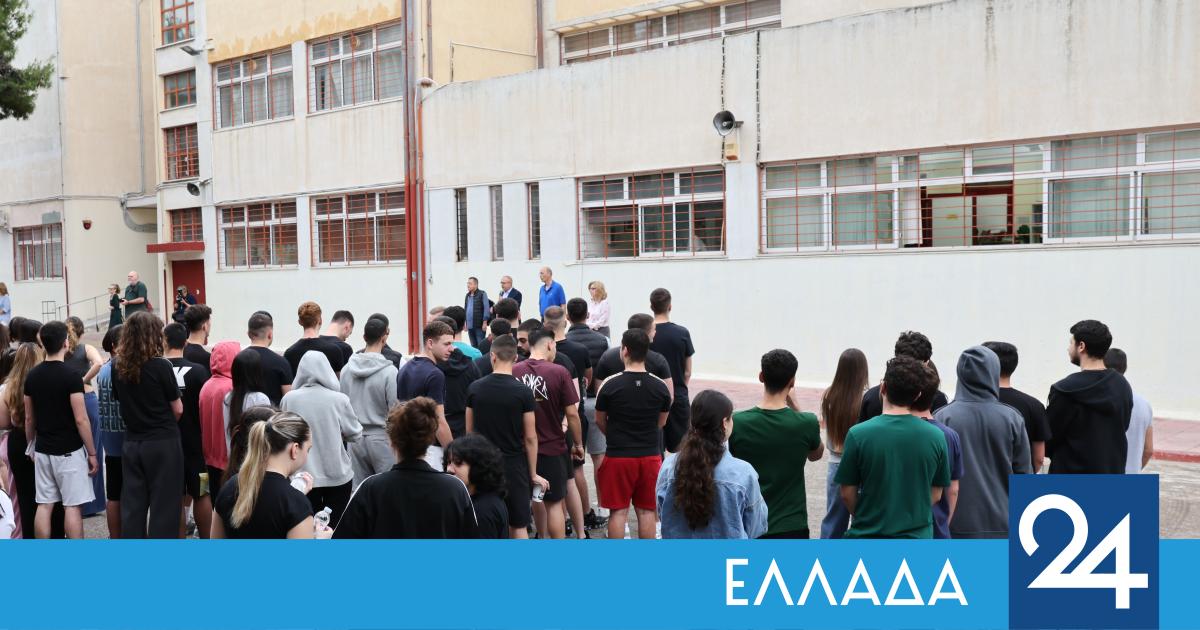
The festival took place last May, with participation exceeding all expectations, as 13 school units from all over Crete participated, with hundreds of students and teachers actively involved in the creation of short films on the value of CPR, prevention and human solidarity.
The awards ceremony was of particular interest, which had a double dimension, as George Pitsoulis stressed, “the films were evaluated by a special jury and awards were given for Best Film, Best Director and Original Screenplay”. At the same time, there was also the Audience Award, through an open citizen vote, giving more value to participation and connecting the school community with the society.
The success of the action, as he told APE-MPE, is already creating thoughts for its continuation as it showed that “there is substantial interest and great potential” while the goal of the Region of Crete is “to evolve into an institution that will continue to inspire young people and link creativity with social contribution”. At the same time, the deputy regional governor expressed the belief that the festival can be expanded thematically and participatively, creating the conditions for a stable field of expression, for students.
As George Pitsoulis noted, however, in this event, a special element was not only the response of the children, but also the enthusiasm with which they embraced the process. “They did not see their participation as a simple school activity, but as a real creative challenge,” he stressed, adding that the students were actively involved in all stages of the production, as they “wrote scripts, collaborated, filmed and spoke through their own eyes on a subject that concerns human life.”
However, according to the deputy governor, the fact that the children made it clear “that they felt they were creating something meaningful, or something that could touch and inform other people” is of particular importance, adding that “this was perhaps the greatest success of the action, that the children became carriers of messages of life and solidarity”.
The “Karpa Video Call” is part of the wider “ZOI” programme of the Region of Crete, which, “is an integrated initiative focusing on prevention, education and protection of human life, with particular emphasis on CPR and first aid training”, as George Pitsoulis said. Through the programme, through educational activities, collaborations with the Medical School of the University of Crete, volunteer groups, schools and institutions, as well as initiatives such as the “Karpa Video Call”, the aim, he explained, is to cultivate knowledge, volunteerism and social sensitivity.
In his conclusion, the Deputy Regional Governor pointed out that the central objective is none other than “to create a society that is more informed, ready to respond in critical moments and more active in the value of prevention and giving to its fellow man”, highlighting the essential social character of the initiative.