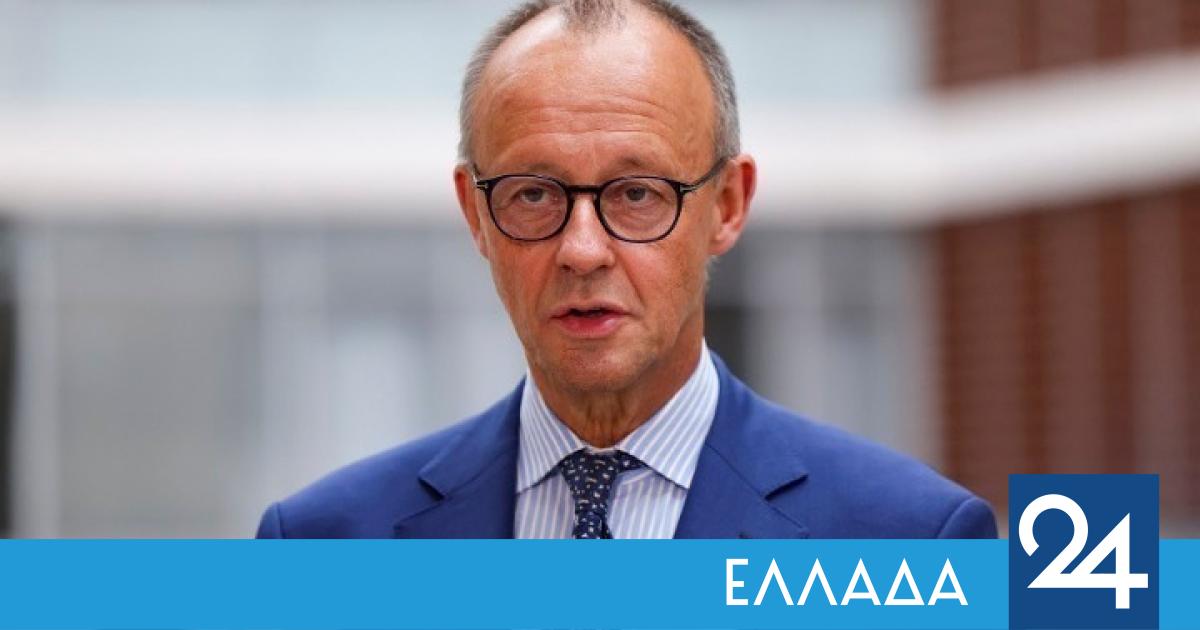
German Chancellor Friedrich Murch proposes to link Ukraine to the EU as the country’s full integration into the bloc will take time, he explains in a letter to European leaders.
“It is obvious that we will not be able to complete the accession process in the near future, given the numerous obstacles as well as the political complications involved in the ratification procedures,” Merts said in his letter.
Accordingly, Berlin proposes that Kiev be granted “associate member” status as a “decisive step” before full accession.
The German chancellor clarifies that this is in no way a ” light membership” or a ” second-class membership”, at a time when Ukraine has over time shown caution towards various proposals aimed at making it wait on the path to accession.
Ukrainian President Volodymyr Zelensky is calling for ” full membership” of the EU, preferably by 2027.
In his letter, which is addressed to European Council President Antonio Costa and European Commission President Ursula von der Leyen, among others, Merts details how this “associate member” status could be shaped.
According to him, this status would allow Ukraine to participate in certain meetings of the European Council, which is attended by EU heads of state and government, to have an “associate” European commissioner without a portfolio, as well as “associate” MEPs without voting rights.
The German chancellor also proposes that EU member states make a ” political commitment” to implement the Union’s mutual assistance clause towards Ukraine, “with the aim of creating a substantial security guarantee”.
Murch’s proposal is an attempt to find an intermediate solution between fast-track accession and Ukraine’s current status as a candidate country.
“My proposal reflects the particular situation of Ukraine, a country at war. It will contribute to facilitating the ongoing peace talks in the context of a negotiated peace settlement,” Merts stresses in his letter, adding that this is “essential not only for the security of Ukraine, but also of the entire continent.”
Ukraine was granted EU candidate status in December 2023, but negotiations have since stalled due to a veto by Hungary under Prime Minister Viktor Orbán. Peter Mayer’s victory in the April 12 election changes the landscape and Germany, as well as most other EU countries, are hoping that these negotiations will formally begin, although informal talks with Kiev have already taken place.
The negotiations are expected to be long and difficult, especially in the agricultural sector. Ukraine is a major producer of agri-food products and this is causing concern in some EU countries, such as France.
Murch said in his letter that he intends to discuss his proposals with other European leaders. “My aim would be to reach an agreement soon and set up a task force to work out the details,” he explains.