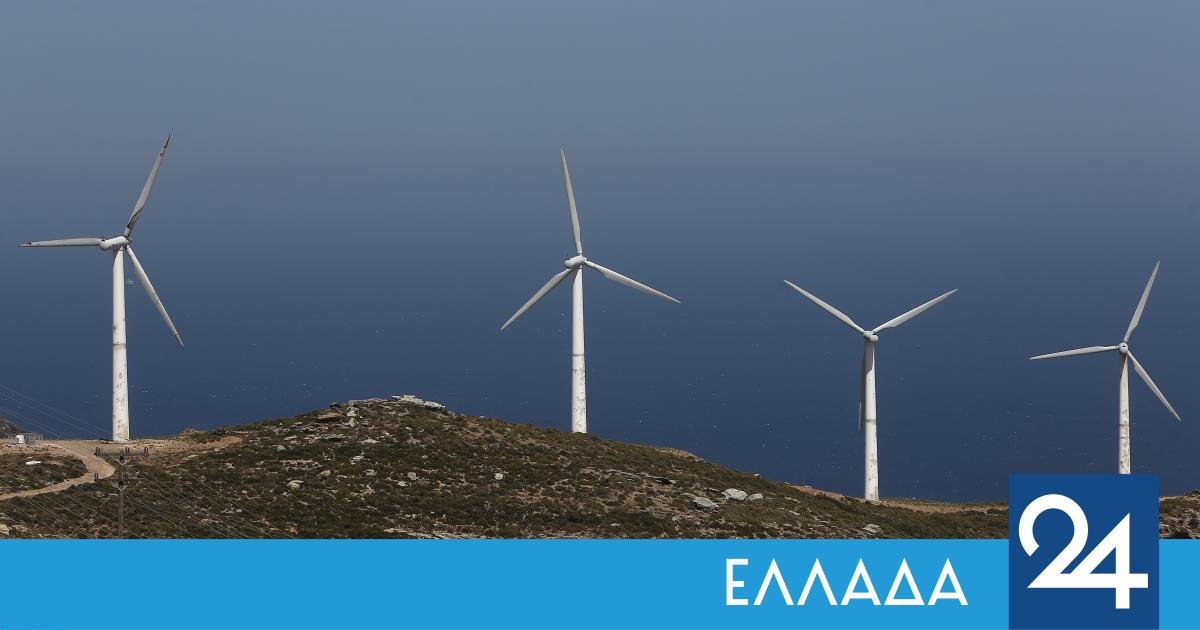
A ban on the installation of photovoltaics (among others) in forests, woodlands and NATURA areas and of wind turbines in Attica, Thessaloniki and areas with an altitude of more than 1.200 meters provides for the Special Spatial Framework for Renewable Energy Sources that was put out for public consultation today by the Ministry of Environment and Energy.
The Ministry of Environment and Natural Resources notes that for the first time, the adoption of three Special Spatial Frameworks is proceeding simultaneously: for tourism, industry and renewable energy, thus ensuring that these plans do not conflict with each other, but are functionally and strategically linked. “This coordinated spatial planning is a holistic development model adopted for the first time in the country. Because only in this way can we avoid the contradictions of the past: land use conflicts, the absence of a plan, and uncertainty,” the ministry said.
The land use plan for renewable energy provides for the following, among other things:
A. For photovoltaic power stations
No further horizontal:
– In all protected areas of the NATURA 2000 network
– In forests and woodlands
– In Ramsar wetlands and small island wetlands
– In national parks, declared natural monuments and aesthetic forests
– In areas designated as Landscapes of Outstanding Natural Beauty
– In declared World Heritage Sites and other monuments of major importance, as well as designated archaeological protection zones A
– In areas with protected and/or abandoned terraces
– In roadless areas defined by decisions of the Ministry of Environment
– On bathing beaches
New siting criteria and rules are set, in particular:
– The maximum allowed percentage of land coverage by new photovoltaic stations (not environmentally licensed) cannot exceed 1.5% per Regional Unit.
– Minimum distances for the siting of photovoltaic power plants (e.g. from residential activities) and specific observer’s horizon coverage percentages are provided for.
– Provision is made for a special view study in case of PV installation within a zone of 1,500 m. from inscribed on the World Heritage List and other major monuments, archaeological sites and historical sites, as well as within 1,000 m from the zone of absolute protection (Zone A) of other archaeological sites, declared cultural monuments, historical sites and traditional settlements.
B. For wind farms
No further horizontal:
– In Attica and the Metropolitan Area of Thessaloniki
– Within areas with an altitude of more than 1,200 m
– Within Ramsar wetlands and small island wetlands
– In areas designated as Landscapes of Outstanding Natural Beauty and in the cores of national parks
– Within the absolute nature protection zones and the nature protection zones of Law no. 1650/1986
– On islands with an area of less than 300 square kilometres, unless they concern the coverage of the public interest needs of the island concerned (e.g. desalination plants)
– In areas of high tourism development, as defined in the new Special Spatial Framework for Tourism
– In off-plan areas where the development of tourism – recreational uses is foreseen
– In parts of quarry areas and mining and quarrying zones operating on the surface
– In roadless areas determined by decisions of the Ministry of Environment
– On bathing beaches.
In particular, within Special Protection Areas (SPAs), i.e. areas for the protection of avifauna that are part of the NATURA 2000 network, wind farms are allowed only exceptionally, if two conditions are met at the same time:
– expressly provided for in the approved Special Environmental Study and
– the wind potential is greater than 7.5m/s (according to the wind map on the RAAEY website).
They are allowed only in “Areas of Suitability”, i.e. in Municipal Units with a wind potential greater than 4 m/s (according to the wind map available on the RAEY website) – and only provided that none of the above (more specific) restrictions apply, such as an altitude of more than 1.200 metres, Special Protection Areas (SPAs), Landscapes of Special Natural Beauty, Ramsar wetlands, etc., as well as taking into account the remaining area of the Municipal Corporation, according to the data of the RAAEY.
In the island area the maximum allowed percentage of ground coverage (carrying capacity) by wind farms cannot exceed 4% of the area per Municipal Unit.
It is noted that the new Spatial Framework does not include:
– projects already in operation,
– those that have completed their environmental permitting or have received approval of formal completeness of their dossier by the date the new NAP is put to public consultation,
– Exempt RES plants (plants which are exempted from a Producer’s Certificate/’Installation & Operation License), except for photovoltaic plants (e.g. Biomass/biogas
– pumped-storage and large hydroelectric power plants >15MW,
– photovoltaic stations installed on the roofs of buildings.
The consultation will run until 24 June 2026 at https://ypen.gov.gr/diavouleusi
Δείτε ολόκληρο το ενημερωτικό κείμενο του ΥΠΕΝ σε μορφή ερωταπαντήσεων εδώ