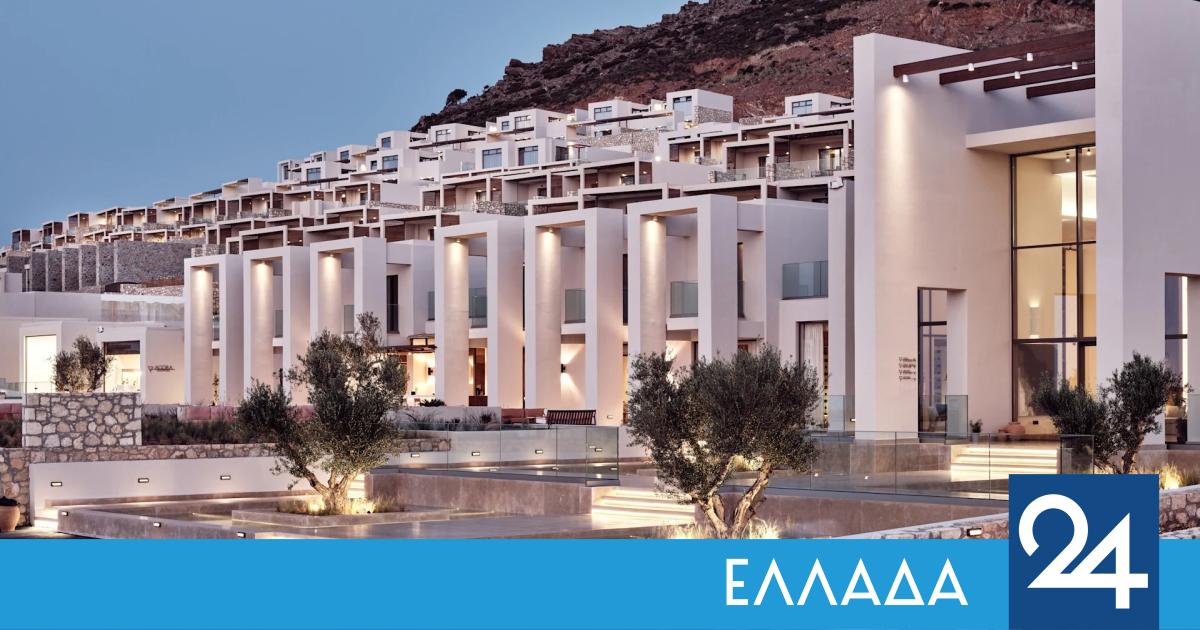
Crete is chosen by Hilton as a key pillar of its strategic expansion in Greece, with the new Hilton Chania Old Town Resort & Spa in Chania as the highlight and two more projects already in the pipeline in Georgioupolis and Episkopi Rethymnon, in collaboration with the Tsiledakis Group.
As Carlos Malliaroudakis, Chief Operating Officer of Hotelleading, a company of the Cretan group, tells APE-MPA, the choice of Crete by one of the most powerful international hotel groups is linked to the island’s ever-increasing dynamics, the quality of its tourism product and the prospects for growth towards a 12-month tourism model.
Hilton Chania Old Town Resort & Spa
The Hilton Chania Old Town Resort & Spa, which opens in the coming weeks in Chania, is essentially the first “Hilton” currently operating in Greece, following the conversion of the historic Hilton Athens to Conrad.
The new hotel is being developed over seven floors and features 85 rooms with an equal number of private pools, a concept that – according to management – is currently unmatched by any other Hilton hotel worldwide, it was pointed out.
The new hotel unit, managed by Hotelleading and under the brand of Hilton Hotels & Resorts, aspires to strengthen the footprint of Chania on the map of quality urban and experiential tourism, while emphasizing the extension of the tourist season, job creation and the overall upgrading of the region, as highlighted. Enhancing city tourism in Chania, operating 12 months a year and creating new added value for the local economy are at the heart of this investment, with the management estimating that the project will contribute substantially to further upgrading the Old Town and the overall hospitality experience in the destination.
Meanwhile, Hilton’s partnership with the Tsiledakis Group is expanding further in Crete, with two major new tourism investments . The first is a new unit of around 140 rooms in Georgioupolis with a family and all-inclusive character, while the second is a luxury project in Episkopi, Rethymnon, which is estimated to reach up to 200 rooms and bungalows.
According to the group’s planning, the Georgioupolis unit is expected to open in 2028, while the second one, that of Episkopi, is expected to open in late 2029 or early 2030.
Focus on 12-month tourism with a conference vehicle
As mentioned above, particular emphasis is placed on the twelve-month tourism segment, with the administration noting that the aim is for Chania to strengthen its position as a destination that can operate beyond the narrow framework of the summer season, using tools such as conference tourism and international corporate events.
In this context, the new Hilton in Chania will have a conference centre with a capacity of around 250 people, aiming to attract conferences, corporate meetings and incentive trips from overseas markets. On this point, Malliaroudakis stressed that every effort will be made to ensure that the international conference market adds Crete to the calendar, with all that this implies for the expansion of tourist traffic in winter.
Besides, with direct flights from the US to Athens, Crete has already become an attractive destination for Americans.
Gastronomy and Wellness
Special mention is made of the gastronomy aspect, as Hilton Chania Old Town Resort & Spa has wellness and gastronomy facilities of international standards. Specifically, it incorporates into the overall concept partnerships such as Fauchon Café Pâtisserie, which is making its debut in Greece through the new hotel in Chania, and L’Occitane en Provence Spa, which will operate as a modern urban wellness retreat in the heart of the city. According to the management, these partnerships further enhance the international identity of Chania as a high-end destination.
The economic footprint on the local community
In conclusion, the economic footprint on the community, in addition to other synergies, is measurable in jobs. According to Tsiledakis Group, with the completion of the new investments, total employment in the group’s units is estimated to reach 1,000 people in Crete, with the majority coming from the local community.