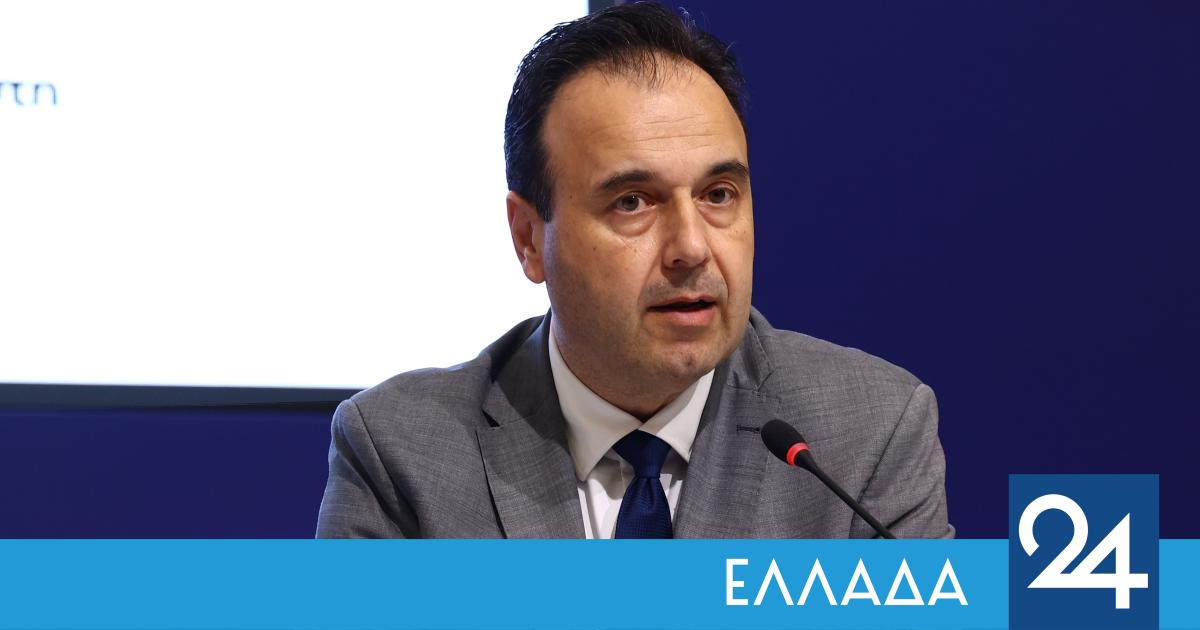
With a “surge” in applications and a “staggering acceleration” of contract awards in the last quarter, loan resources from the Recovery Fund have been exhausted, according to Deputy Minister of National Economy and Finance Nikos Papathanasis.
Presenting at a special press conference the progress of the implementation of the NSRF, the CDF and the special financial instruments, the deputy minister announced that the eighth request for disbursement from the grants component, amounting to 1.4 billion euros, will be submitted on Monday, as 32 milestones were completed. At the same time, the seventh request for the loan component of the Recovery and Resilience Fund , amounting to €1.2 billion, will also be submitted. “In total, the request submitted will amount to 2.6 billion euros,” he said, while announcing that by September the government is preparing to request 7.4 billion euros, submitting new requests for disbursement of 4.8 billion euros.
“The Recovery Fund is in the completion phase,” said Deputy Minister of National Economy and Finance Nikos Papathanasis, stressing that the loan component “has essentially been completed with great success.” He placed particular emphasis on the footprint of the Recovery Fund loans on the economy. “27.5 billion euros are currently contracted investments and will end up at 30 billion euros,” Papathanasis said, noting that these loans “added to the country’s GDP and gave us growth more than double that of Europe.”
For the “My House 2” programme, the minister noted that the average income of beneficiaries is 20,800 euros, following the widening of the age and income criteria.
At the same time, 15,170 small and medium-sized enterprises have already been supported through InvestEU, while another 20,000 new aids are expected. “In total we will have 35,000 SMEs supported through this scheme,” he said.
The minister pointed to the progress of the NSRF 2021-2027, where Greece is in sixth place in the EU in terms of absorption of funds (and even higher among comparable countries with a loan programme of more than €20 billion), as well as the new €16.7 billion Public Investment Programme – the largest in 17 years, he said.
Papathanasis also announced new financial tools and actions that will “run” in the coming period through the NSRF and development programmes. Among these, the GReco Islands programme for island Greece, road safety improvement interventions, the “Start-up Business” programme for young graduates and new programmes to support businesses in strategic technologies, defence and security through the STEP programme stand out.
“All resources have already been allocated to the banks”
Responding specifically on the issue of business loan applications through the Recovery Fund which will remain pending, Mr. Nikos Papathanasis explained that due to a massive expression of interest just before the closure of the programme, “the resources of the loan arm of the TAO were completed, without any failures that would have penalised the country.”
For his part, the Governor of the Special Coordination Service of the Recovery Fund, Orestis Kavalakis, also noted that there was no surprise to the market, as the available funds had been announced and approved by Ecofin as early as last November. “All the funds have already been allocated to the banks,” Mr Kavalakis stressed, and now all that remains is “the completion of the contracting by the deadline of the end of May.”
He said 798 contracts have already been signed for a total of €27.5 billion, of which €12.5 billion comes from Recovery Fund loans, €8.8 billion from bank capital and €6.2 billion from investors’ own participation. Of these contracts, 489 concern SMEs. Meanwhile, 15,170 SMEs have already been financed through the InvestEU guarantee scheme with loans of around €3 billion, and another round of financing is planned which is estimated to give access to around 20,000 additional SMEs.