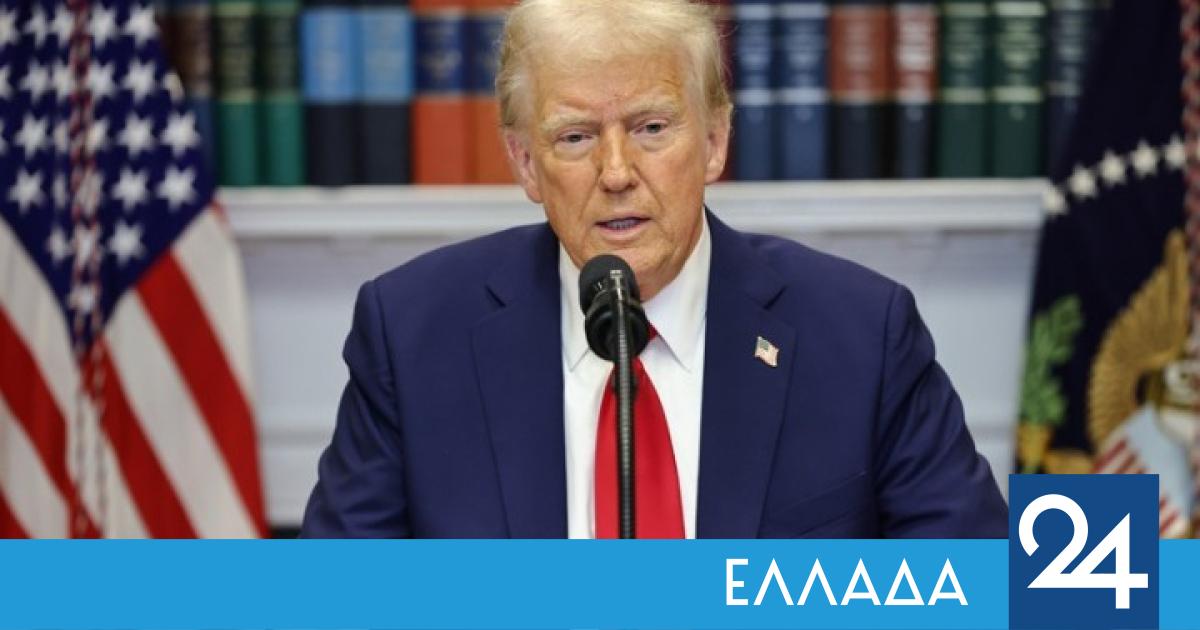
Donald Trump made it known yesterday (Monday) that he had cancelled at the last minute a new attack on Iran that was due to be carried out on him today, then spoke of a “very good chance” of a “deal” being struck between Washington and Tehran.
The US President had never mentioned this plan of attack before yesterday, when he said via Truth Social that he had rescinded the order to resume military operations because “the leaders of Qatar, Saudi Arabia and the United Arab Emirates have “asked him” to do so because they believe a deal is possible.
<p
Speaking to the press, he later assessed that there was a “very good chance” of his government coming to an understanding with that of the Islamic Republic.
“If we can do that without bombing them and dismantling them, I would be very happy,” he assured, calling the indirect negotiations a “very positive” development, but avoiding going into details.
At the same time, he stressed that the US military remains ready to launch an “all-out and wide-ranging attack against Iran at any time if no acceptable (to Washington) agreement is found” with Tehran.
That agreement would guarantee that Iran would not acquire a nuclear arsenal, the Republican billionaire wrote on his platform–even though the country has denied for decades that it harbors such an ambition.
Just the other day, he threatened again to annihilate Iran if talks fail. “For Iran, the clock is ticking,” he asserted, and the Iranians “had better act quickly or there will be nothing left of them,” he added. In early April, he threatened to wipe out Iranian “civilisation in its entirety” before announcing a ceasefire.
Iranian armed forces chief Ali Abdullahi reacted by warning “the US and its allies” against any “error”, both “strategic” and “calculated”. The Iranian military is keeping “its finger on the trigger,” the general added, according to official media.
“Dialogue”
Diplomatically, the Iranian Foreign Ministry said a new proposal had been served on the US, without any clarification on its content.
Since a ceasefire was announced on April 8, after some 40 days of hostilities, a haggling is underway to find a deal to end the war, but the two sides’ positions still seem far apart, especially on the aspect of Iran’s nuclear energy program.
Only one face-to-face meeting of US and Iranian delegations for talks has taken place, on April 11 in the Pakistani capital Islamabad. It has not led to an agreement.
Iran reiterated its own demands, including the release of Iranian resources tied up abroad and the lifting of international sanctions that are strangling the country’s economy.
“Dialogue does not mean surrender,” Iranian President Massoud Pezzekian stressed once again yesterday via X. Iran, he insisted, “will in no way dispense with the legitimate rights of the people and the country.”
Hormuz
According to the FARS news agency, Washington is demanding in particular that Iran maintain no more than one operating nuclear facility and accept the delivery and transfer to the US of its high enriched uranium stockpile.
Washington is demanding that Iran not maintain more than one operating nuclear facility and accept the delivery and transfer to the US of its high enriched uranium stockpile.
Another Iranian news agency, Tasnim, reported that “the Americans have agreed in a new text to a temporary suspension of oil sanctions during the period of the talks.”
Washington, however, has not commented on this information.
Tehran still retains control of the Strait of Hormuz, strategically important for exporting hydrocarbons from the Middle East to the rest of the world, and Washington’s blockade of Iranian ports in retaliation.
The fact that sea transport through the strait has been all but paralysed continues to rattle the global economy, pushing up oil prices. They rose again yesterday, with a barrel of North Sea Brent crude, a benchmark variety on international markets, reaching $112.10 (+2.60%).
Ship traffic in the strait, however, increased last week, returning to levels in line with the average since the war broke out.
Western countries, as well as the EU, reject the scenario of Iran controlling the strait, advocating freedom of navigation.
In the other main theatre of the war, Lebanon, Israeli bombing has killed at least 3,020 people since the start of hostilities with Hezbollah on March 2, according to a newest official casualty count released yesterday, as shelling continues despite the announcement in Washington on Friday of a month-and-a-half extension of a supposed truce.