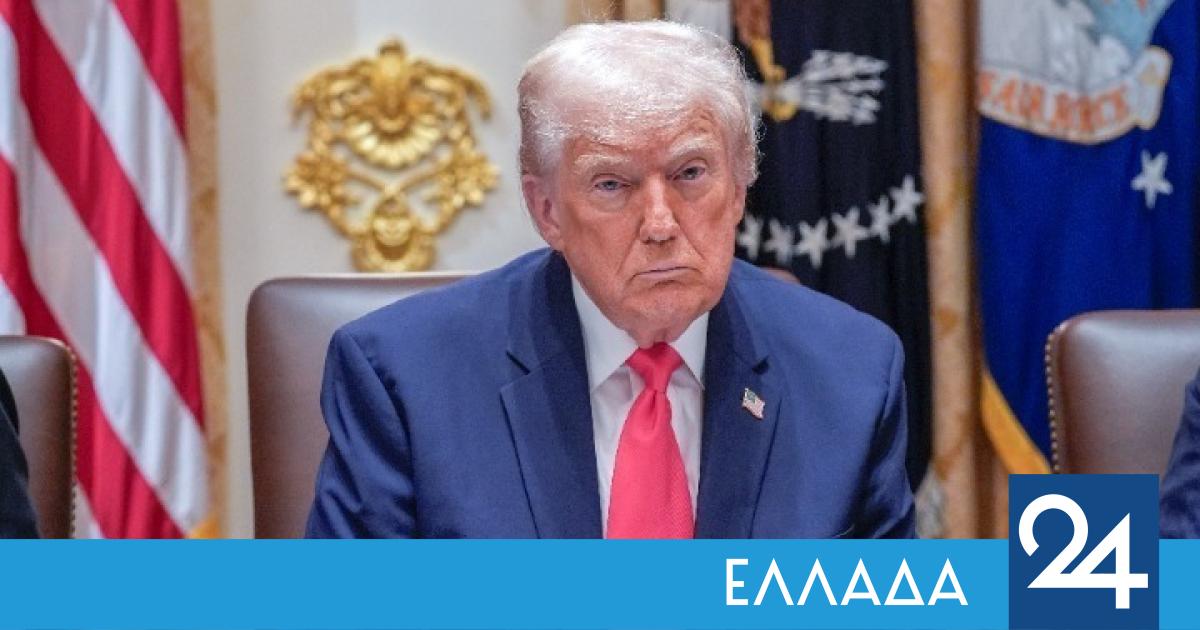
Donald Trump claimed yesterday (Wednesday) that a deal with Iran is “very likely,” enough to trigger a drop in oil prices and an enthusiastic rise in stock market indexes, although–at the same time–he dropped the threat of new U.S. bombing.
“We’ve had very good discussions over the last 24 hours and it’s very likely that we will reach an agreement,” the US president assured reporters in the Oval Office of the White House.
He had already expressed optimism earlier.
“If Iran agrees to deliver what was agreed (…) the already legendary Operation Epic Rage will end,” the Republican billionaire said via Truth Social.
But if the Iranians “do not accept, (new) bombing will begin, and it will be, sadly, of a much higher level and intensity than before,” he asserted, referring to the war launched by US and Israeli armed forces against the Islamic Republic on February 28 and continuing until the declaration of a ceasefire on April 8.
On the other side, Iran’s main negotiator, Parliament Speaker Mohammad Bayr Galibaf, assessed that Washington was seeking Tehran’s “surrender” by implementing a “new strategy” aimed at “destroying the cohesion of the country.”
However, Iran did not slam the door, with Foreign Ministry spokesman Esmail Bagaei noting that Tehran was “still considering the plan and proposal” of the Americans.
Wall Street party
Markets preferred to hold on to the optimistic scenario. Wall Street closed with a net rise, inspired by the euphoric atmosphere in European stock markets. In early trading on Asian stock exchanges, indices were soaring. The price of a barrel of North Sea Brent crude, a benchmark variety of crude, fell nearly 8 percent to $101.27, far from the $126 it had reached days ago.
On Tuesday, Mr. Trump announced that in light of “the tremendous military success we have achieved” and “the great progress made toward a full and final agreement with Iranian representatives”, he had decided that the military operation that had begun just a day earlier to get hundreds of blockaded merchant ships out of the Gulf by crossing the Strait of Hormuz escorted by US warships “will be suspended for a short period of time”, always through his platform.
Tehran has virtually locked down this strait, strategically important for hydrocarbon exports from the Middle East to the rest of the world, since the war began, with thousands killed, the vast majority of them in Iran and Lebanon.
Washington, for its part, is continuing the blockade of Iranian ports that began on April 13, with the Pentagon announcing yesterday that it had “neutralised” an Iranian oil tanker that was trying to break it by hitting its rudder.
Possible sign of developments on the ground: the aircraft carrier Charles De Gaulle approached and took up position in the Gulf region, according to French authorities, as an alliance made up of France and Britain means to guarantee the “security” of the strait if there is an agreement to end the war.
At the UN, the US and its allies, Gulf kingdoms, have drafted a Security Council resolution demanding Tehran end its attacks, reveal where sea mines have been laid and refrain from imposing transit fees in the Strait of Hormuz, according to US Secretary of State Marco Rubio. A vote is expected to take place in the coming days. It remains unknown at this stage what the mood of Russia and China will be.
The start of the US operation in the strait on Monday was marked by exchanges of fire at sea between the Iranians and Americans and attacks attributed to Iran against the UAE, after weeks of comparative calm.
“All scenarios”
Pakistani Prime Minister Shabaz Sharif, whose country hosted the first and so far only–unprecedented–round of direct US-Iran talks on April 11, said yesterday he was “hopeful” that the current “momentum” would lead to “lasting peace.”
<p
In Iran, some make no secret of their dismay.
“The psychological pressure is intense. The whole world is despondent, it has no hope because of this psychological game,” confided Azade, a 43-year-old translator, who spoke by telephone from Tehran to a French Agency reporter in Paris.
In Israel, Prime Minister Benjamin Netanyahu assured that he is ready for “all scenarios” in Iran. His army is also “ready” to resume a “robust” operation, according to its chief Major-General Eyal Zamir.
On the other main front of the war, in Lebanon, Israel’s army launched a bombing campaign against a senior officer of an elite unit of the military arm of the Hezbollah movement in Beirut.
AFP sources in the Iranian-affiliated Shiite movement confirmed that a top member of the Radwan force was killed in the bombing, the first in the Lebanese capital since a ceasefire was announced on April 17.
Lebanon’s health ministry has counted at least 11 dead in Israeli bombardments in the south and east of the country despite a supposed truce imposed by the US.
<p
For its part, the Israeli military said it intercepted a “suspicious air target” heading north from Lebanon, causing alarm sirens to go off overnight.
</html