The Hermetic Dust Transport Observatory (https://meteo.gr/dust/), a new information service for citizens, is activated by the METEO unit of the National Observatory of Athens. As METEO/EAA reports, the frequent and often intense episodes of desert dust transport from Africa to our country, which can occur even in winter, as happened with the significant dust episode of 15 February 2026, led to the activation of this observatory.
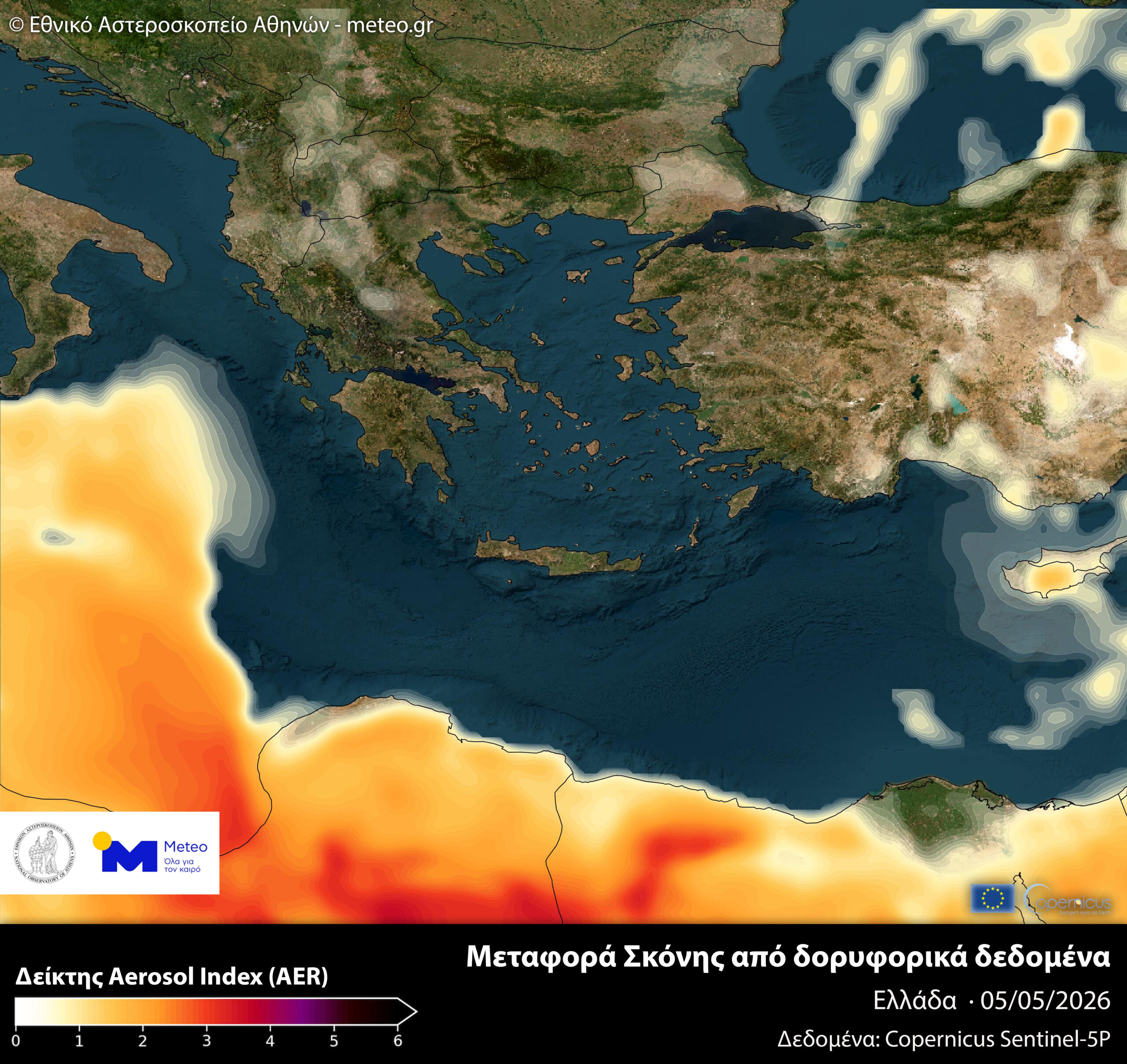
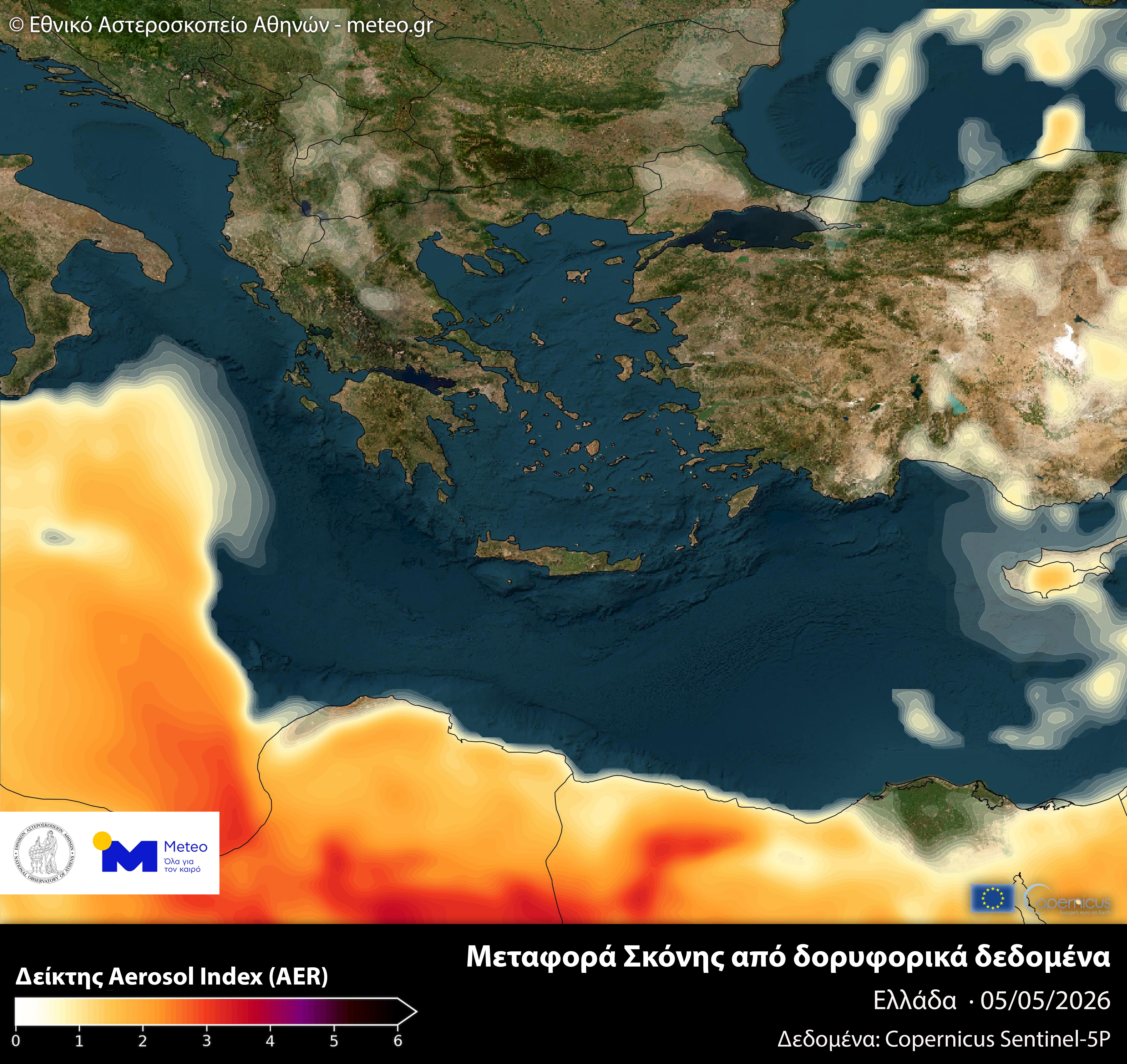
The first part presents a satellite dust transport mapping using data from the Sentinel-5P satellite of the European Copernicus project. Desert dust transport is represented by the Aerosol Index (AER). This is a satellite measurement that indicates an increase in atmospheric concentrations of absorbing particles and is ideal for monitoring the evolution of intense dust episodes. The satellite record is updated after each dust transport episode, when satellite data become available.
The second part includes diagrams of PM10 (particles with a diameter of less than 10 μm) concentrations at two air quality stations in Rethymno (Rethymno-Poli and Adele Rethymno) for the last 48 hours, which are operated by the National Observatory of Athens/meteo.gr. Meteo/EAA stresses that Crete is one of the areas most affected by the dust transport episodes, adding that the station charts are updated every half hour.
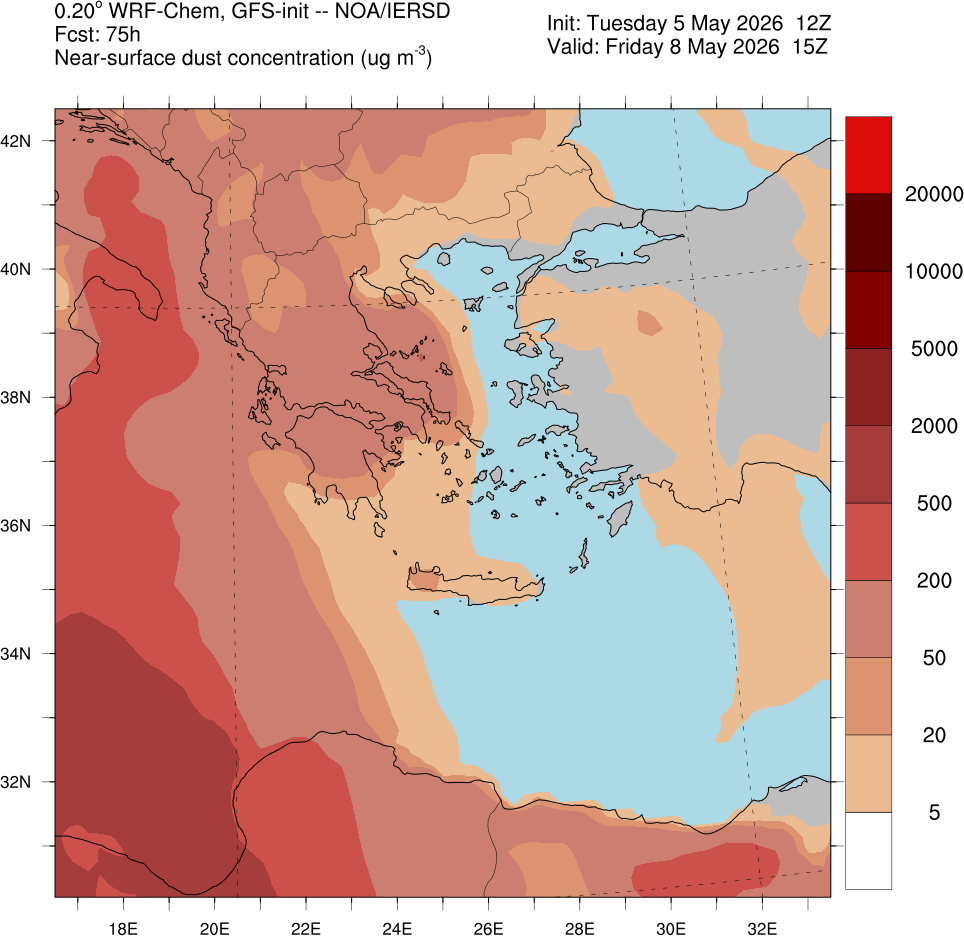
Finally, the third part presents the forecasts of dust concentrations over Greece (Figure 2) for the next four days from the DUST/METEO model of the National Observatory of Athens/meteo.gr which, as METEO/EAA notes, has been operating continuously since 2015, providing highly reliable operational dust transport forecasts. The forecast maps are updated daily with new forecasts from the forecast model.
*Images are attached with the satellite imaging of the desert dust transport over Greece on Tuesday 05 May 2026 and the dust transport forecast from the DUST/METEO model for Friday 08 May 2026 at 18:00.
.