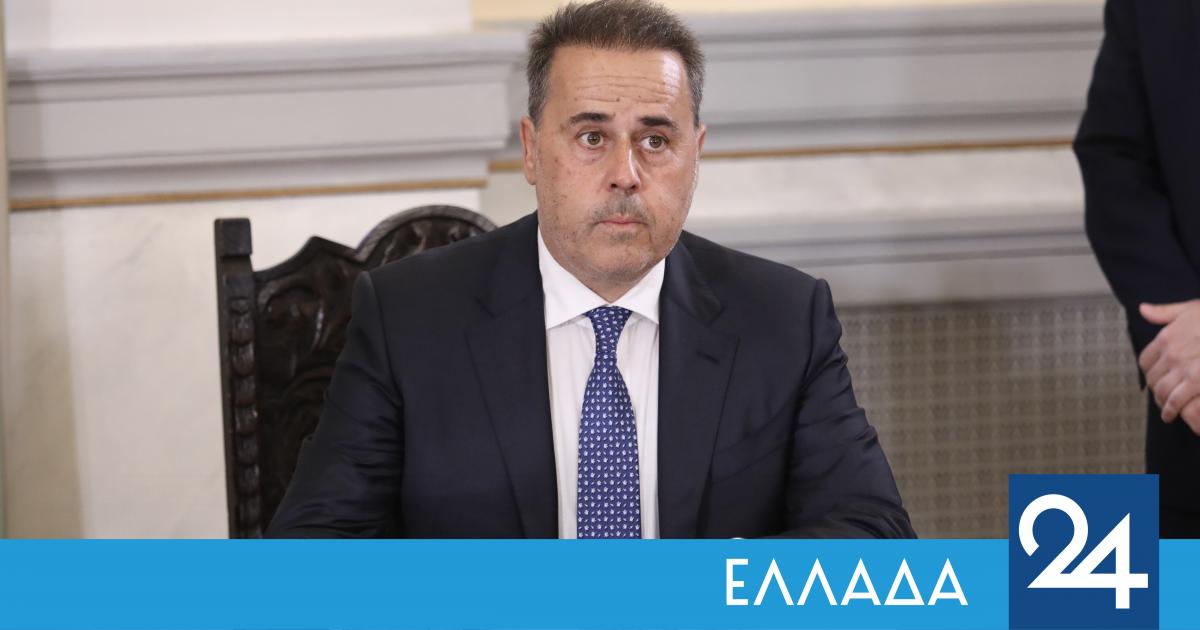
Minister of Environment and Energy Stavros Papastavrou spoke to SKAI radio station about developments in the Middle East, the measures being promoted at European level to control energy costs and yesterday’s EU Energy Council.
When asked about this, Mr. “There are countries that are very reluctant to enter into a discussion on measures now, as they believe that the crisis may soon ease,” he said, adding that there are other member states, including Greece, “that believe that it is necessary to prepare specific, targeted measures and flexibilities, which will be analysed and studied now and will be activated in case the effects of the crisis are prolonged or intensified.”[2] There are countries that are very reluctant to enter into a discussion on measures now, as they believe that the crisis may soon ease,” he said, adding that there are other member states, including Greece, “that believe that it is necessary to prepare specific, targeted measures and flexibilities, which will be analysed and studied now and will be activated in case the effects of the crisis are prolonged or intensified.
According to the minister, it is important “to learn from past mistakes and improve our weaknesses”, explaining that in the previous crisis in 2022 it took Europe about 12 months to react. He stressed that Europe has several measures in its arsenal that “allow to create a dike in the increase of energy costs”. “Also the transition towards a cleaner Europe, a more competitive and sustainable Europe with carbonisation is a direction that must not be stopped,”
Mr. Papastavrou noted that it is very important both for Europe and for our country, “whatever measures are taken and whatever flexibilities are given, not to create an image of fiscal relaxation, such that it would cancel out the strength and stability that we have at the moment as a country.”
Referring to next Thursday’s EU summit, he predicted that there would be a very intense debate: “I think Europe has to show the right reflexes and be able to send a message to both European citizens and businesses that it is here and will be there to help them in their efforts. At this moment Europe has to be ready for its citizens, regardless of whether the measures are implemented and enforced. It has to be something that is prepared in advance, not after the fact.”
The Minister also referred to the package of measures on networks, which was discussed yesterday at the Council of Energy Ministers: “Greece was one of the countries that strongly supported it. There were several countries that were sceptical because of the costs. We still do not have a single European electricity market and this reduces competitiveness and puts a huge burden on the European citizen. The systematic, large differences in wholesale electricity prices between Eastern and Central and Northern Europe are a major challenge and create an energy wall that we need to tear down, building a single electricity market. And this is Greece’s constant position, both when we had double wholesale prices and now, when we are among the 10 countries with the cheapest wholesale prices in Europe, thanks to our diversified mix,”
Talking about the Vertical Corridor, the Minister said that the latest developments “confirm the importance and value for Europe of the Vertical Corridor and the decoupling from Russian gas. The issue was discussed at the EU Energy Council yesterday and Greece asked all Member States to support the decision of the decoupling, which they have unanimously agreed on, and the European Commission to send a clear message of support for the project, clarifying the regulatory ambiguities that exist and formulating a clear, coherent and predictable regulatory framework.”
Finally, asked if the government is planning new measures, Papastavrou said, “That will depend on the crisis. One thing is certain, our fiscal and political stability allows us, within the framework of Europe’s fiscal rules, to have tools and measures to deal with the crisis, and depending on how it develops, the government will be there to help every Greek citizen.”
.