In a city that until recently never slept, the lights are now going out earlier. In multicultural Cairo, a metropolis of contrasts, where the history of the pyramids and the world’s largest archaeological museum coexist with an economy under constant pressure, daily life is changing markedly. Shops that were open until late at night now close from 9pm as energy restrictions and rising costs due to geopolitical developments affect market operations.
In this environment, where the accuracy and volatility of the exchange rate create conditions of constant adjustment, a different narrative is emerging: that of the extroversion of Greek entrepreneurship, which is claiming space in markets with challenges but also significant prospects.
The picture of the local market is described by the Egyptian entrepreneur Mahmood Saad, who is active in the catering sector and works with a Greek brand, which he first met as a visitor to Athens: “The market has changed significantly in recent months. There are energy constraints, resulting in shops closing earlier, while the accuracy and volatility of the exchange rate is affecting both business and consumption. Things are fluid and constantly changing,” he notes, describing how his initial impression as a tourist in Greece evolved into a strategic investment in Cairo.
He points out that the Egyptian market has its own peculiarities: “Consumers differ, even in terms of aesthetics and preferences. However, the partnership works well because there is understanding on the concept side and the necessary adjustments are made,” he says, describing the importance of flexibility in the franchise model.
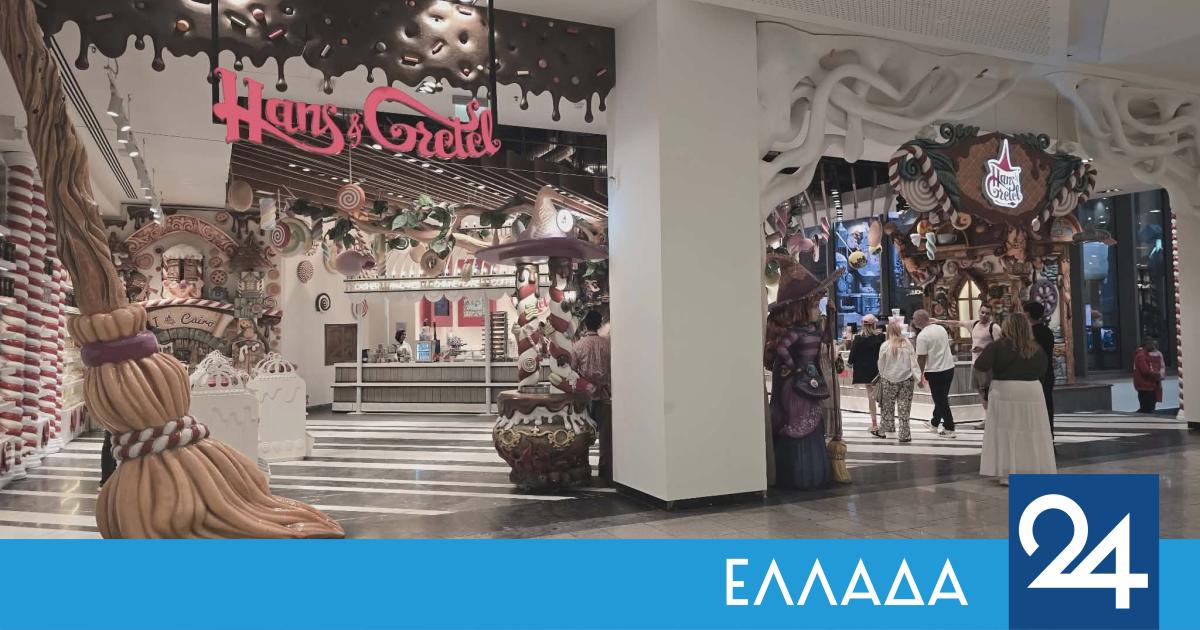
In this context, the expansion of the Greek chain Hans & Gretel in Cairo, which is being implemented through a franchise partnership with Mahmood Saad, is also part of this framework. This model is the company’s key strategy for international growth, allowing entry into new markets through local partners who are familiar with the specificities of each country. This business partnership was recently sealed with the opening of the chain’s fourth store in the Egyptian capital.
Behind the venture is Greek entrepreneur Thanasis Anifantis, the chain’s founder, who has mapped out the brand’s international development strategy, with the franchise model at the forefront. Starting in 2017 from Monastiraki, he created a thematic concept combining sweet, image and experience, which evolved into an international network. Today, the brand has 32 stores in 8 countries – Greece, Bulgaria, Egypt, Cyprus, France, Egypt, Cyprus, Malta, UK, Malta and Turkey – with the entire international presence being developed through franchise partnerships.
This business plan allows for faster growth without negating the challenges. Markets such as the Egyptian market are characterised by high volatility, different consumer patterns and a need to adapt the product and experience. In this environment, collaboration between a central company and a local partner is a critical success factor.
The presence of Greek brands in such markets also serves to enhance the country’s international image in the field of gastronomy and experience. Products and concepts that have been tried and tested in the Greek market are transferred abroad, acquiring a new audience and different dynamics.
The company’s next key step focuses, as Anifantis said, “on the promotion of Greek yoghurt through a new, thematic concept. The aim is to create a specialized network that will act as an “ambassador” of Greek taste in international markets, investing in the global recognition and authenticity of our national product.”
At the same time, the tourism picture in Egypt remains complex. The country continues to attract a significant number of visitors, led by the new Grand Egyptian Museum (GEM) and the Giza pyramids, but according to industry professionals, there is a modest decline in demand. At the same time, there is increased activity at Cairo airport, which is gradually strengthening its role as a regional hub.
In this environment, franchise development is emerging as a flexible model of international expansion for Greek businesses seeking to establish a presence in new markets, turning challenges into growth opportunities. From Monastiraki to Cairo, this journey illustrates how Greek entrepreneurship is attempting to capitalize on a local concept into an international network.