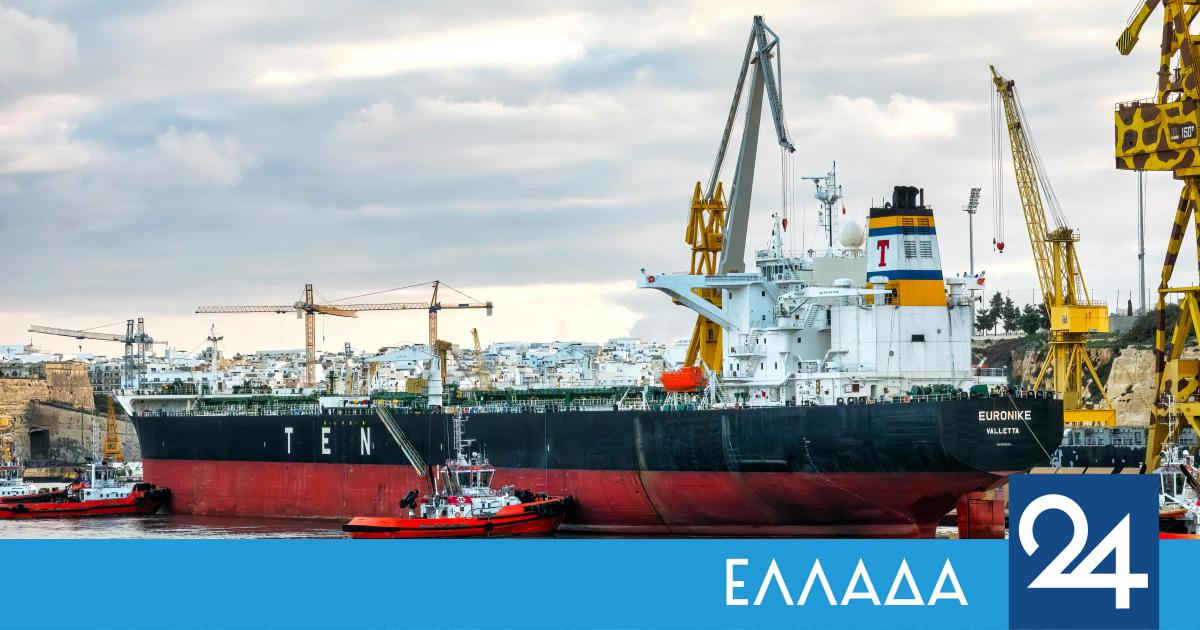
The Economist magazine highlights the increasingly strategic role that Piraeus and Elefsina play in the global competition for control of critical maritime hubs. The region appears to be developing into an area of intense competition between the United States and China as the two powers seek to strengthen their influence over trade flows in the Eastern Mediterranean.
The port of Piraeus has established itself as one of the most important transit hubs in Europe, serving as a key gateway for Asian goods to the European market. With an annual throughput of more than 4 million containers, the majority stake held by China’s COSCO reinforces its geopolitical importance, but also raises concerns among Western governments.
At a short distance, about 30 kilometres to the west, Elefsina is being promoted as an alternative trade hub backed by US interests. The development of port infrastructure there is seen as part of a broader strategy to balance the Chinese presence in Piraeus. At the same time, the picture is completed by Thessaloniki, where there is investment from Russian and Chinese capital, and Alexandroupolis, which has become an important hub for US and NATO forces.
The geographical proximity of Piraeus and Elefsina creates a highly competitive environment in which the economic and strategic interests of major powers clash for control of maritime trade routes. The fact that about 80% of global trade in volume is carried by sea makes ports critical infrastructures for the global economy.
PwC estimates that investment in port infrastructure is expected to exceed $90 billion per year by 2035, a significant increase. However, recent international crises, from pandemics to tensions in strategic passages such as the Straits of Hormuz, have highlighted the vulnerability of supply chains.
China has been expanding its presence aggressively, with stakes in at least 129 ports worldwide and investments exceeding $80 billion. Many of these are located near critical maritime locations, such as the Straits of Malacca and the Suez Canal. Research shows that where there is Chinese port management, bilateral trade with China is growing significantly.
For its part, the United States and its allies are stepping up efforts to curb this influence by investing in alternative infrastructure and strengthening its strategic presence. At the same time, other countries such as India, Saudi Arabia and the United Arab Emirates are also claiming a larger role in the global port network.
However, rapid port development carries risks. Over-investment can lead to low returns and inefficient allocation of resources, while political interference in trade decisions can negatively affect the functioning of markets. Despite the potential benefits of competition, such as better services and lower costs, overcrowding of port facilities can increase operating costs and create unnecessary trade routes.
The conclusion is that, although the “port fight” is intensifying, it is not certain that all stakeholders will benefit. Instead, the landscape is shaping up as a complex web of geo-economic interests where competition can lead to both opportunities and significant challenges.