Diffusion of technology to small and medium-sized enterprises that employ 85% of workers, with the central aim of closing the technological and productivity gap that keeps wages and living standards low in our country, includes the new Reform Plan 2028-2034 put forward by the Government and the OECD
The key finding behind the plan is that, despite improvements in key macroeconomic indicators, the Greek economy still lags behind in labour productivity, which is around 64% of the OECD average.
This, according to the OECD analysis, explains why growth is not passing with the same intensity in wages and living standards, despite the fall in unemployment (from 18% in 2019 to close to 8% today) and the overall improvement in the country’s fiscal and banking picture.
What changes
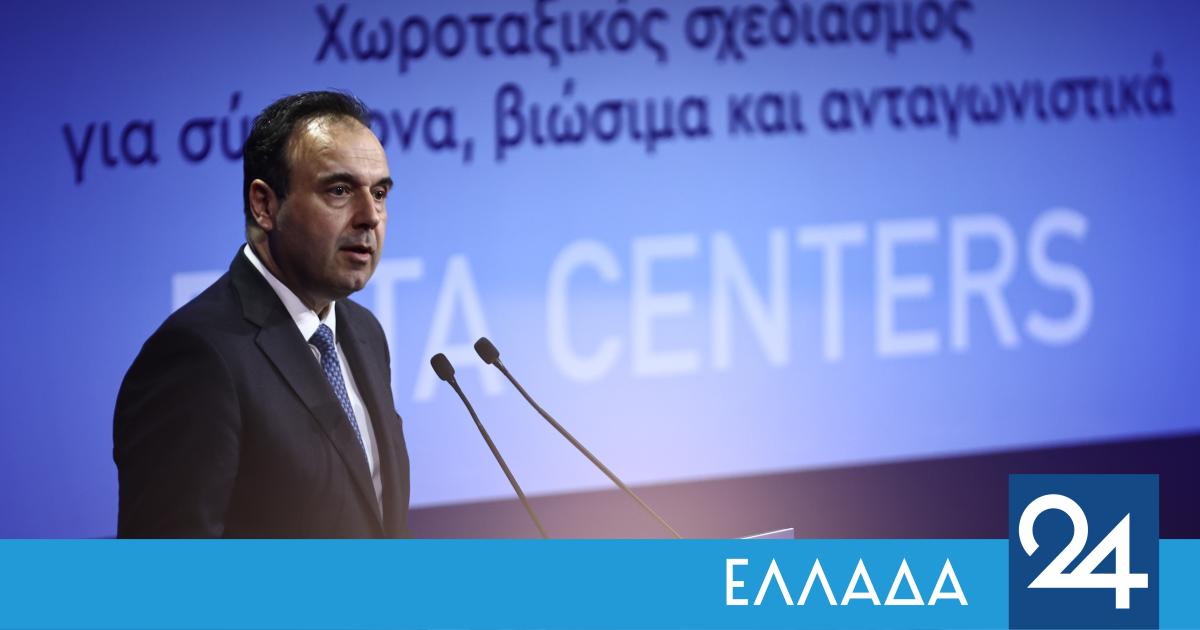
The new package of interventions, presented at the 11th Delphi Economic Forum by Costis Hatzidakis and OECD Secretary General Mathias Corman, is described as the roadmap for the next decade for an economy with more productivity, stronger investment and better incomes.
“So far we have emphasized fiscal seriousness and pro-investment policy. Now we will combine productivity growth with the distribution of wealth and growth in a socially just way,” the Deputy Prime Minister said, announcing cooperation with the OECD, the Bank of Greece and the IOBE on the new plan for economic and social policy making in the country.
“The project”, as Kostis Hatzidakis stressed, “will address the economic and social agenda for the period 2028 – 2034. This is the best way forward. Governments have their own ideological and political philosophy, but best international practices must always be taken into account.”
“Key” οι μικρομεσαίες
At the “heart” of the plan is the diffusion of technology and innovation to SMEs, which account for around 85% of employment, so that best practices, digital tools and more efficient organisational structures can be transferred from a few large companies today to the whole economy in the coming years. The logic of the intervention is that without this diffusion, the economy will continue to show some pockets of high performance, but without widespread productivity improvements and thus no meaningful improvement in incomes for the great mass of workers.
According to the OECD’s analysis, the problem of the Greek economy is not only quantitative but also qualitative: good operating and efficiency practices applied to more organised enterprises are not sufficiently diffused either to small enterprises or to the market as a whole. This is why the Organisation’s focus is on a matrix of interventions that includes, in addition to technology diffusion and efficiency, improving fairness, facilitating access to bank lending for small and medium-sized enterprises, strengthening the framework for intangible investment, addressing demographic pressures, and completing the regulatory framework for digitisation and competitiveness.
New “toolbox”
The goal and the next “bet” for Greece, through the new “toolbox” of measures that will result from this cooperation, is not only to maintain growth, but to transform it into higher productivity that will be passed on to more businesses, increasing overall incomes.
The OECD’s approach directly links reforms to the everyday lives of businesses and workers, seeking not just better indicators, but greater resilience and a stronger wage outlook.
Special attention is also being paid to upgrading the skills of workers, as digital transformation and artificial intelligence are already changing the needs of the labour market. The aim is for productivity growth to come not only from capital and technology, but also from better-trained workers able to use new tools and fit into more efficient production patterns.
New “roadmap” to the Economy
This cooperation comes to fill the gap of the “lost decade” that preceded it for our country. Matthias Corman stressed that these policies should not be confused with a new “austerity programme”, but constitute a package of actions that can deliver tangible results in the real economy, precisely because they aim to increase productivity and improve the living standards of workers. While Kostis Hatzidakis also stressed that cooperation with the OECD does not point to a “new memorandum”, but to a transition from fiscal stabilisation to a growth-oriented upgrading of the economy.
The strategic objectives presented by the Deputy Prime Minister also include a closer link between research and production, the completion of spatial planning, upgrading the skills of the workforce, the mobilisation of the Greek diaspora, the promotion of balanced regional development and the more effective use of European resources.