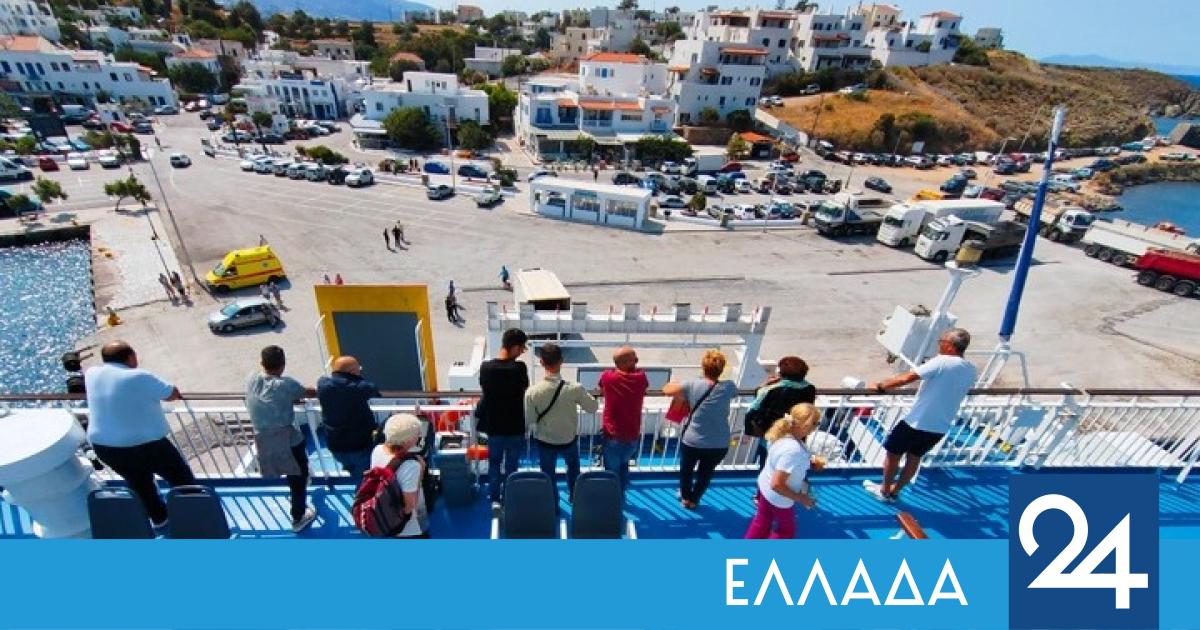
The messages for the current tourist season are optimistic, despite the geopolitical developments, confirming the dynamics of Greece as a modern, competitive and multidimensional destination. According to what the Minister of Tourism recently pointed out in an interview with the APPE-MPA, despite the challenges, Greece maintains a strong position as a safe destination, with its tourism showing resilience and adaptability.
For 2026, the first available data show, according to the tourism minister, that the year has started with a very positive outlook. January saw a spectacular increase in receipts of 58%, compared to the same month in 2025, and 33% in arrivals. In February, as in March, a new increase in traffic from abroad was recorded at Athens, Thessaloniki and other destinations. At the same time, the signals from international markets are encouraging. “It is something we also received at the big international tourism fair in Berlin at the beginning of March, when war had already broken out. New air connections and increased interest in more Greek destinations show that Greece maintains a strong momentum,” Kefalogianni said.
In this context, the strategy of expanding target markets includes both maintaining traditionally strong markets and strengthening the presence in new and emerging markets. “We are placing particular emphasis on the North American markets (USA and Canada), but also on India, with which the direct air connection creates new opportunities. At the same time, we are interested in markets such as South Korea, Japan, Australia and the Middle East. Our strategy is not limited to advertising. It includes co-advertising programmes with airlines and tour operators, participation in major international exhibitions and partnerships with media and networks that influence international public opinion,” the tourism minister said.
‘Jump in tourism revenues
At the same time, tourism revenues in the two months of January-February 2026 exceeded 1 billion euros, according to the Bank of Greece. Specifically, in the January-February 2026 period, travel receipts recorded a 70.7% increase compared to the same period in 2025 and stood at €1,006.7 million. This development is due to the increase of both receipts from residents of EU-27 countries by 74.3%, which amounted to EUR 477.5 million, and receipts from residents of other countries by 70%, which amounted to EUR 516.3 million. More specifically, receipts from residents of the euro area countries amounted to €407.9 million, up by 68.6%, while receipts from residents of EU-27 countries outside the euro area also recorded a significant increase, reaching €69.5 million. In particular, receipts from Germany decreased by 0.8% to €66.6 million, while receipts from France increased by 76.8% to €29.4 million. Receipts from Italy increased by 41.5% to €55.6 million. Among the other countries, receipts from the United Kingdom rose to €173.4 million, while receipts from the United States fell by 13.3% to €92.5 million.
In the January-February 2026 period, inbound travel increased by 38.5% to 2,129.5 thousand travellers, compared to 1,537.5 thousand travellers in the corresponding period in 2025. In particular, travel through airports increased by 19.0%, and that through road border stations by 83.9%. In the period under review, travel from EU-27 countries amounted to 1,106.2 thousand travellers, an increase of 49.1% compared to the corresponding period in 2025, while travel from other countries increased by 28.6% to 1,023.2 thousand travellers. Travel from euro area countries increased by 37.3%, while travel from EU-27 countries outside the euro area increased by 129.5%.In particular, travel from Germany increased by 8.2% to 174.4 thousand travellers, as did travel from France, which increased by 41.5% to 54.8 thousand travellers. Travel from Italy also rose by 3.6%, reaching 83.7 thousand travellers. Among non-EU27 countries, travel from the United Kingdom rose by 56.7% to 164.2 thousand travellers, while that from the USA fell by 9.8% to 98.1 thousand.
Travelers’ desire for getaways
Increased desire for getaways
Geopolitical instability has brought about significant changes in the travel habits of Europeans, who, while maintaining a strong desire for getaways, are now turning to safer destinations, last-minute bookings and tighter financial planning. According to the European Travel Commission (ETC) rolling survey, 82% of Europeans intend to travel in the next six months, with an overwhelming majority of 65% choosing European destinations, while just 9% are planning trips to other continents.
Southern Europe and the Mediterranean remain at the top of the list of preferences, with 59% of respondents planning to visit by September, an increase of 17 percentage points compared to 2025. At the same time, interest in Eastern Europe declines by 6 percentage points. A particularly interesting trend is the search for tranquillity, with 51% now opting for less popular and quieter destinations. The traditionally strong months of May, June and July retain their primacy, with August and September following.
Financially, travellers appear much more restrained. 39% are planning a single trip and a similar 39% are planning two, up 12 percentage points in these categories. In contrast, the intention to take three or more trips fell by 9 percentage points due to the increased cost of living. This financial pressure is also reflected in the budget, as most now plan to spend between €501 and €1,000, a drastic decrease compared to last year’s range of €1,501 to €2,500.
The length of holidays is also shrinking, with 4 to 6 nights now the main choice, displacing the longer stays of 7 to 12 days that dominated last year. In terms of trip purpose, leisure trips are gaining ground over business or family visits. Finally, although air travel remains the main mode of transport, there is an increase in car use, as it offers greater flexibility and better control of travel costs.
Focus on more sustainable travel
85% of travellers of all ages worldwide and 84% of Greeks consider more sustainable travel important or very important. But while younger generations express stronger sustainability intentions, in practice they are taking less action. On the other hand, older age groups are more consistent, adopting more concrete and meaningful sustainable behaviours. This one generational paradox emerges from Booking.com’s 11th Report on travelers’ attitudes and understanding of the social and environmental impact of travel, which was conducted with data from 32,500 travelers in 35 markets worldwide.
Although less than half (47%) of respondents from the Baby Boomer generation (61+) say they want to travel more sustainably in the next 12 months, compared to 60% of Generation X (45-60), 71% of Millennials (29-44) and 75% of Generation Z (18-28), the survey shows that in practice the picture is different. Older age groups seem to more often turn their intentions into actions, proving that actions ultimately carry more weight than words. Of those who plan to travel more sustainably in the coming year, two-thirds of Baby Boomers (67%) say they will reduce overall waste while traveling, compared to 56% of Generation X, 52% of Millennials and less than half of Generation Z (48%).60% of Baby Boomers plan to reduce energy consumption (e.g., by turning off the air conditioning and lights in their room when they are not there), compared to 51% of Generation X, 46% of Millennials and 42% of Generation Z. A 59% of Baby Boomers say they will shop more at local, independent stores during their travels, compared to 50% of Generation X, 44% of Millennials and 42% of Generation Z.
While generations may differ in what they say and do, extreme weather events are increasingly influencing travel choices and trip planning, making them important factors for all age groups. Globally, almost three quarters of travellers (74%) say they take into account the risk of extreme weather events both when choosing a destination and the time of travel, while in Greece the corresponding figure is 66%.At the same time, internationally 68% say that they consciously avoid destinations known for extreme weather phenomena, with the percentage in Greece amounting to 65%, while 55% worldwide say that these phenomena cause stress when booking a trip, a percentage that in Greece is 50%. 55% globally believe that unpredictable weather conditions make it difficult to decide when to travel, compared to 52% in Greece.
Almost a third of travellers worldwide (31%) reported that their travel plans were cancelled or changed in the last twelve months due to extreme weather events or natural disasters (e.g. high temperatures, storms, fires, floods, etc.), while in Greece the corresponding figure is 17%. At the same time, more than half of people worldwide (55%) say that some destinations are now too hot to visit, with the percentage in Greece at 49%, while 52% worldwide say they have removed destinations from their wish list due to news of extreme weather or natural disasters, compared to 43% in Greece.