The new version of the housing programme aspires to substantially change the face of the property market, giving real incentives to landlords to develop homes that have previously remained inactive or in poor condition.
The aim is to activate a significant housing stock and boost supply at a time when housing pressure remains intense.
As long as there are no delays, the new ‘Renovate’ platform is expected to go live in early June, presenting an upgraded format with a much more functional direction. Compared to the previous version, which had limited appeal due to its narrow framework of interventions, the new programme aspires to be a comprehensive housing policy tool that will substantially address housing upgrading needs.
A key change is the structure of the programme. As sources at the Ministry of National Economy and Finance point out, the new “Renovate” does not operate as a single, general package, but is divided into two basic and mandatory parts: renovation and energy upgrading.
Participation in both strands is mandatory, which precludes the choice of individual interventions. The philosophy behind this option is clear: to avoid superficial works and ensure a comprehensive and substantial upgrade of the property.
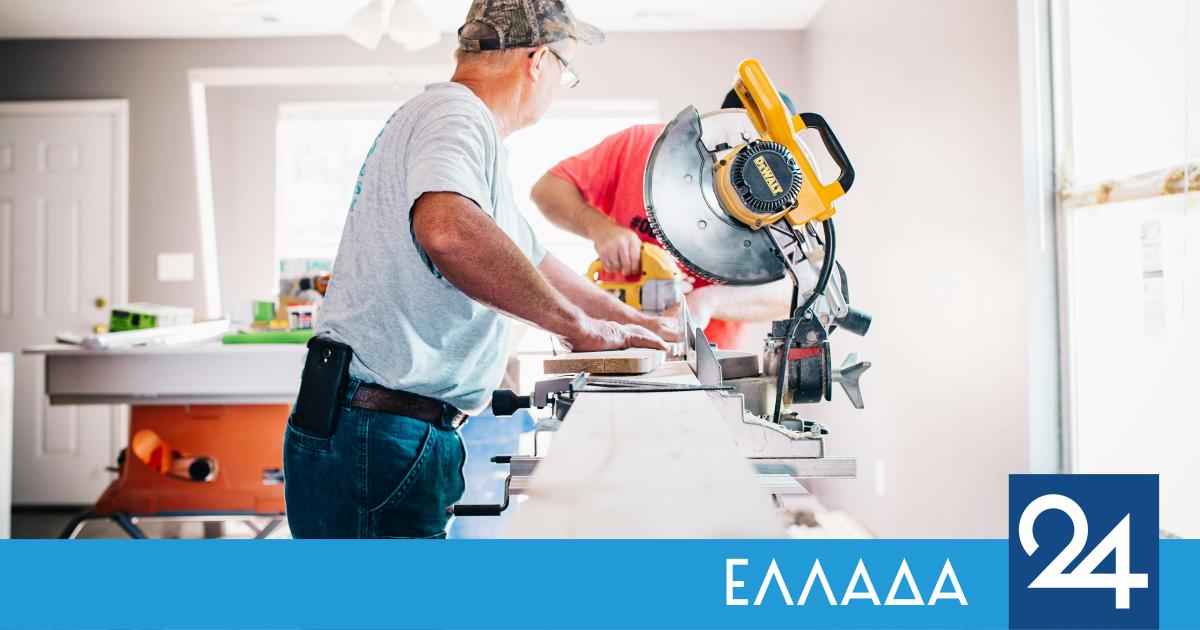
The refurbishment part includes all the critical work required to make a property fully functional. These include interventions such as plumbing and electrical installations, masonry reinforcement, damage repair, flooring replacement, complete bathroom and kitchen renovation, and painting. Essentially, most of the work that has been a deterrent for many owners to date is covered.
The energy upgrade component operates in a complementary way, but with more flexible terms than programmes such as ExoEconomo. It includes interventions such as replacing windows with insulating frames, installing or replacing solar panels or other renewable hot water systems, changing heating and cooling systems (e.g. heat pumps or biomass boilers), and targeted insulation work. A prerequisite is that at least three interventions must be implemented, of which two must be among the basic low-difficulty interventions to ensure energy upgrading without excessive costs.
The distribution of the budget between the two strands is specific: 60%-80% for renovation and 20%-40% for energy upgrading. In this way, the emphasis is placed on basic functionality needs without neglecting energy efficiency.
The split is between 60% and 60% for renovation and the rest for energy efficiency.
Energy upgrade
.
A prerequisite is also the energy improvement of the property. After completion of the works, the property must be upgraded at least one energy class (from the lowest, C to H), which is certified through an Energy Performance Certificate (EPC) before and after the interventions.
In terms of funding, the programme appears significantly enhanced. The total budget reaches €500 million, targeting the renovation of 15,000 to 20,000 homes, mainly older apartments from the 1980s and 1990s. The subsidy is calculated per square metre, with a maximum of €300/sq m, and can reach up to €36,000 per house.
The basic subsidy rate is 80%, with the possibility of an increase. An additional 5% is foreseen for properties in island and mountainous areas and another 5% for vulnerable social groups, such as third-generation families, large families and people with disabilities. These increases can be combined, bringing the subsidy up to 90%, which significantly limits the owner’s contribution to the cost.
The scheme is aimed at both occupied and unoccupied homes. In the case of closed properties, the owner is required to occupy them after renovation or make them available for long-term rental for at least five years. A similar obligation applies to owner-occupied properties.
A particularly important is the ban on using renovated properties for short-term Airbnb-style rentals for five years, with the aim of boosting the long-term rental market.
Income criteria
.
The income thresholds are extended: up to €25,000 for single people and up to €35,000 for married people without children, with an additional €5,000 for each child. There are special arrangements for single-parent families, while the criteria relate to total family income, broadening the base of beneficiaries.
In addition, there is no restriction on the number of applications per owner or age limit, which boosts participation and helps increase the supply of housing.
The need for such interventions is evident as housing costs remain high. Increases in the prices of building materials such as steel, iron, aluminium and timber, coupled with increased energy costs, are putting a strain on both construction and sales and rental prices.
Eurostat figures reflect the pressure, with Greece remaining at the top of Europe in terms of households spending more than 40% of their income on housing. Despite a relative deceleration compared to the crisis years, the real burden continues to rise in terms of purchasing power.