The Easter customs in regions of Aitoloakarnania offer residents and visitors a special experience of deep devotion, which combines tradition, history and the natural landscape.
The special ritual in the Venetian harbour of Nafpaktos on Good Friday evening, the impressive and explosive bronze war at the same time in the centre of Agrinio, the custom “At the icons of St. Thanasis” on Easter Sunday in Evinochori of Messolonghi and the “Donkey” at the Ascension of Thermos on Easter Monday, are some of the customs that are being revived.
St. Nafpaktos
St. Nafpaktos
In recent years Nafpaktos has emerged as a special and popular destination for the Easter holidays.
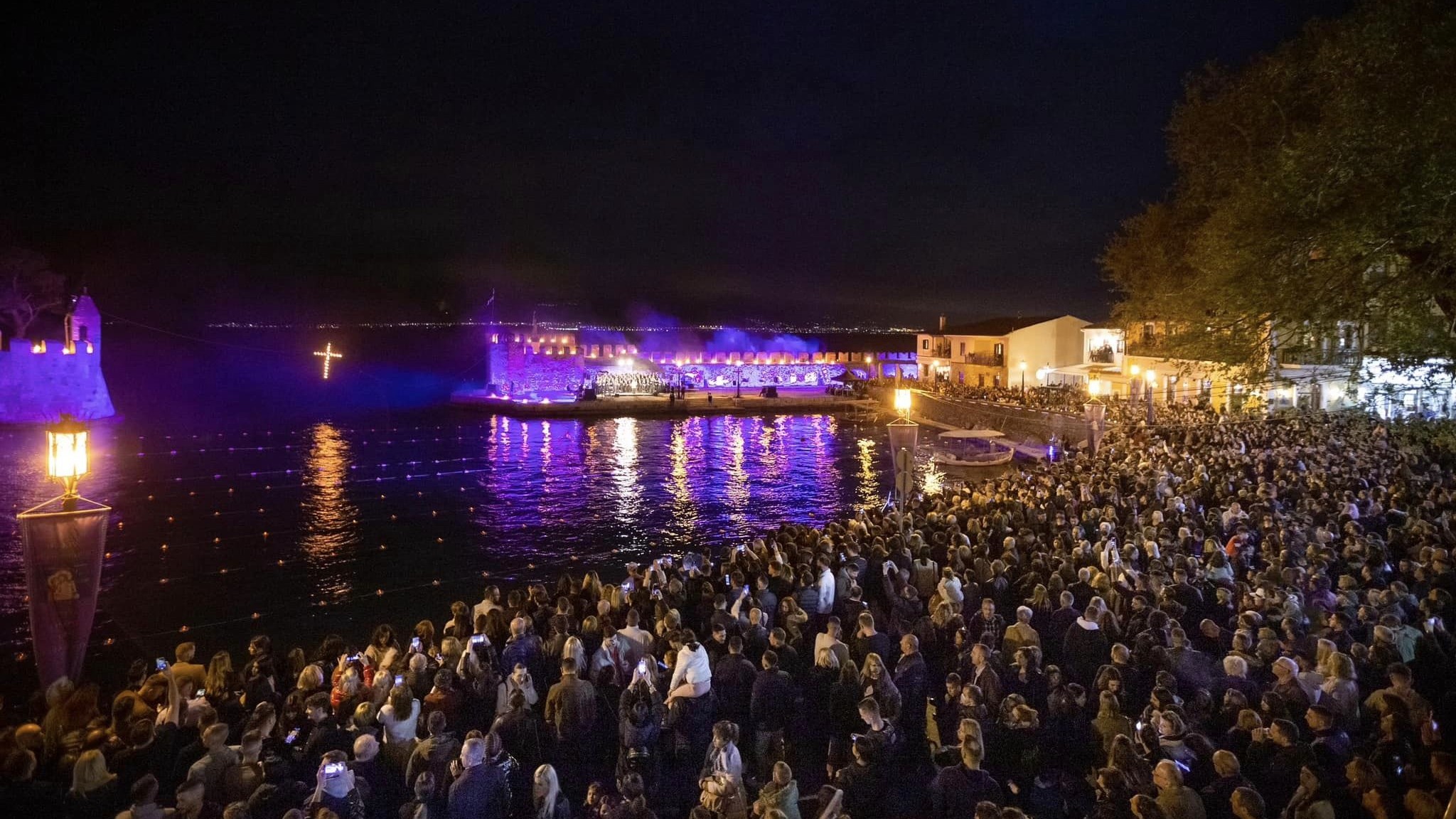
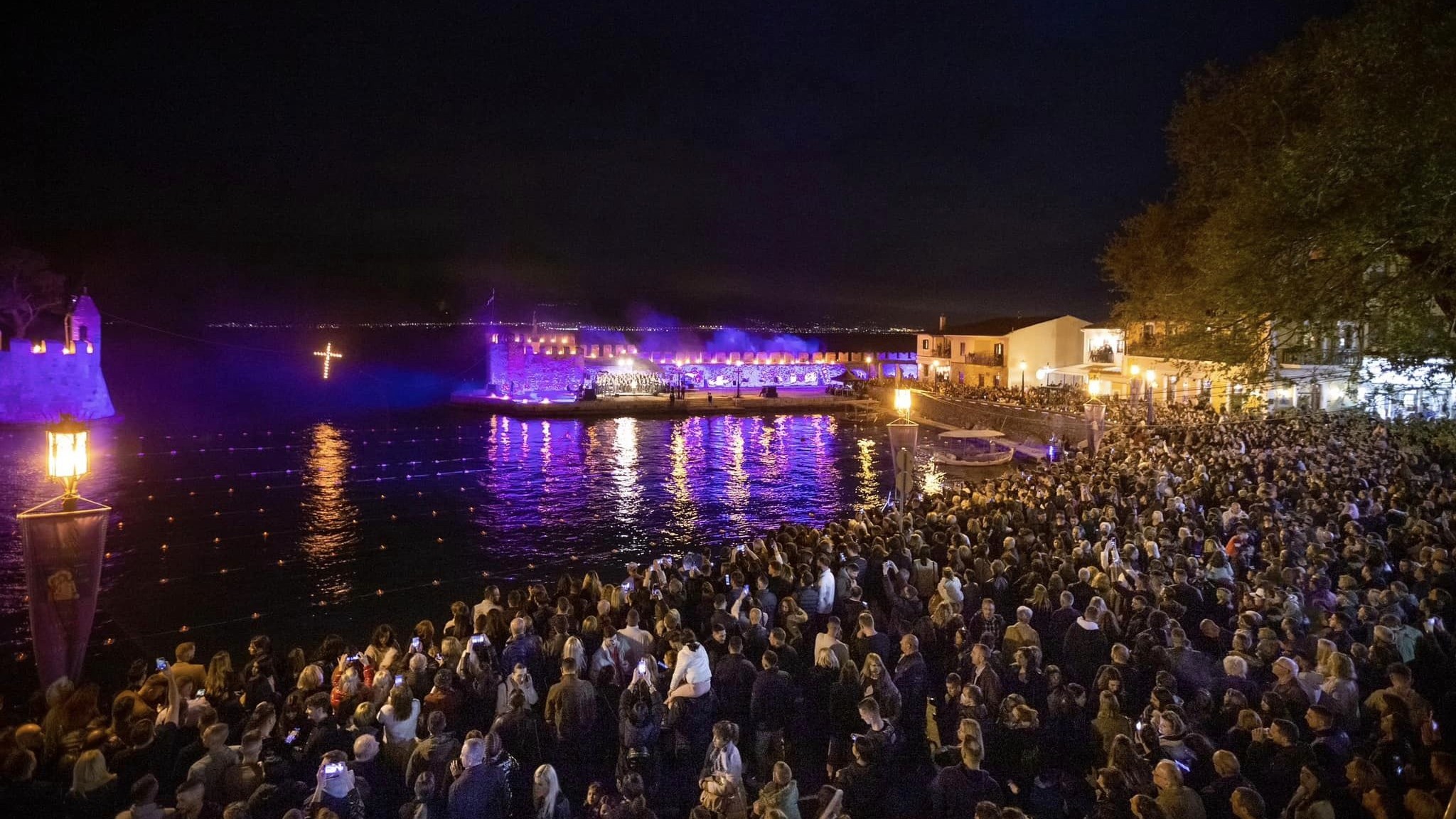
On Good Friday evening, the Venetian Harbour is transformed into a scene of rare beauty and emotion. The dozens of lighted torches on the battlements of the walls and the flaming cross at the entrance to the harbour create a special scene where tradition meets the thrill of divine drama.
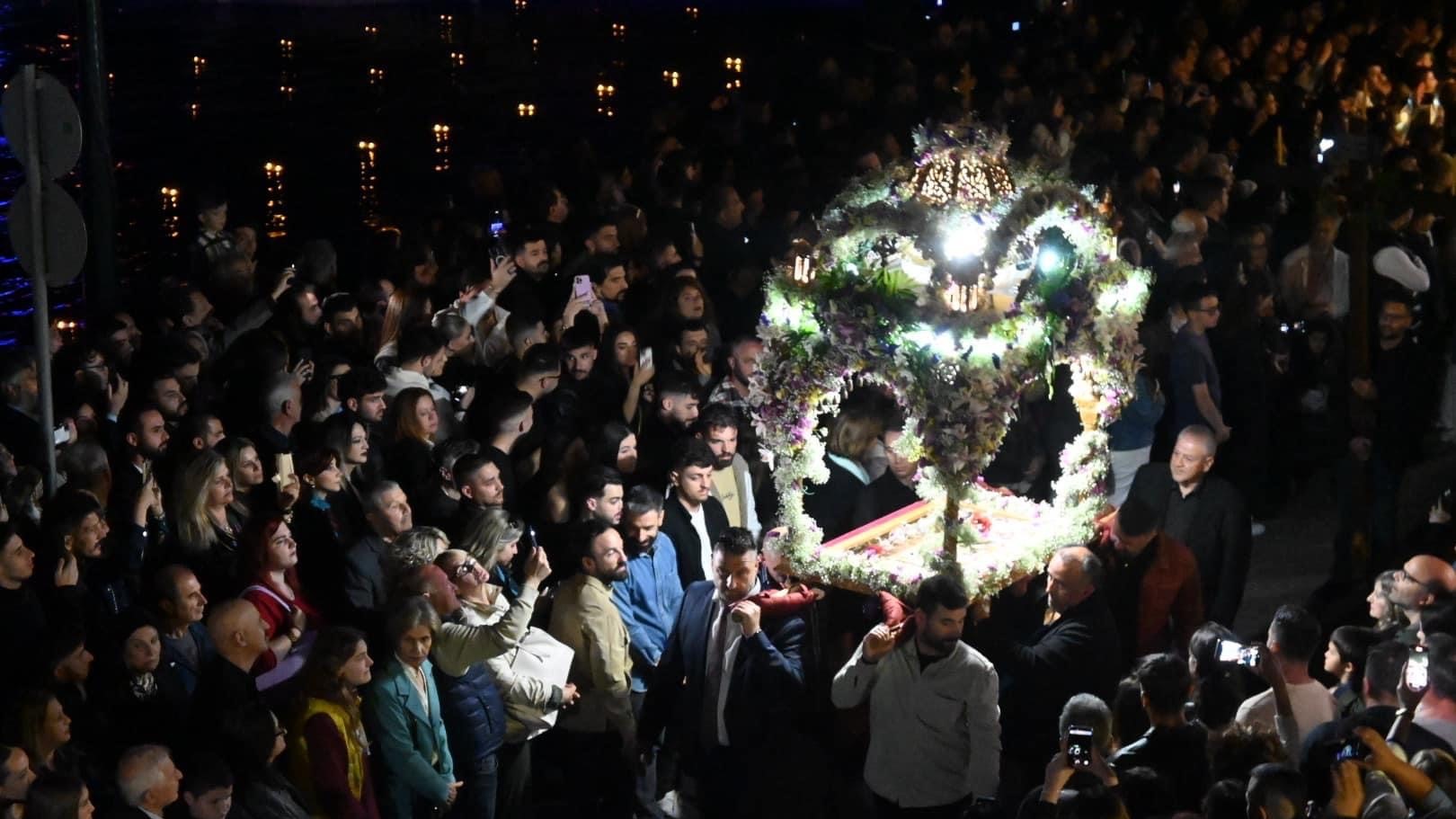
Earlier, the epitaphs of the two central parishes, the Metropolitan Church of St. Demetrios and the Church of Agia Paraskevi, meet, forming a single procession and then head to the Venetian harbour. The lights go out, the people are silent, while the mournful sounds of the parish bells are accompanied by the “Papacharalampeio” municipal philharmonic orchestra of Nafpaktos.
Before the arrival of the procession at the Venetian harbor, the mixed choir of Nafpaktos performs the popular oratorio “Hymns of Angels in Rhythms of Men” by Stavros Kouyoumtzi, with lyrics by Dinos Christianopoulos and then performs the Good Friday Prayers of Praise, under the direction of the conductor Eleni Papadopoulou-Aravantinou. This year, the soloist tenor Antonis Koroneos, the musicians Elias Kaloudis and Giorgos Konis, as well as the Nafpaktos Children’s and Youth Choir are expected to participate, while the actress Filareti Komninou will recite.
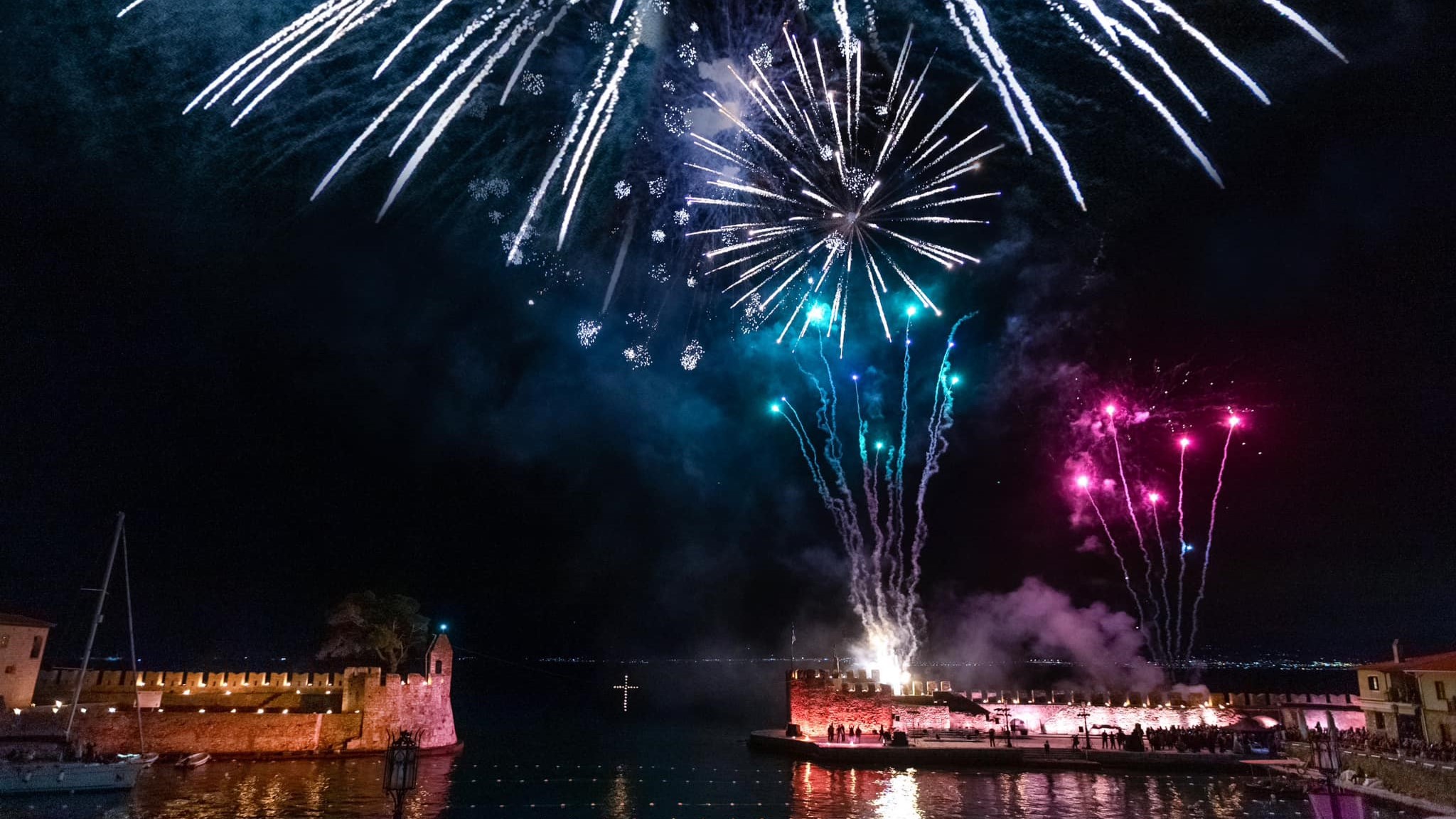
With the arrival of the procession, a joint prayer of the two parishes is performed by the Metropolitan of Nafpaktos and Agios Vlasios, Ierotheos, while the evening culminates with dozens of fireworks lighting up the sky, heralding the joyful message of the Resurrection. The custom, which attracts a large number of visitors, began in the 1950s, when the fishermen of the area began to place lit torches on the port’s warships, while over the years, the custom has been embraced by the local community and the Municipality of Nafpaktia.
In Agrinio
In Agrinio
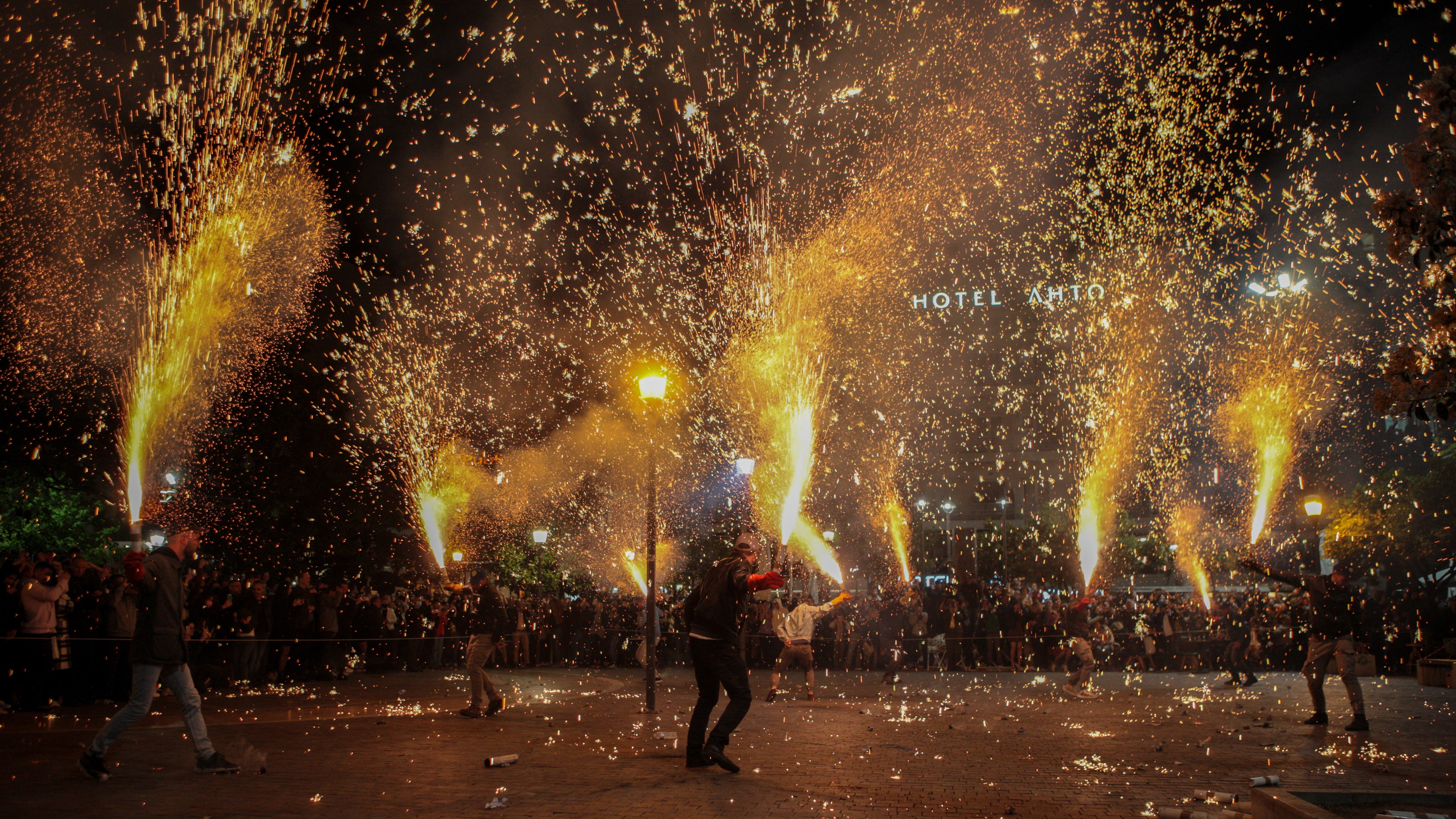
At the same time, the custom of the copper war is revived in the city of Agrinio.
Specifically, when the procession of the Epitaph of each parish is completed, the “chalcones” gather in Republic Square to participate in the bronze war.
The preparation of the halacha starts at least two months before Easter. Halberds are essentially improvised explosive structures, which consist of a large cylinder filled with a mixture of gunpowder and a wick at the end. During the preparation, the halberdiers look for the right powder mixture, which is tested beforehand to ensure it is safe.
As far as the history of the custom is concerned, it dates back to the years of the Turkish occupation, when the people of Agrinio lit the halcones during the procession of the Epitaph in order to drive away the Turks. However, they continued to make them even after the liberation of the country.
In Evinochori
In Evinochori
In Evinochori, Messolonghi, the custom of “At the icons of St. Thanasis” is revived on Easter Sunday.
In particular, after the Liturgy of Love at St. Athanasius, the procession with all the icons of the Saint follows.
This custom has its roots in the late 1880s, when an epidemic of typhus had hit the area. At that time, the residents of Evinochori held a procession with all the icons of St. Athanasius, praying that the epidemic would stop.
In the Ascension of Thermos
In the Ascension of Thermos
On Easter Monday in the square of the village of Analipsi village of the Municipality of Thermos, men, women and children dance and sing “Gaitanaki”, without the accompaniment of musical instruments.
This is a dance event, where the resurrection message of Love is sent through the “knitting” and “unknotting” of the hands, from which the dance takes its name. In fact, the older dancers are at the center of the dance, as is the “master of ceremonies,” who gives commands for the dancers’ movements.
The “Donkey” is danced in two parallel circles, with the men in the outer circle and the women in the inner circle.
When the “Donkey” is completed, a feast begins immediately afterwards, with traditional songs and dances.