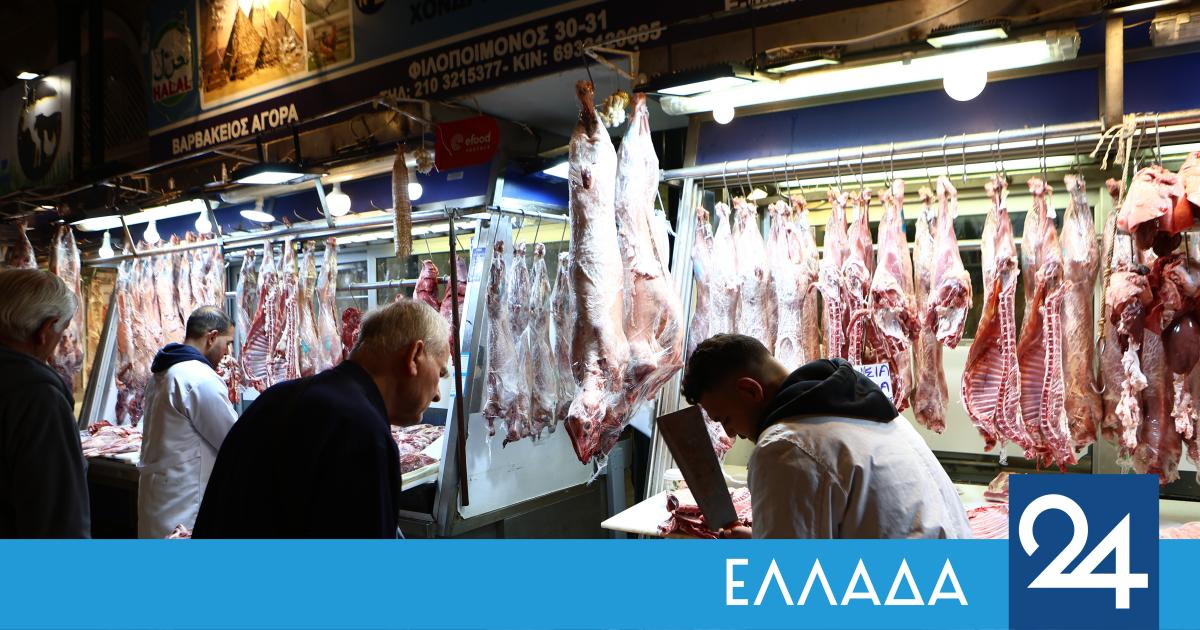
More than 1,800 inspections were carried out by the General Directorate of Food and the General Directorate of Veterinary Medicine of the Ministry of Rural Development and Food, in cooperation with ELGO-DIMITRA and the Directorates of Agricultural Economy and Veterinary Medicine (DAK) during the first quarter of 2026 in view of the Easter season.
The controls concern the food market as a whole during the period of increased demand at Easter, with particular emphasis on products of animal origin, especially meat, where increased vigilance is required to ensure traceability, correct labelling of origin and the prevention of localisation.
According to the announcement by the Ministry of Agriculture, the results of the checks showed 223 non-compliances, while the specialised checks by ELGO-DIMITRA found 36 infringements. In total, 259 cases of non-compliance and infringements were recorded, while 120 administrative sanctions have already been imposed, which reflects both the intensity and effectiveness of the control mechanism.
For its part, ELGO-DIMITRA, in close cooperation with the DAKOs of the Regional Units, carried out targeted and unannounced checks in slaughterhouses, standardization units, storage areas, traders and retail outlets, focusing on the cross-checking of data declared in the ARTEMIS application, compliance with the obligations of businesses and full traceability at all stages of the supply chain.
As stated in the same announcement, in the last period alone, from the end of March to the first days of April, more than 430 checks were carried out.
In the same context, the Directorate of Veterinary Public Health of the Ministry of Veterinary Affairs systematically monitors the movement of live animals from other European Union member states to our country through the electronic system TRACES NT, in order to ensure full traceability to the final point of marketing of carcasses.
For the period from 26 March to 6 April 2026, a total of 33 intra-Community consignments of live animals were recorded from France, Spain, Slovakia and Austria to different parts of the country. Of these, 31 consignments concerned animals for further preservation, which were mainly destined to the Regional Units of Larissa, Aitoloakarnania, Achaia and Magnesia, and, to a lesser extent, to Imathia, Ioannina, Karditsa, Kilkis, Serres and Fthiotida.
The remaining 2 consignments concerned live animals for immediate slaughter and came from Slovakia, destined for the Regional Units of Corinthia and Larissa. For these consignments the foreseen traceability procedure is being followed, with the transmission of the relevant data to ELGO-DIMITRA for further action.
Finally, the veterinary creameries in slaughterhouses throughout the country are carrying out daily increased health checks on the receipt and slaughter of animals, on the health labelling of carcasses and slaughterhouse by-products, as well as on the proper management of animal by-products, in accordance with the instructions of the Directorate of Veterinary Public Health.