The Single Food Control Authority has released advice to consumers on safe Easter table. The statement said that when preparing festive tables, it is important for consumers to ensure that meals are safe, minimising the risk of foodborne illness and food waste. Here are some useful tips:
-Supply food only from official and therefore controlled outlets.
-We pay attention to the cleanliness of the equipment and the general area of the store we choose to buy food from.
-We consult the package markings on pre-packaged food. The label provides us with useful information, such as the product’s minimum shelf life date, proper storage conditions, and nutritional information.
-When we buy meat, we make sure it is placed in refrigerators or refrigerated display cases that work.
– We place foods that we buy raw and need cooking (e.g. meat, meat preparations) in different bags from those that are ready-to-eat (e.g. salads) to avoid possible cross-contamination. We buy products that need to be chilled or frozen last, so that we can place them in our home refrigerator as soon as possible.
– We make sure food is properly stored in the cupboards, fridge or freezer so that it is kept in optimal condition until we use it.
– Watch the temperatures! Make sure to put perishable foods in the fridge as soon as possible (for example meat, milk, cheese) after purchase. We check that our refrigerator is working properly. We keep cooked food warm (above 60°C) before serving. Do not leave cooked food at room temperature for more than 2 hours.
-Prepare meat for cooking by following good food hygiene practices to avoid contamination of cooked meat with raw food and ensure cleanliness of surfaces.
– Cook food at safe temperatures and for as long as necessary. Additionally, we can use a food thermometer to make sure all meats are cooked to the recommended safe internal temperatures to kill harmful bacteria.
– If we plan to hold a dinner party, we remember to ask the attendees if they suffer from any food allergies so that we can be careful about the ingredients we use or warn them not to eat any of the food. If anyone feels unwell or has an allergic reaction after eating any food, they should seek medical attention immediately. Allergens, which have been identified by Annex II of Regulation 1169/2011, must be clearly indicated on pre-packaged foods.
Practical tips for the Easter period
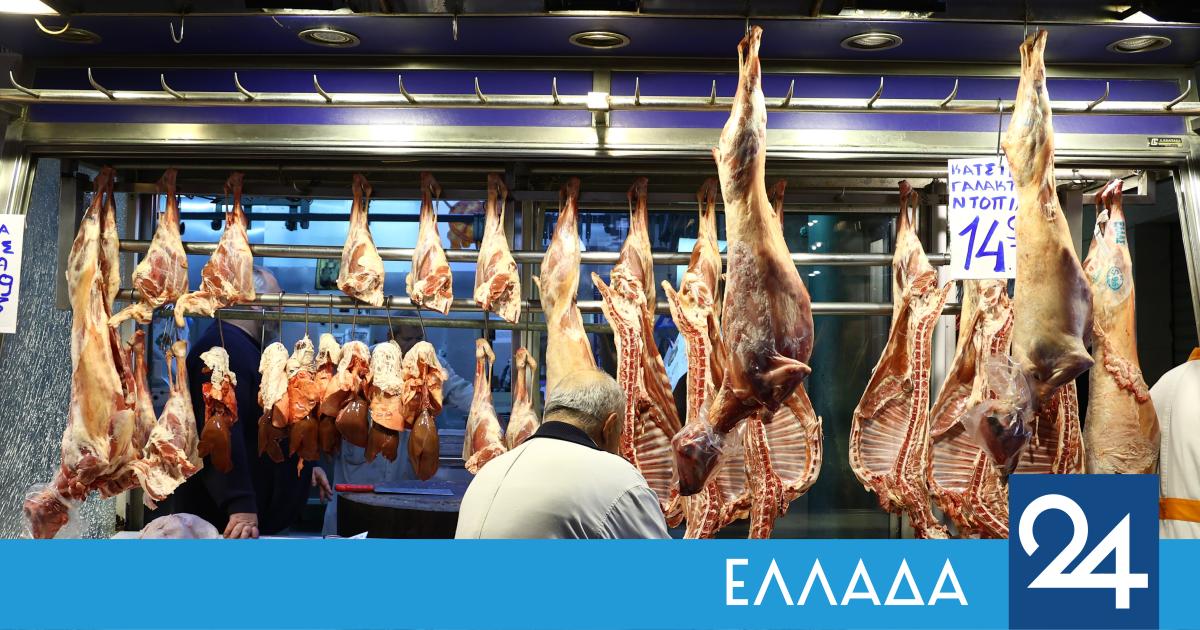
For buying lambs, goats – the so-called lambs: Lamb and goat are often the centrepiece of the Greek Easter meal. If you buy a whole carcass or a half of a carcass, make sure that there is an egg-shaped stamp indicating that the required meat inspection has been carried out. In particular, there are three categories of compulsory stamps:
– Carcasses slaughtered in our country and reared in Greece or in an EU Member State have a “bright blue” (turquoise) health stamp, with the veterinary approval code number of the slaughterhouse in the centre and the initials GR and the EU insignia around the centre.
– Carcasses slaughtered in other EU Member States and transported to our country have an approval stamp in the colour chosen by each EU Member State and the characteristics (slaughterhouse approval code number, country and EU insignia) applicable in the country of slaughter.
– Carcasses slaughtered in other EU Member States and transported to our country have an approval stamp in the colour chosen by each EU Member State and the characteristics (slaughterhouse approval code number, country and EU insignia) applicable in the country of slaughter.
– Carcasses slaughtered in third countries and imported into our country have a brown-coloured health stamp and the details of the country of origin. 3 It should be noted that especially carcasses from animals born, bred and slaughtered in Greece, i.e. animals originating in Greece, bear an additional stamp with the indication “GREECE”, which is in the shape of a rectangular parallelogram with the indication “GREECE” in capital letters and in the colour “bright cyan” i.e. turquoise.
For viscera and meat, we take care to keep them refrigerated in protected areas (e.g. refrigerated display cabinets). When selecting frozen viscera, we should look at the date of freezing and the date the product was consumed (e.g., labeled: “READ BY”, “READ BY”).
-If marinating the lamb/lamb, keep it in the refrigerator until cooked.
– Cooking times: lamb must be cooked to an internal temperature of at least 63°C to kill potential pathogens. The cockerel must reach an internal temperature of at least 71°C, which is vital to prevent foodborne illness.
The chicken must be cooked to an internal temperature of at least 71°C, which is vital to prevent foodborne illness.
-Cooked goat and sheep meat can be kept in the refrigerator for up to 3-4 days.
-The cracking of dyed eggs is a typical Easter custom, and we often use them as raw materials for desserts and other dishes. Handling them properly protects us from contamination by salmonella, a bacterium that causes foodborne illnesses.
-Check the prescribed indications on egg packaging, such as the quality category, weight and best-before date.
– We do not wash eggs before storing them.
– We do not wash eggs before storing them.
– For their good preservation, we keep fresh eggs in a cool place or in the refrigerator.
–
– Store boiled eggs in the refrigerator within 2 hours of preparation and eat them within a week at the latest. Don’t forget to put them in a separate place from the fresh ones!
– To dye eggs, buy only approved dyes and carefully follow the instructions on the packaging. Only dye eggs that have not broken during boiling.