The Greek defence industry is entering a phase of intensifying investments and expanding international cooperation.
Domestic companies are seeking increased participation in armament programmes and are strengthening their position in European and international value chains.
The total mobilisation of resources in the sector is estimated to exceed €10 billion over a decade, reflecting both increased defence needs and the strategic choice to strengthen the domestic production base.
.
A significant part of the investment is directed towards infrastructure, technological modernisation and development of industrial synergies, with the aim of increasing domestic value added.
.
Central role of shipyards
The shipyards play a central role in this process, and they are dynamically returning to the centre of the planning process. The Elefsina Shipyards are undergoing a restructuring and relaunch phase, with investment plans aimed at their full reopening and the undertaking of new projects. At the same time, following the change of ownership, the Skaramanga Shipyards are preparing for the development of their infrastructure in the context of major shipbuilding and defence projects. Total capital mobilisation in the shipbuilding sector is estimated to exceed €500 million in the coming years.
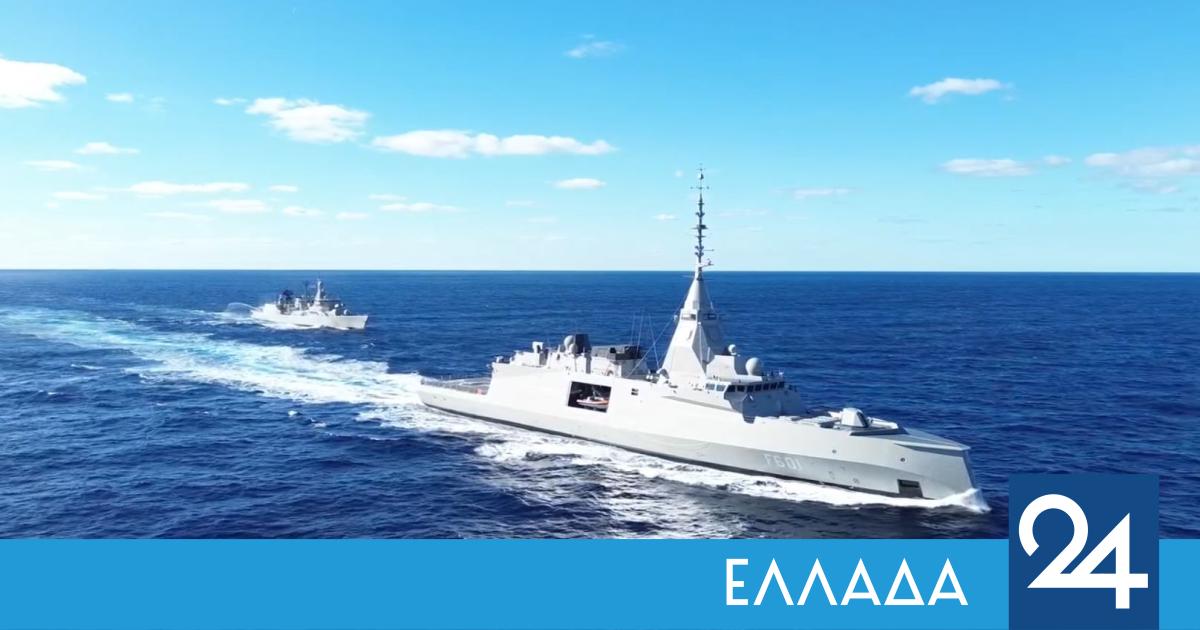
The activity of Salamis Shipyards, which is actively involved in the FDI HN (Kimon class) frigate programme, with a budget of more than €3 billion, is of particular importance.
The shipyard’s activity is of particular importance.
.
Their participation includes the construction of individual parts of the ships, making them the first shipyard outside France to join the production process of this programme. At the same time, through support agreements, they are also expected to have a role in the maintenance of the ships over time, reinforcing the long-term involvement of Greek industry.
More than 60 Greek companies are participating in the Belharra frigate programme
.
The presence of the Naval Group, which has developed a wide network of partnerships in Greece, is crucial in shaping synergies. More than 60 Greek companies are participating in the frigate programme, with more than 120 individual contracts, covering a wide range of activities, from metal fabrication to specialised services and technological applications. The establishment of Naval Group Hellas strengthens the company’s permanent presence in the country and acts as a hub for the coordination of its activities.
An important aspect of the developments is also the strengthening of investments from the private sector. The case of METLEN, which through M Technologies is implementing an extensive investment programme in Volos, is typical. The programme involves the development of four new industrial units, which will be added to the existing ones, creating an integrated industrial complex of six factories by the end of 2026.
According to market sources, the first two plants are expected to be completed by the summer, while the remaining two are expected to be completed by the end of 2026. The total investment plan (capex) is estimated at between EUR150 million and EUR180 million and includes investments in infrastructure, research and development (R&D) and capacity enhancement. From 2027, the increased capacity is expected to allow the company to meet the demand created by new international partnerships, while strengthening Greece’s position in European defence production chains. In the medium term, the investment is estimated to lead to an increase in operating profitability (EBITDA) in the range of EUR 130 to 170 million.
.
METLEN’s cooperation with the Naval Group, through a memorandum of understanding for projects involving frigates and submarines, further enhances the prospects for the integration of Greek industry in international programmes and creates conditions for export activity.
In the aviation sector, the Hellenic Aerospace Industry maintains a key role in the F-16 upgrade programme to Viper version, while it also participates in the support of the Rafale, enhancing the country’s participation in high-tech projects. At the same time, partnerships with international groups such as Lockheed Martin contribute to the transfer of know-how.
At the same time, Greek high-tech companies, such as THEON, are strengthening their international presence in the field of optoelectronics and night vision systems, with an export orientation. At the same time, smaller companies and start-ups are active in areas such as unmanned systems, cyber defence and digital systems, reinforcing the sector’s diversification.
It is also important to connect the industry with the academic and research community through partnerships with universities and research institutes, focusing on areas such as naval systems, advanced materials and digital applications. These partnerships contribute to the transfer of know-how and the development of innovative solutions.
.
Overall, the strengthening of investments, the reactivation of shipyards and the development of partnerships with international groups are shaping a new landscape for the Greek defence industry. These developments highlight the gradual transition from a model of limited participation to a more active and extroverted production system, aiming to increase domestic value added and strengthen the country’s competitiveness.