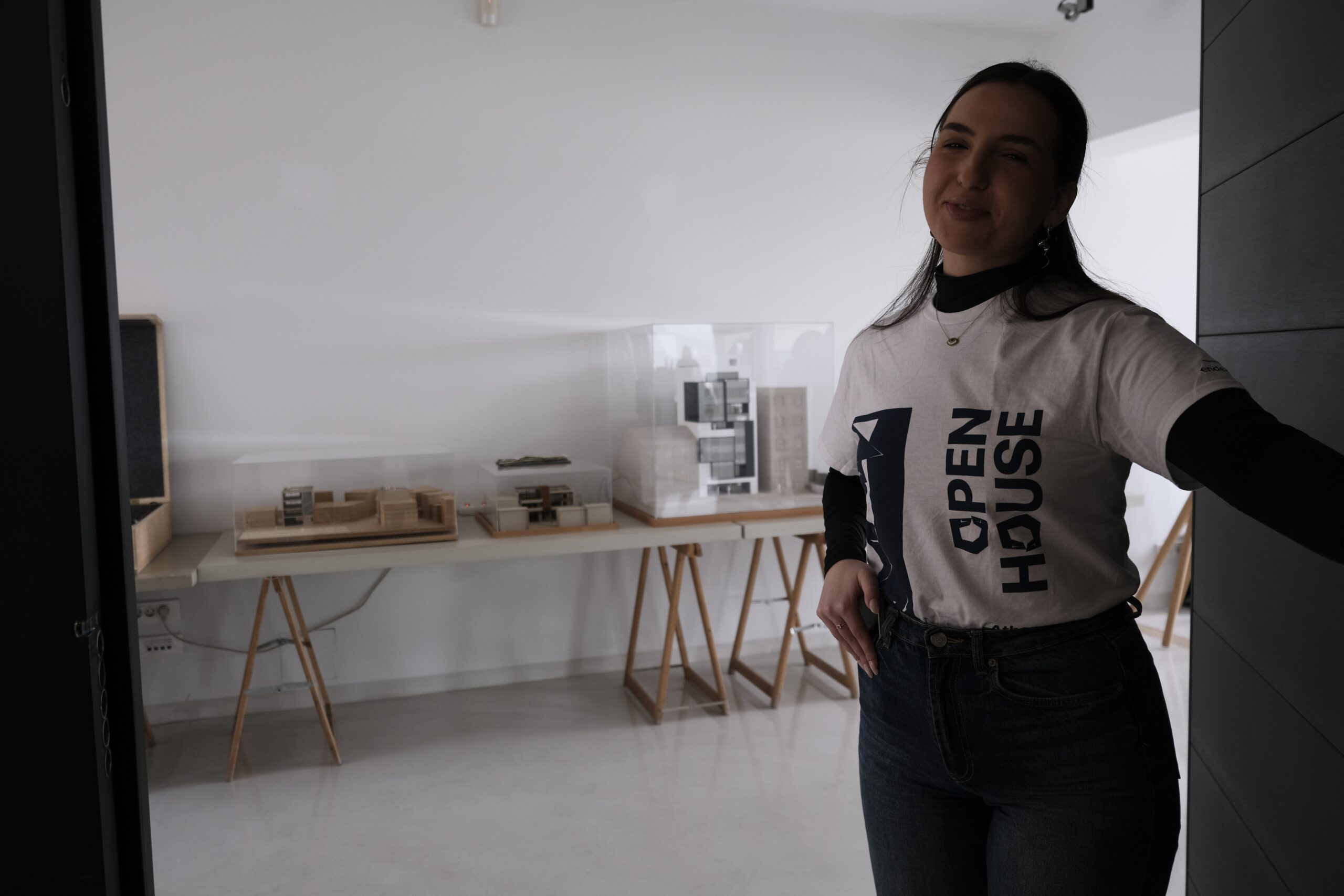
Athens opens its doors and reveals its hidden facets through Open House Athens, the institution that invites the public to get to know the architecture of the city. For a weekend on 4 and 5 April, iconic buildings and lesser-known spaces come to life through free guided tours, offering a unique experience of exploring urban identity. These are dozens of buildings of architectural interest – historical and contemporary, public and private, residential, work, cultural, recreational, worship and monumental spaces – while the guided tours are undertaken by the event’s volunteers.
Renata Douma, the communications manager of Open House Athens, talks to APE-MPA about the history of the institution: “The institution started in 1992 in London, and after 10 years it reached New York. Since then the institution has travelled to other major cities around the world. It came to Greece in 2012, specifically to Thessaloniki, and in 2014 it came to Athens. The events are run by Open House Greece, the NGO founded for this purpose, taking the rights from the global organization Open House Worldwide.”
“The purpose of Open House, is to promote architecture to the general public, that is, to introduce it to people who are not related to it. In the public, of course, there are people who are related to architecture, such as architects, civil engineers, decorators, people who are involved in design in general, but what we have achieved at the Open House – and it is impressive – is that more people who are not related to architecture come,”
When it comes to the buildings that visitors to Open House Athens will visit, “there is a very wide range,” Dumas explains, “both in terms of uses and architectural eras. One can choose according to what interests him or her and attend it, or one can even do a mixture of all these and thus gain a global picture of Athens’ architecture.” Through the Open House, people can visit the neoclassical buildings of Athens, dating from the early 20th century to the modern ones. “Visitors who attend our program will have the opportunity to experience many types of architectural buildings and so many uses. Museum tours are included, not in the exhibit area, but in terms of the buildings. For example, the Ilium Melathron and the museum of the old Parliament, two excellent and important historical buildings with remarkable architecture, have been participating in the institution since 2014 and have been consistently attracting an audience every year. What we love about including such buildings is that we not only focus on their architecture but also on their history. We also have contemporary buildings that are either restorations, rebuilds, that is, older buildings that have been converted to ultra-modern and to new bioclimatic standards.”
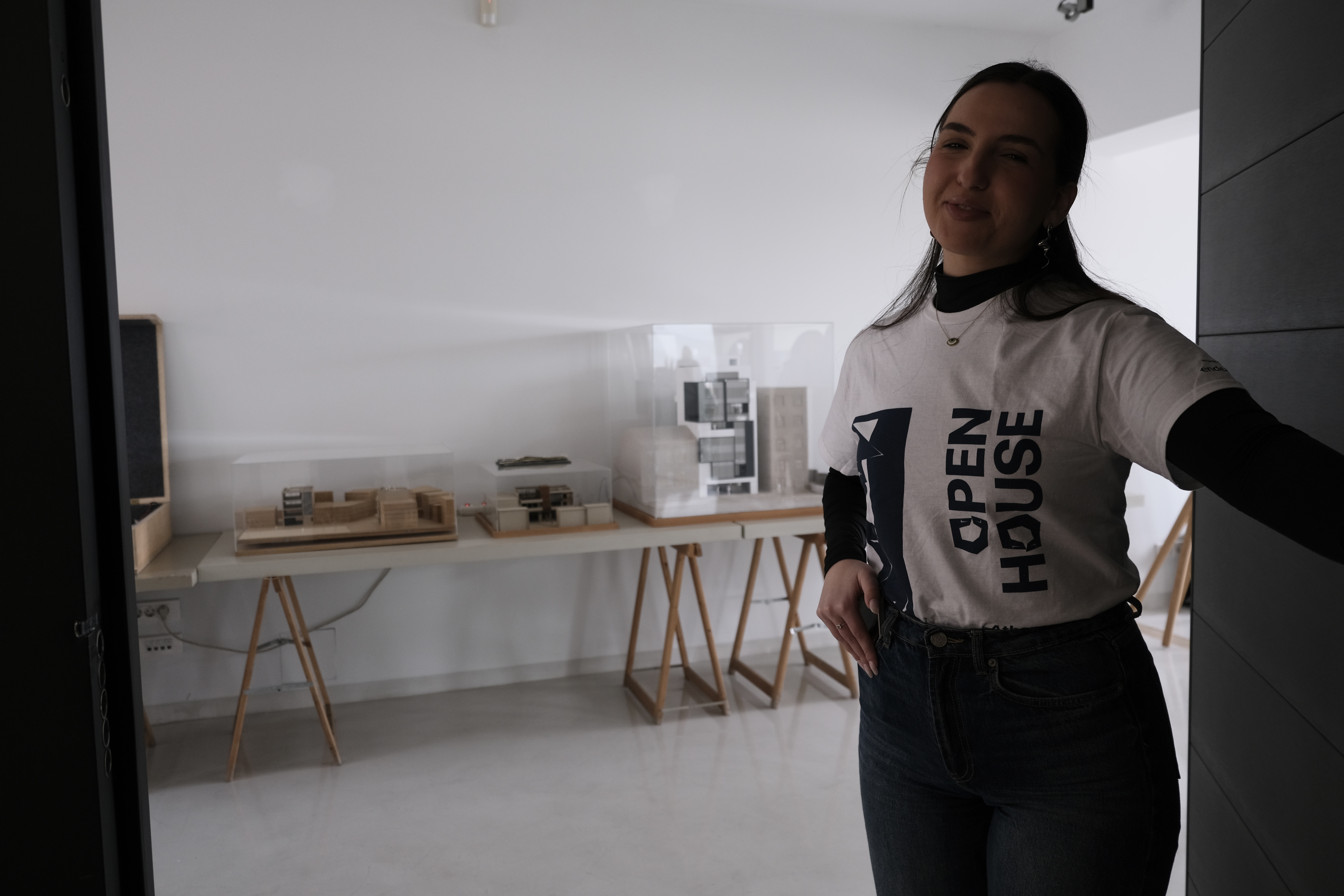
It is worth noting that Open House Athens is based on volunteerism. The 600 or so volunteers carry out the action on the days that it lasts, while the main tasks they undertake are: reception, guided tours, escorting the public to the buildings and informing the public. “The guided tours are carried out by volunteers, free of charge, and this is very important for the action. The effort of these people, who work feverishly a month before the tours start, is also reflected in the enthusiasm of the public, who recognise this selfless offer”, underlines Mrs Duma.
In terms of the registration process, it is very user-friendly, she explains: “Every year because the attendance is even higher, we have gone through a ‘digital transformation’ so that the interested public can issue their online ID card in just a minute, and avoid delays in waiting for guided tours. If, however, it is not possible to register electronically, the volunteers in the first building visited will do so at that moment.”
The volunteer area manager of Open House Athens, Artemis Abazi, speaking to APE-MPE about her own participation in the institution, said: “I started in 2017 as a volunteer tour guide as I participated in various buildings, while in 2020 I accepted the offer and became an area manager, coordinating and preparing the volunteer groups for the tours in specific buildings. The reason for becoming a volunteer tour guide was my visit to the Nikos Hadjikyriakos-Ghika Gallery when I was still a student in the Interior Architecture department. This building impresses me just as much as it did then, and indeed this year, it is reopening its doors for Open House Athens.”
Abazi explains: “Every year the buildings are different, there are of course the constants, but every year new buildings are announced. Residential buildings open, new owners find us, and so the public’s interest is renewed. The people who participate in the tours are not necessarily related to architecture. We used to say that the city is becoming a museum of architecture, meaning that buildings are opening and tours are taking place. They see the buildings from their architectural point of view. People get to know the architecture of their city better, whether it’s neoclassical buildings or more modern buildings.”
Talking about the impact of the institution, he explains: “The feedback from people is always very good and we can see this in the patience they show when they have to wait in the queues at mainly popular buildings. People are looking for what they can do on a weekend in the centre of Athens that is a bit different. They are excited about the institution because it gives them the opportunity to visit buildings that they can’t visit on any other day, such as residences, a good hotel to tour its good rooms, offices and generally places that are not public.”
In closing, the volunteer area manager of Open House Athens says: “But beyond the whole experience that a volunteer gets when they come and tour the building, is the connections they make and the bonds that develop between people. The volunteer makes friendships, meets people he or she didn’t expect to meet. It’s a memory that can’t be outlived. For me, the people of Open House are an integral part of my experience and are my most valuable reward.”