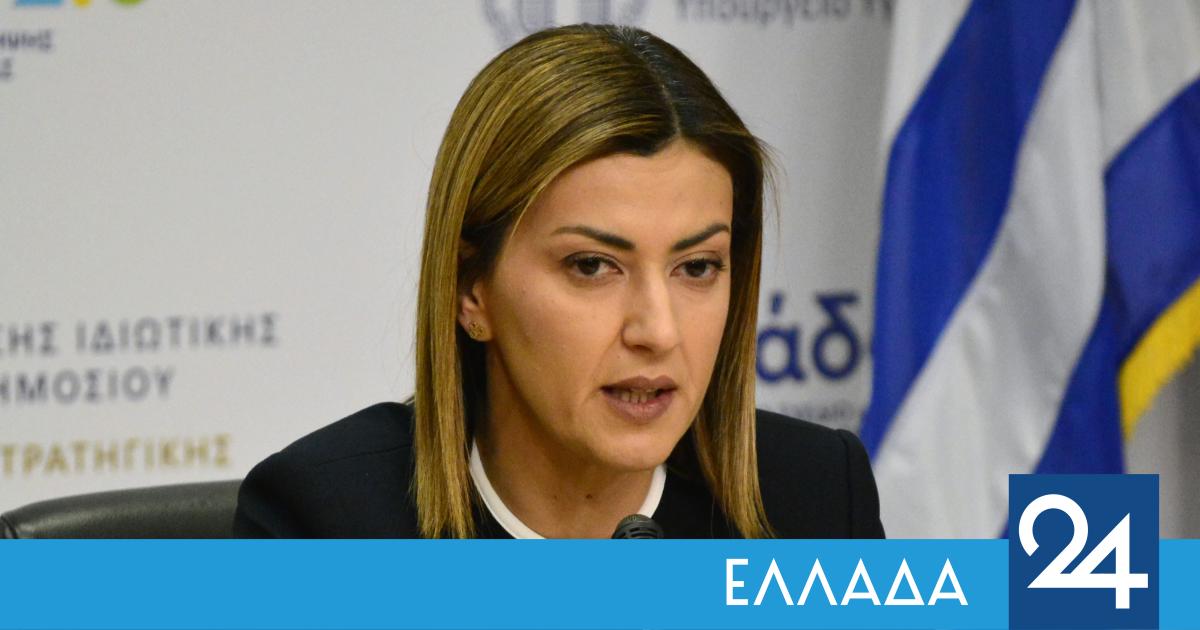
The progress of the programmes under the National Action for the Promotion of Child and Family Health, implemented by the Ministry of Health in cooperation with UNICEF, was presented today by the Deputy Minister of Health, Irene Agapidaki.
More specifically, this concerns the Child and Family Mental Health Promotion and Mental Disorders Prevention Programme, the Health and Hygiene Period Programme and the Programme for the Prevention and Treatment of Self-Harm in Adolescents and Young People and, as Health Minister Adonis Georgiades said, the development of the programmes is “amazing”.
The aim of the programmes is to develop a comprehensive framework for raising awareness of children’s mental health issues, Agapidaki said. In our country, she added, “these issues have been treated with embarrassment for years, but now it is necessary to speak openly and clearly.” Children’s mental health has also been made a priority by the World Health Organization, as lifestyle changes have a significant impact on the body, mind and nervous system, shaping children’s development.
The aim is to better monitor children through the creation of a comprehensive and institutionalized system of prevention, early diagnosis and intervention.
Already, 400 paediatricians have been sensitised and trained under an institutionalised programme. Through collaboration with the SNF’s Mental Health Reference Centres, the aim is to unify referral criteria to ensure uniform and effective case management.
The program focuses on early identification of issues such as autism, anxiety and depression.
Positive Parenting Program – Triple P
The Positive Parenting Program – Triple P supports parents in their daily lives by providing practical and scientifically based tools for a positive approach to parenting and parenting practices. The goal of the program is to enhance parenting skills and create a safe and supportive family environment.
The Triple P program:
*Based on more than 35 years of scientific research through the University of Queensland, Australia
* Adapted to different cultural and social contexts.
* Implemented in more than 30 countries worldwide and available in 23 languages, including Greek through this program.
* It has supported over 4 million families.
Positive Parenting Program – Triple P
Based on the results of a comprehensive review of evidence-based parenting interventions and in line with the objectives of the “National Programme for the Promotion of Family and Child Health in Greece”, the Ministry of Health, in collaboration with UNICEF, has secured the pilot implementation of the Positive Parenting Programme for the first time in Greece.
The Programme is implemented through a set of actions, designed according to the different needs of families:
* 90-minute seminars offering practical information and basic strategies for positive parenting:
* Small groups of parents (5-12 participants), with weekly meetings for 8 weeks, which foster sharing of experiences, mutual support and gradual application of skills to daily life.
* Individual support sessions, tailored to each family’s needs, in person, at home or remotely.
* Parents of infants 0-1 (prenatal and postnatal period)
* Parents of children 0-12
* Parents of teens 12-16
* Parents of children 0-12 with developmental or other challenges
To date, 177 health professionals have been trained and 5,000 parents have participated.
Plan for implementing a national initiative on Doomscrolling
Greece is undertaking a pioneering national and international initiative to understand and address the impact of digital life – and particularly doomscrolling – on the mental health, development and brain function of children and adolescents.
The initiative is being implemented through a phased, science-based action plan that combines research, policy, innovation and social mobilisation.
As part of the initiative, the Global Centre on Child Development, Mental Health and Neurosciences is being established in Athens, in collaboration with the National and Kapodistrian University of Athens and leading international academic institutions such as Harvard University.
The Center will be:
* a global hub for research and innovation,
* a bridge between science and policy,
* and a benchmark for protecting children’s mental health and development in the digital age.
Greece, in collaboration with UNICEF, is placing itself at the forefront of a global effort to protect children’s brain health and well-being in the digital age, Ms. Agapidaki.
Health and Hygiene Programme
The Period Health & Hygiene Programme is an innovative national initiative that aims to promote the health of adolescent girls by enhancing knowledge about menstruation, fostering attitudes of respect and equality, and shaping an inclusive school environment. Through targeted interventions in the school community and the wider public, the programme combines information, awareness-raising and ensuring equal access to menstrual products so that every girl can manage her period with comfort and confidence.
To date, awareness activities have been carried out in 1,482 schools and 170,000 children have been informed.
In parallel, the programme includes modern distance training for teachers, school nurses, psychologists and social workers in remote and island areas, as well as in Special Education School Units, while an online platform with free educational material for all target groups is being developed.
It is also planned to make available free of charge more than 18 million of period products to all female students in all schools in the country, who are attending from the 5th grade to the 3rd grade for at least 4 months and so far 50% of the products have been distributed.
Finally, Ms Agapidaki also referred to the National Programme for information, education, awareness and treatment of self-harm in adolescents and young people in Greece. To date, 280 people under the age of 17 have passed through the Prevention Centre and 1,340 health professionals have been trained.