Iran stressed yesterday (Wednesday) that “no tangible progress” had been made in talks with the US to end the war in the Middle East, where hostilities have resumed, both in the Gulf and in Lebanon.
“Messages were exchanged regarding the need to end the attack on Beirut, but no tangible progress was made in the negotiation process,” Iranian Foreign Minister Abbas Araghchi said, referring to Israel’s strikes against the Tehran-affiliated Shiite Hezbollah movement in Lebanese territory.
Any attack on the Lebanese capital would lead to the “resumption of war on a large scale,” the Iranian diplomatic chief warned while speaking to the Lebanese television network Al Mayadin, according to excerpts of his interview as broadcast by the Iranian news agency Tasnim.
Last night in Washington, D.C., the governments of Israel and Lebanon agreed to “implement a ceasefire” and establish “pilot zones” under the exclusive control of the Lebanese army, a trilateral statement released after two days of talks sponsored by the administration of President USDonald Trump.
Abbas Araghchi’s statements stand in stark contrast to those of Donald Trump later in the Oval Office.
“I am told that the negotiations are going very well (….) Who knows (…) (the deal) could be concluded over the weekend,” the US President said. He also said he meant to “separate” the talks on Lebanon from those on Iran. Tehran rejects the idea, stressing that the war is one.
Breaches in Kuwait
US diplomatic chief Marco Rubio claimed while testifying before a parliamentary committee yesterday that the issue of Iran’s highly enriched uranium has been “clearly raised” with Tehran, probably meaning Washington’s demand that it be handed over, adding, however, that the other side “has not given the green light” for anything of the sort.
The fate of Iran’s highly enriched uranium is one of the main obstacles to reaching an agreement. The US and Israel accuse Iran of seeking to acquire a nuclear arsenal, something Tehran has denied for decades.
The US House of Representatives yesterday approved a text ordering the withdrawal of US troopsdeployed in the Middle East as part of the war against Iran, practically with only symbolic significance, a development in which observers nevertheless saw a setback for President Trump.
However, there is no chance of it being followed up, even if the Senate approves it, given the veto power of the US head of state.
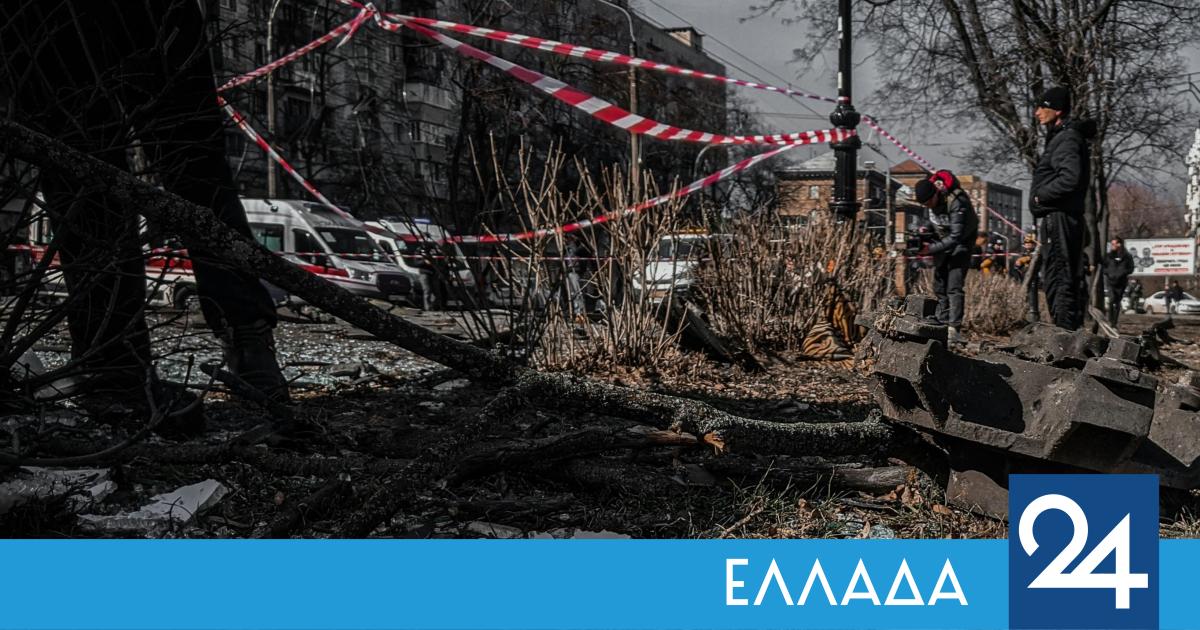
Earlier yesterday, Kuwaiti authorities accused Tehran of hitting the small Gulf emirate’s airport, in the first known deadly attack since the 8May ceasefire began to be implemented on May 8, increasingly disputed amid exchanges of fire between the US and Iran.
According to authorities, one person — an Indian national — was killed and 63 others were injured at the airport.
The Revolutionary Guards, the ideological army of the Islamic Republic, denied attacking the airport and claimed the infrastructure was accidentally hit by a Patriot anti-aircraft defence system.
Fighting has intensified in recent days, particularly around the Strait of Hormuz, a strategic sea artery for international hydrocarbon trade that was closed de facto by Iran when the war began.
Kuwait said it was yesterday targeted by 13 ballistic missiles and 17 manned airborne assault vehicles launched by Iran.
“The explosions followed each other very close to populated areas. For the first time, the children felt how serious the situation was,” Hassan Sheikh, a Pakistani national, 40, who lives near the airport, told the French News Agency.
Oil prices back around $100
The new hostilities have pushed oil prices back up to around $100 a barrel, after a dip last week, on market expectations of a deal to end the war in the Middle East.
According to the U.S. Joint Forces Command responsible for the Middle East (CENTCOM, “central command”), Iran even targeted Bahrain with missiles, and in retaliation, in “legitimate defense,” U.S. forces conducted “strikes” on the Iranian island of Qeshm., where a telecommunications socket was hit, according to Tehran.
On the other hand, the Revolutionary Guards reported targeting a US military base in Kuwait and the headquarters of the US 5th fleet, based in Bahrain, with missiles and unmanned aerial assault vehicles. They spoke of retaliation for US strikes on Qeshm and against an Iranian tanker.
They also reportedly targeted a ship linked to Israel and the US.
Iranian diplomacy has accused Kuwait and Bahrain of allowing Washington to use their territories to carry out attacks against Iran, a charge the small emirate denied, while announcing the expulsion of two diplomats serving at the Iranian embassy.
Attacks on northern Israel
A written statement by Mojtaba Khamenei is expected to be released today, on the anniversary of the death of the founder of the Islamic Republic, Ruhollah Khomeini, during which a major event is usually held around his mausoleum.
The anniversary coincides this year with one of the most important Shiite holidays, which brings Iranians out onto the streets en masse.
Before the extension of the supposed ceasefire between Israel and Lebanon was announced, Israeli shelling killed nine people in Lebanese territory, including a soldier and rescuers. And, in the early hours of this morning, the official news agency ANI reported that another rescuer was killed when an ambulance was targeted by Israeli forces.
The Israeli army, for its part, said it intercepted an “enemy aircraft” and two missiles from the direction of Lebanon. Hezbollah claimed responsibility for an attack against Israeli territory.