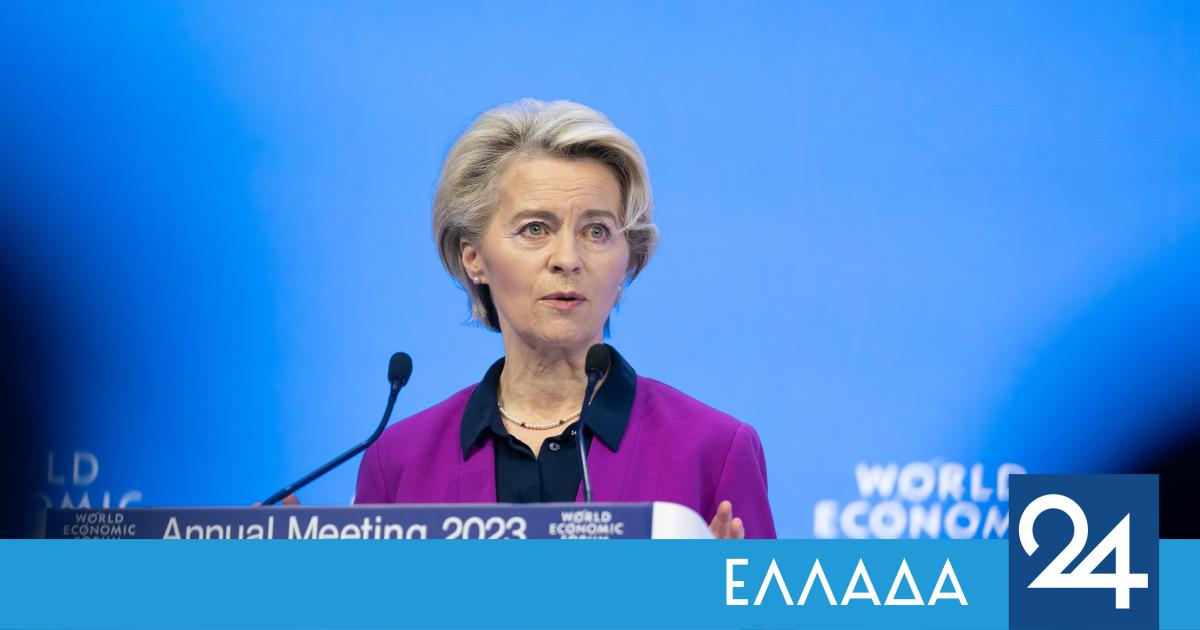
“The continued closure of the Strait of Hormuz is very damaging and the restoration of free navigation is of the utmost importance to us,” said European Commission President Ursula von der Leyen today at a press conference shortly after the College of Commissioners meeting on the crisis in the Middle East and its impact on Europe.
At the same time, Ursula von der Leyen expressed the European Commission’s concern about the ongoing attacks in Lebanon, which “threaten to derail the whole process” for peace in the region. “There can be no stability in the Middle East or the Gulf while Lebanon is in flames,” she said, calling on all parties to respect Lebanon’s sovereignty and implement a complete cessation of hostilities. She noted that the EU is providing immediate assistance to the Lebanese people, but pointed out that “no amount of assistance can replace the security of a lasting peace.”
Referring to the “huge impact” that the Middle East crisis is having on the economies of EU countries, the Commission President underlined that since the conflict began 44 days ago, the bill for fossil fuel imports has increased by more than €22 billion. Therefore, von der Leyen referred to a series of measures to reduce energy prices – the so-called “toolbox” – that the European Commission will present next week, 22 April, just before the informal European Council to be held in Cyprus, 23 and 24 April.
FOCUSED, TEMPORARY AND IMMEDIATE ACTIONS FOR RECOVERY
According to the Commission President, EU Member States must respond in a coordinated way to rising energy prices. She said these measures should be “targeted” – giving particular support to the most vulnerable households and sectors of the economy – “temporary” and “implemented in a timely manner and without delay, when they are really needed”. In the same context, the Commission is expected to present best practices for the design of income support programmes, while a consultation on more flexible state aid rules is being launched to give states more room to intervene in the most exposed sectors.
Fon der Leyen stressed that the Commission is placing particular emphasis on better cooperation between member states, building on the experience of the 2022 energy crisis, to avoid competition between them in the energy market.
It also foresees enhanced European coordination to fill gas reserves, as well as joint planning for the release of strategic oil reserves to maximise the impact. At the same time, von der Leyen stressed, it will ensure that national emergency measures “do not compete with each other” and do not disrupt the functioning of the single market.
As von der Leyen said, the Commission is also looking at measures to reduce energy demand, “with full respect for consumers’ freedom of choice”, with an emphasis on energy efficiency, such as upgrading buildings and renewing industrial equipment.
In parallel, more structural interventions to reduce energy costs are being promoted, with a review of the Emissions Trading Scheme (ETS), interventions in taxes and network charges and a broader overhaul of the energy mix.
In conclusion, von der Leyen stressed that dependence on fossil fuels makes Europe vulnerable to crises and high prices, stressing that the transition to renewable and nuclear energy is the only long-term solution for energy independence and stability for the EU. He also said that investment in networks, storage and electrification of the economy should be accelerated, using European resources but also mobilising private capital, in order to enhance energy security and reduce prices in a sustainable way.
Finally, in response to a question on the possibility of triggering more drastic measures, von der Leyen made clear that at the moment “the conditions for triggering alternative measures, such as the general escape clause, are not met”. She stressed that any interventions should not overly burden public deficits and that the response to the crisis should be “step by step” as the situation evolves. He added that the Commission would constantly reassess the situation, depending on developments in the Middle East.