The US armed forces said yesterday (Monday) that they had bombed missile launching facilities in southern Iran and ships allegedly laying mines, even as both Washington and Tehran spoke of progress in negotiations aimed at finding an agreement to end the Middle East war in the long term.
After weeks of seeming deadlock and exchanges of threats, the two governments have reported progress in their talks in recent days. Donald Trump presented a solution as imminent over the weekend, which he decided to spend at the White House, while media outlets, both US and Iranian, reported various details of the draft text under negotiation.
Hopes that peace would soon be restored appeared to be dashed yesterday, however, initially due to statements by Israeli Prime Minister Benjamin Netanyahu that his army would “intensify” operations in Lebanon, where he means to “crush” the Shiite movement Hezbollah, which is pro-Iranian, then when it was announced that the US military had launched new strikes against Iranian forces.
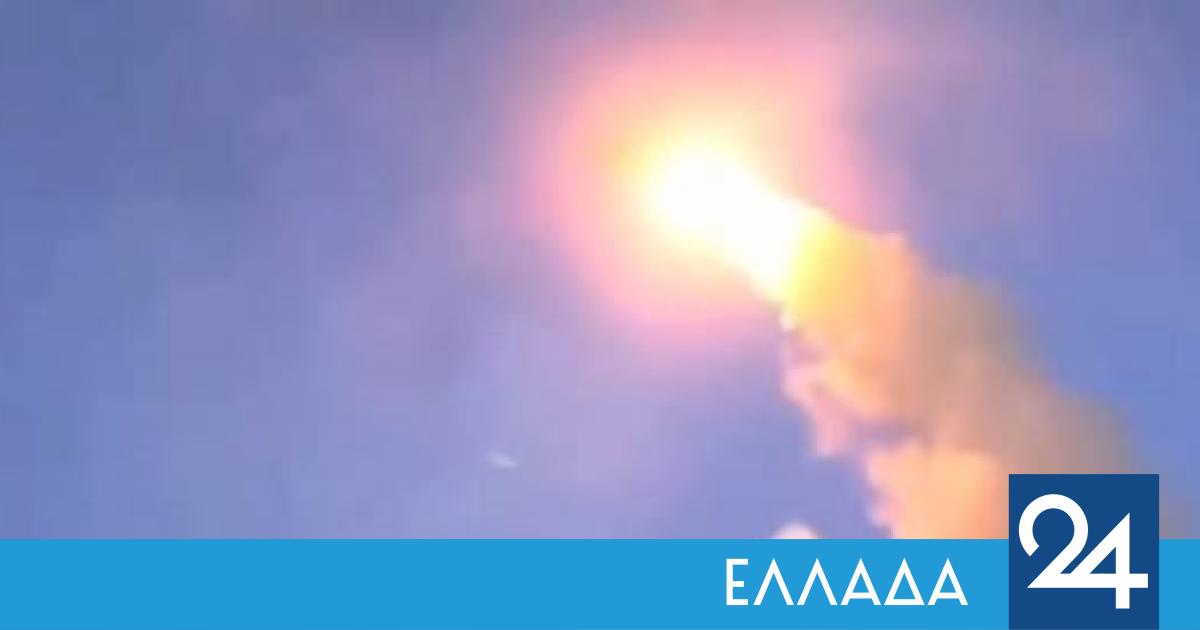
“The armed forces of the US were currently (p.ed. yesterday) strikes on legitimate defenses in southern Iran to protect our troops from threats raised by Iranian forces. Targets included missile launch facilities and vessels attempting to lay mines,” the U.S. Joint Forces Command’s joint command responsible for the Middle East (CENTCOM, “Central Command”) said.
Iranian media reported that powerful explosions were heard in Bandar Abbas (south) around midnight (p.23:30 GMT). State television, however, later reported that calm had been restored and that an investigation was underway to determine the cause of the explosions.
The US military assured that it showed “restraint” during “the ceasefire”, which came into force on 8April, after more than a month of hostilities with thousands killed, the vast majority in Iran and Lebanon, that have shaken the global economy.
The US President is reportedly looking for a way to end this war as, apart from being unpopular in his country, it is causing increasing problems for the world economy, above all because of the closure of the strategic Strait of Hormuz by Tehran, through which one fifth of the oil and LNG consumed around the world normally passes.
Markets seemed rather confused after the developments of the last few hours, with oil prices reflecting this: the price of a barrel of WTIwas down 5.4% in the early hours of the morning, while that of North Sea Brent, by contrast, was up 1.6%.
“Βuληση”
His government’s Foreign Minister Marco Rubio appeared to downplay yesterday’s blows, saying a deal was still possible within days. Addressing reporters in India, where he is still on an official visit, he said the talks “are revolving more around the exact wording of the initial text, that will take some days”, and insisted that US President Trump “has expressed his will to reach” an agreement and that he will either sign it “or there will be none”.
Mr. Rubio made a similar comment about the Strait of Hormuz. “Every alley should be open. And it will open one way or another,” he asserted. “What is happening down there is illegal (…) it is unbearable for the whole world, it is unacceptable.”
The nuclear issue
Earlier yesterday there seemed to be an acceleration of diplomatic processes, particularly in Qatar.
Leading Iranian officials, including chief negotiator Mohammad Bayr Galibaf, Foreign Minister Abbas Araghchi and the governor of the Central Bank of Iran, have travelled to Doha. It was the first visit of this level to the emirate since the outbreak of the war, in which the Iranian side retaliated by striking its Gulf neighbours.
However, US President Trump has been careful to temper expectations that there will be an immediate settlement, saying he will not be “rushed” into signing anything but what he considers an “excellent” deal.
Tehran also appeared wary. “We have reached conclusions on a large part of the issues,” but “from there until we say that an agreement is imminent–no one can say that,” Iranian diplomatic spokesman Esmail Bagaei said yesterday afternoon.
Meanwhile, a Pakistani delegation, including key negotiator and army chief Asim Munir as well as Prime Minister Shabaz Sharif, was in China supporting Islamabad’s efforts to resolve the crisis.
The opening of the Strait of Hormuz, which has closed de facto Iran since the war began with the US-Israeli attack on February 28, is considered a major stake.
On Saturday Donald Trump said the negotiation is “largely complete” and will ensure “the opening” of the sea lane, while Iran, on the other hand, insists that the issue of its nuclear energy program is not “at this stage” part of the negotiation and will be the subject of a separate process.
Last night, the US President addressed the issue of highly enriched Iranian uranium–“nuclear dust.” in the phrase he likes to use, assuring via Truth Social that “or it will be immediately transferred to the US (….) and destroyed, or preferably, with the cooperation and coordination of Iran, destroyed on site or at another agreed location.”
It is not clear whether the US President was expressing his intentions or whether it is something that could be included in the negotiated text.
Continued attacks in Lebanon
Earlier, it appeared to ratchet up the pressure and the demands of a potential deal. Listing the leaders of several mostly Muslim countries with whom he has spoken in recent days, he said that “all” of those countries should “at a minimum, sign the Abrahamic Accords at the same time.”
These 2020 agreements entail recognition and normalization of relations with Israel. They have been signed in particular by the United Arab Emirates and Bahrain, Washington’s Gulf allies.
But several states in the region have repeatedly rejected joining the process, especially since the war broke out in the Gaza Strip, notably Saudi Arabia, but also Syria and Lebanon.
A ceasefire has been in place on the Lebanese front since 17April in theory, but Israel and the Shiite pro-Tehran Hezbollah movement have continued their non-stop hostilities.
Israeli Prime Minister Netanyahu announced yesterday that Israel would “intensify” its attack on Lebanon and “crush” the movement, amid dozens of airstrikes, with at least three dead, according to the Lebanese national news agencyANI.
.
Hezbollah claimed responsibility for drone strikes against three camps and a military post in northern Israel.
Israeli operations have claimed the lives of at least 3.185 people in Lebanon since the start of the new Israel-Hezbollah war on 2March, according to the Lebanese Health Ministry’s most recent account. The Israeli army counts 23 casualties in its ranks in that time.
NEW: Details of US ‘self-defense’ attacks on Iran – Fox News
– 2 Iranian boats destroyed
– Surface to air missile site hit in Bandar Abbas
– Ceasefire still in effect https://t.co/4v0YR3gWMI pic.twitter.com/nYTm1yNquvpic.twitter.com/nYTm1yNquv
– WarSignalHQ (@EchoSignalHQ) May 26, 2026