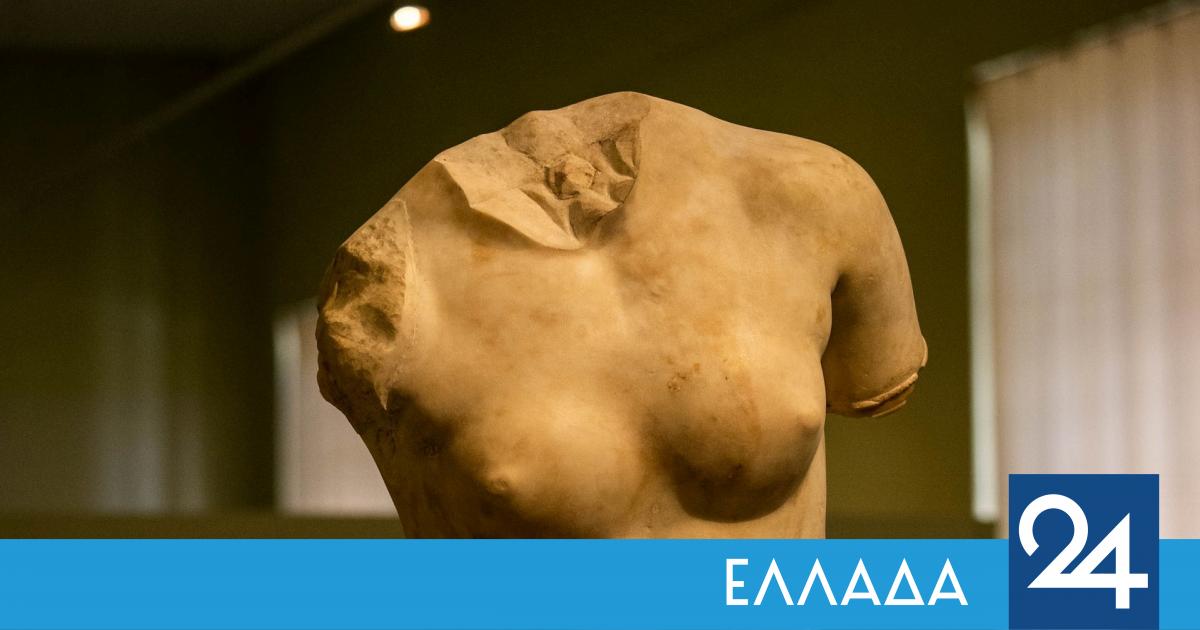
An important archaeological discovery has been announced in Turkey, as a sculpture of the goddess Athena some 2 meters high has been unearthed in the ancient city of Laodicea, in Pamukkale.
Turkish Culture and Tourism Minister Mehmet Nuri Ersoy announced: “We have made another important discovery in Laodicea! Another new find has been unearthed in the ancient city. The work we are carrying out in the Western Theatre of Laodicea continues to reveal traces of the past. At the site, we discovered a statue of Athena, about 2 meters long, made of white marble.”
The find was located at the so-called ‘Western Theatre’, which reportedly served as a cultural beacon in antiquity beyond theatrical use.
Ersoy noted: “This structure, which served as a setting for Homer’s epics, reveals that it was also a centre of cultural storytelling in antiquity and the work, which reflects the classical style of the Augustan period, stands out for its high artistic quality. With our vision ‘Heritage for the Future’, we continue to protect this unique heritage and carry it forward into the future.”
During the excavations, the statue was found lying face down among the ruins on the outer wall of the theatre (“metascene”), and its head has yet to be identified.
The sculpture, made of white marble, depicts the goddess Athena standing on a round base, with a veil and chlamys around her neck, while the head of a Medusa and snakes are displayed on her chest. The folds of the fabric and the naturalness of the rendering indicate a high artistic quality, while the back has been left rough, a fact associated with its position between columns.
The stage of the Western Theatre dates to the 2nd century BC and features a three-storey architecture with 16 columns on each level.
Sculptures that have been identified depict scenes from the Odyssey, such as the Land of the Lysstrians, the Cave of Polyphemus and Scylla.
The excavations between 2024-2025 revealed numerous sculptures related to the above narratives, reinforcing the importance of Laodicea as an important cultural centre of antiquity.