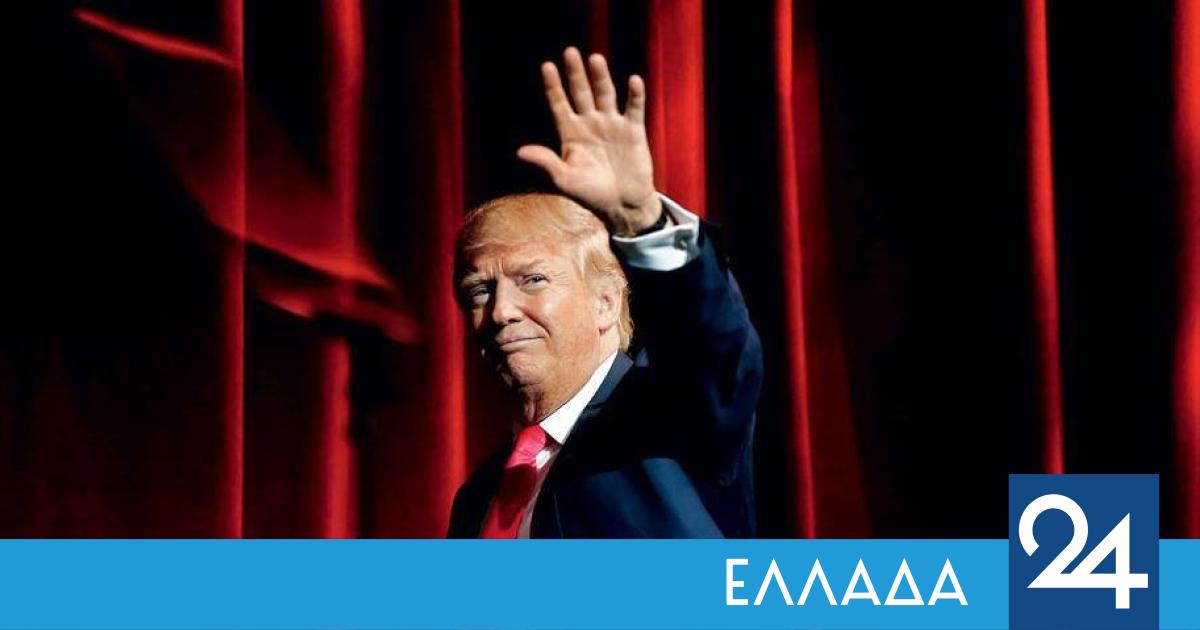
Donald Trump spoke of a possible resumption of US negotiations with Iran later this week in Pakistan, while representatives of the governments of Israel and Lebanon agreed in Washington to begin direct talks on the other main front in the Middle East war.
“You need to stay over there, really, because something could happen over the next two days,” the U.S. president told a reporter for the tabloid New York Post, which is in Islamabad, by telephone.
The newspaper explained that Donald Trump returned a call from its reporter minutes after she had initially replied that it was unlikely that talks would resume in the Pakistani capital.
She was quoted as saying that she thought it was “more likely” that US negotiators would return because “the marshal” (p.Asim Munir, the head of Pakistan’s army) is “doing a super job.”
Over the weekend, the first round of negotiations, in which Washington was represented by Vice President J.D. Vance, a few days after a two-week ceasefire went into effect on April 8d, was fruitless.
Two senior French News Agency sources in Islamabad noted that the Pakistani government is seeking to resume talks.
UN Secretary General Antonio Guterres yesterday called for a resumption of “serious negotiations” after insisting, once again, that “there is no military solution to this crisis”.
On the “same side”
On the other front of the war, which pits the Israeli army against the Iranian-affiliated Lebanese Shiite Hezbollah movement, the Israeli and Lebanese governments have agreed to begin direct negotiations aimed at achieving a lasting peace after two and a half hours of “productive” talks between their ambassadors in Washington, the first of its kind since 1993.
US diplomacy made clear that the when and where “remains to be jointly determined.”
“It became clear today that we (Israel and Lebanon) are on the same side,” Israeli Ambassador Yehiel Leiter said. “We are united in our will to liberate Lebanon” from Hezbollah, he added.
Ambassador Leiter also stressed that he does not want any French involvement in the talks with Lebanon.
“We would like to keep the French as far away as possible from practically everything, but above all as far as the peace talks are concerned,” the Israeli representative threw in, not very diplomatically.
Israel claimed that Lebanon was “not covered” by the US-Iran ceasefire agreement, continued and intensified aerial bombardment in the country, and did not withdraw its troops from the south, instead seeking to expand the areas under its control.
Hezbollah, absent, called the talks a “surrender” by the Lebanese government and claimed responsibility, as they began, for firing rockets at border communities in Israel.
Oil below $100
Lebanon was dragged into the Middle East war on March 22, when the Shiite movement fired rockets against Israel supporting Iran after the US and Israel launched a large-scale offensive. The Israeli military responded by launching a barrage of aerial bombardment and ground operations in southern Lebanon.
Since then, more than 2.000 people have been killed in the country, according to authorities in Beirut, while about a million have been forced from their homes — in other words, a fifth of the population, according to the UN.
On the Israeli side, the army says it has suffered thirteen casualties. Ten of its members were wounded yesterday in fighting in the southern city of Bid Jbail.
In the Lebanese capital, residents made no secret of their exhaustion.
“We are in favour” of negotiations “if it is in Lebanon’s interest” if it “resolves the problems”, said Kamal Ayad, 49, who repairs windows. “We want peace for our children and for our future, we are demoralized, we have lived through so many wars.”
In the Gulf, the US military said yesterday that it had prevented six ships from leaving Iranian ports in the first 24 hours of a blockade announced by the US in retaliation for the de facto closure of the strategic Strait of Hormuz.
The paralysis caused oil prices to rise, but they fell below the $100 barrier yesterday (-7.8% to $91.28 for WTI, -4.60% to $94.79 for North Sea Brent), as markets appear to await the resumption of Washington-Tehran negotiations.