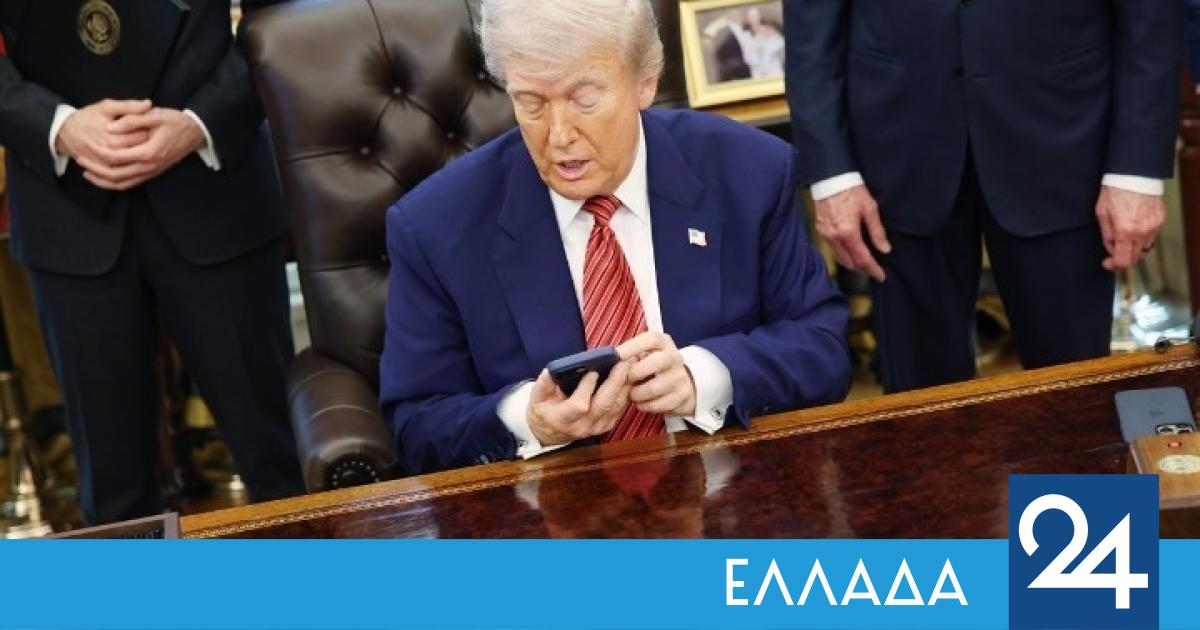
U.S. President Donald Trump said yesterday (Friday) that he was not satisfied with the latest Iranian proposal for talks on the Iran war, while Iran’s foreign minister indicated that Tehran is ready to pursue the diplomatic route if the U.S. changes its approach.
Trump’s comments suggest that the impasse over ending the war that began on February 28 is likely to continue, despite the Republican seeking to end a conflict that is highly unpopular among Americans.
Although the US and Iran agreed to a ceasefire on 8 April, which has been extended, the two countries still disagree on many issues, including Tehran’s nuclear ambitions and control of the Strait of Hormuz.
After initial talks between the two sides in early April in Islamabad, they have failed to agree on a second meeting.
It is unclear what Iran’s new proposal includes, although the country’s foreign ministry has warned that there will be no immediate results.
“They want to make a deal, but (…) I’m not satisfied with it,” Trump told reporters at the White House, adding that the Iranian leadership is “disorganized” and divided into two or three groups. “They’re asking for things I can’t accept,” he said, but added that phone negotiations were continuing.
Later yesterday, during a speech in Florida, Trump said the US would not prematurely end its confrontation with Iran, and then “the problem may arise again in three years.”
Trump has said he will not allow Iran to acquire nuclear weapons, and is under pressure to break Iran’s control of the Strait of Hormuz.
On Thursday night, Trump held talks with his national security team regarding Iran for about 45 minutes at the White House, according to the news website Axios.
The meeting was attended by US Vice President J.D. Vance, Defense Secretary Pete Hegseth, Secretary of State Marco Rubio, CIA chief John Ratcliffe and US negotiator Steve Whitcoff.
The meeting was attended by US Vice President Jay Di Vance, Defense Secretary Pete Hegseth, Secretary of State Marco Rubio, CIA chief John Ratcliffe and US negotiator Steve Whitcoff.
During the meeting, the head of US forces in the Middle East (Centcom) Admiral Brad Cooper and US Armed Forces Joint Chiefs of Staff Chief of Staff Dan Kaine briefed Trump and his team on plans regarding a possible, new military action against Iran, two US officials told Axios.
“There are options: we want to go in and just blow them up and finish them off for good or we want to try to make a deal. Those are the options,” Trump said yesterday when asked about the briefing. He added that “from a humanitarian point of view” he did not prefer the military option.
Open to diplomacy, ready for war
For his part, Iranian Foreign Minister Abbas Araghchi said his country is ready to pursue the diplomatic route if the US changes its “excessive demands, threatening rhetoric and provocative actions.”
However, Araghchi added in a Telegram post that “Iran’s armed forces remain ready to defend the country against any threat.”
Iran has activated its anti-aircraft defences and is planning a broad response in the event of an attack, having assessed that there will be a short, fierce US attack, possibly followed by an Israeli strike, two senior Iranian sources told Reuters on condition of anonymity.
The head of the judiciary, Golamhossein Mohseni Ejay, echoed the same sentiment, noting: “The Islamic Republic has never hesitated to engage in negotiations (…) but we will certainly not accept having a policy imposed on us.”
Echoing the view of other Iranian leaders, he assessed that the US had “gained nothing” from the war.
In addition, in a written message, Iran’s supreme leader Ayatollah Mozhtamba Khamenei asked businesses damaged by the war “to avoid layoffs as much as possible,” Iranian agencies reported, in the name of “the economic and cultural war” waged by Iran.