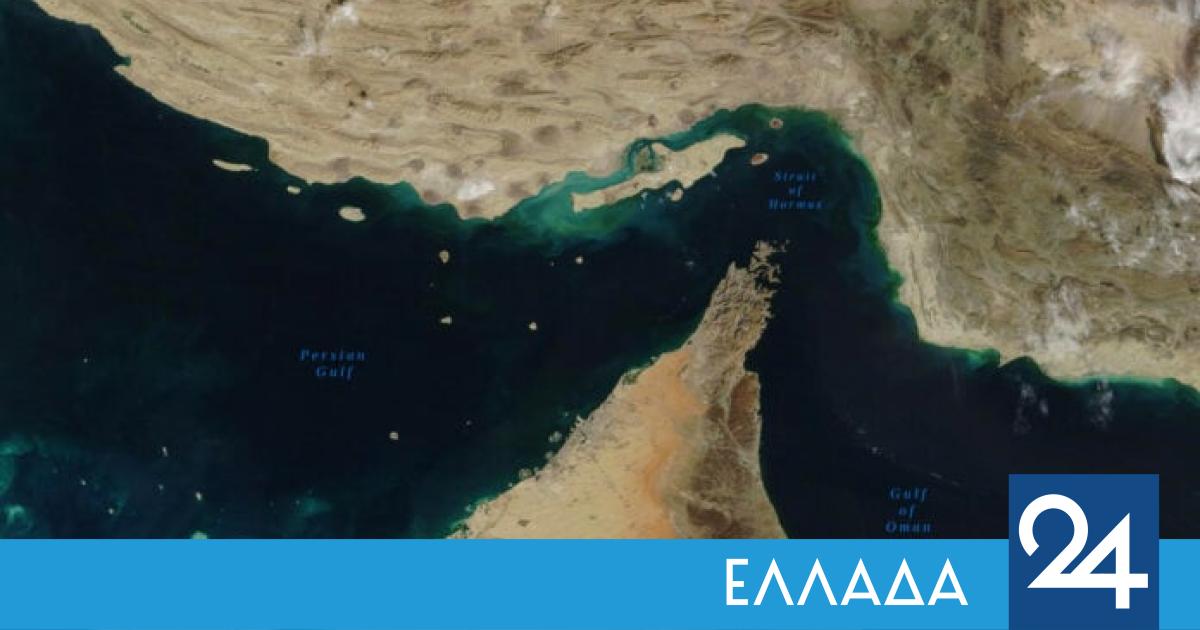
Iran has responded to an ultimatum from US President Donald Trump by issuing new threats to the Strait of Hormuz, a vital artery for global oil and gas shipments.
“The Strait of Hormuz will only be reopened when, under a new legal regime, the damages from the war imposed will be fully compensated using a portion of the transit toll revenues,” Mehdi Tabatabaei, a communications official in charge of the Iranian president’s office, said yesterday, Sunday, via X, said.
The Iranian Revolutionary Guards have said the strait will not return to its previous state, especially not for the United States and Israel, according to Iranian media. Tehran claims control of the entire crossing and plans to introduce a toll system on it.
Trump warned Iran that it will face attacks on power plants and bridges if it does not comply by 8 p.m. tomorrow, Tuesday (03:00 Wednesday, GMT). In a post on his platform, Truth Social, he said: “Open the GAM… the Strait, you crazy bastards, or you will live in Hell – YOU WILL SEE!”
Tabataway said Trump has resorted to insults out of “desperation and anger” and accused him of sparking a full-scale war in the region.
Iran’s mission to the UN announced via X that Trump is openly threatening to destroy infrastructure essential to the survival of civilians and called on the international community to act to prevent what he described as war crimes.
Meanwhile, United Arab Emirates official Anwar Gargas said any settlement to the war between the US and Iran must guarantee access to the Strait of Hormuz, also warning that a deal that does not rein in Iran’s nuclear program and its missiles and drones would pave the way for a “more dangerous and unstable Middle East.”
Gargas, the diplomatic adviser to the President of the United Arab Emirates, said during a weekend briefing that the Strait of Hormuz cannot be used as a weapon, stressing that its security is not a regional negotiating card but a global economic imperative.
“The Strait of Hormuz cannot be held hostage by any country,” Gargas said, adding that freedom of navigation through this sea passage “must be part of any settlement of the conflict with a clear agreement on it.”
Gargas said the UAE wanted the war to end, but warned against a ceasefire that would leave the root causes of instability unresolved.
“We don’t want to see more and more escalation,” he said. “But we don’t want a ceasefire that doesn’t resolve some of the core issues that will create a much more dangerous environment in the region … particularly the (Iranian) nuclear program, the missiles and drones that continue to rain down on us and other countries.”
He said the United Arab Emirates is ready to participate in any international effort led by the US to secure navigation through the strait.
Gargas noted that for decades the most unlikely worst-case scenario for the UAE has been a full-scale Iranian attack on it – a scenario that is now underway. However, he said, the country is responding well, demonstrating resilience and an ability to find solutions under pressure.
The official added that the UAE’s economic fundamentals remain strong and put the country on the road to recovery, although he admitted that effort will be required.
According to Gargas, Iran’s strategy is likely to strengthen the Gulf’s security alignment with Washington rather than diminish it, cementing the US military role in the region and multiplying Israel’s footprint there. He said the US would remain the UAE’s central security partner and that Abu Dhabi would strengthen that relationship as regional threats intensify.
He argued that Iran’s leadership was fighting to preserve “the regime, not the country”, adding that no normal government would accept such a catastrophe just to claim it had resisted. He also said the UAE did not seek hostility with Iran, but warned that trust was impossible under the current government in Tehran.
The UAE is grateful, he said, for the international support it has received, singling out France as a decisive partner and praising Washington for its outstanding support, particularly for strengthening the UAE’s air defence capability.