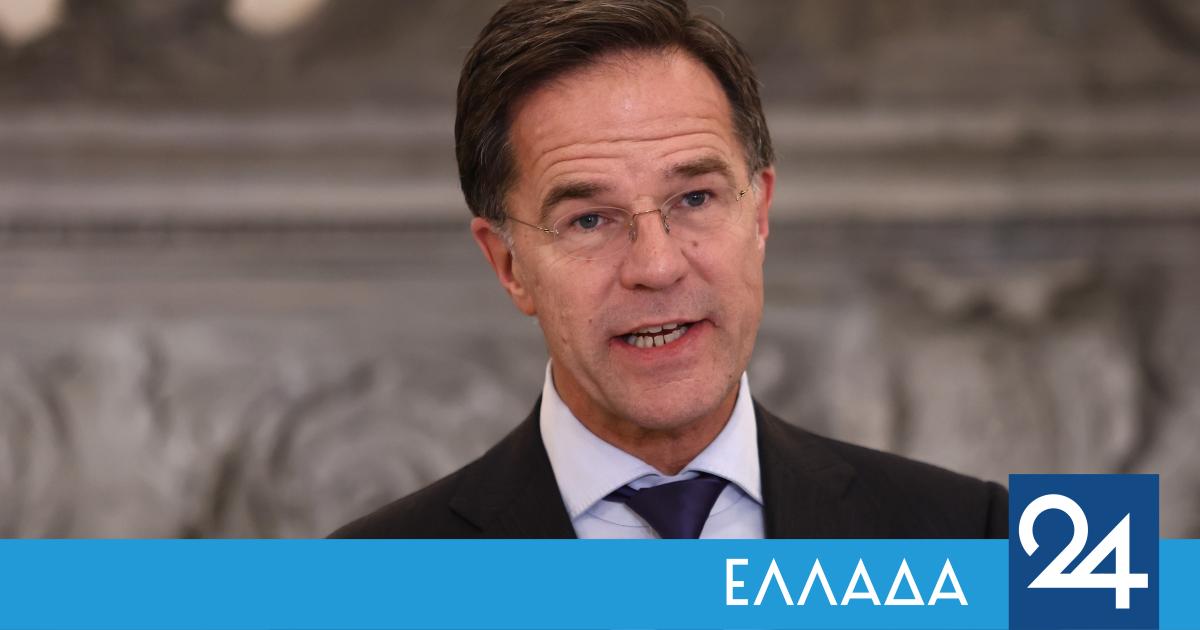
The need to implement the commitments made at last year’s Hague Summit, where Allies pledged to increase defence spending to 5% of GDP by 2035, was underlined by NATO Secretary General Mark Rutte at a press conference in Brussels today ahead of the NATO Foreign Ministers’ Meeting to be held on 21-22 May in Helsingborg, Sweden.
The main focus of the NATO Ministerial Meeting in Sweden will be to prepare the “agenda” for the Ankara Summit on 7-8 July, where Mark Rutte said the central issue will be the “implementation” of the defence commitments made by European allies last year, as well as NATO’s continued support for Ukraine. On Thursday in Helsingborg, the foreign ministers will meet with their Ukrainian counterpart, Andrii Sibiha, to discuss how to ensure that support for Ukraine remains substantial, sustainable and predictable in the long term.
“The question is no longer whether we need to do more. The question is how quickly the Allies can turn commitments into opportunities,” M. Rutte said, calling for steady, sustainable growth in investment and “a credible path” towards achieving the goals. The Allies must increase defence industrial production on both sides of the Atlantic and boost warfighting capabilities, he added.
The Secretary General stressed that shifting the balance of responsibilities within the Alliance is part of ensuring that NATO remains ready. He noted how Europe and Canada are investing more and taking greater responsibility for conventional defence. He added that this evolution is also reflected in NATO’s command structure, where Europe will lead all three Joint Forces Commands, while the United States will lead the three component commands – contributing to a stronger and more sustainable transatlantic Alliance. “We will continue to see this transformation to a stronger Europe in a stronger NATO: NATO 3.0,” said M. Rutte. (The term “NATO 3.0” describes the new phase of the Alliance’s transformation after the war in Ukraine, with an emphasis on enhanced deterrence and collective defence in Europe.)
Asked about the United States’ decision to withdraw some 5,000 troops from Germany, the NATO Secretary General replied that this “will have no impact” on NATO’s defence plans and its ability to defend itself.
“We know that there will be adjustments,” but “this will be done gradually and in a structured way,” he added. He said “this is the normal course of events” and that it was something “to be expected”. He also revealed that an announcement is expected at the end of the week on the “Force Model” – NATO Force Model – the “pool” of troops belonging to the 32 countries of the Alliance, which can be activated in less than 180 days in the event of a crisis or war. He said the debate on the NATO Force Model began a year ago.
Finally, in response to a question on the incidents of drones endangering the security of NATO countries in the Baltic countries, M. Rutte stressed that NATO had reacted “calmly, decisively and proportionately”, and called Moscow’s claims that Latvia allows its airspace to be used for Ukrainian drone attacks against Russia “completely ridiculous”.