“Our peers in America have a great longing for Greece and Greek. Just think that they go to the American school in the morning and in the afternoon they have so many more hours of lessons in the Greek school, because they want to learn Greek and the history of Greece!” “They prepare their national anniversary celebrations for a long time, with real joy, it’s a big event for them and they enjoy it.” They ask with interest about life in Greece. How is everyday life, how do we experience customs and national holidays. Many of the things that we in Greece take for granted in terms of customs and celebrations, our peers there crave them.” “It was like taking a piece of our homeland to America.”
Impressions such as the above were gathered by the teacher of the 1st Experimental Primary School of Thessaloniki (integrated in the Aristotle University of Thessaloniki), Panagiota Koutli, from her students, following the recent visit of 12 of them to Boston.
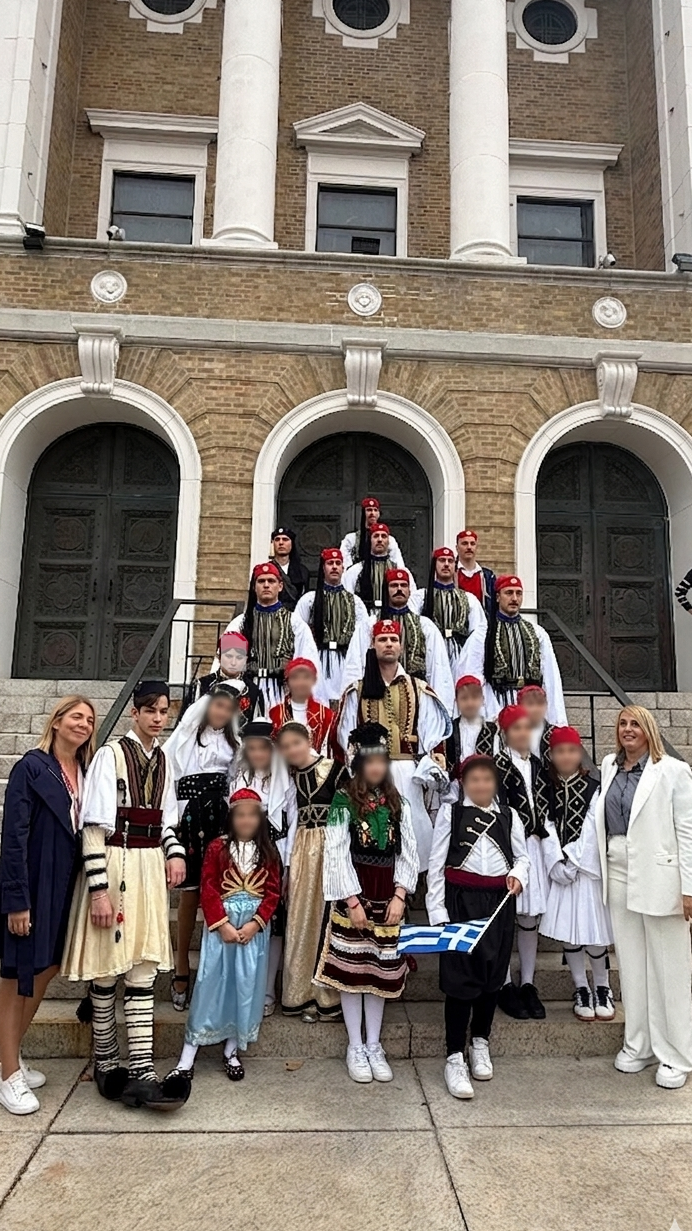
As Ms Koutli explains to APE-MPA, the visit to Boston, in which the children of the fourth, fifth and sixth grades were accompanied by the school’s principal, Chrysanthi Gerani, and parents, was part of the school’s innovative programme entitled “Words, images, people travel”. “The aim of the programme was for the children to become familiar with the topic of migration, to understand why people migrate, to learn about the history and the contribution of the Hellenism of the Diaspora to the homeland, to understand the feelings of Greeks abroad and to realise the importance of preserving the Greek language and identity. And I think this goal was achieved,” observes the teacher, according to whom another group of children travelled to Istanbul for the same purpose. “The visit to Boston was an experiential journey of learning, history and culture,” she assesses, adding that during the events, the students experienced the importance of preserving traditions and cultural heritage for expatriate Greeks, which encouraged their connection to the roots and values of Hellenism.
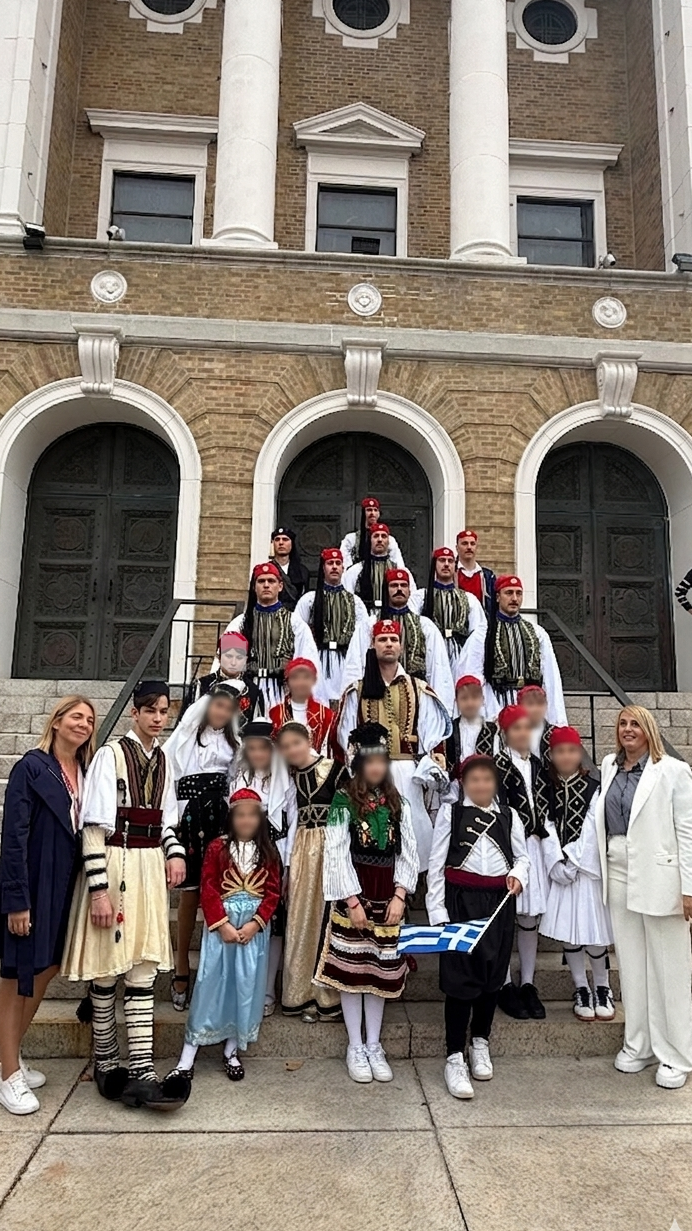
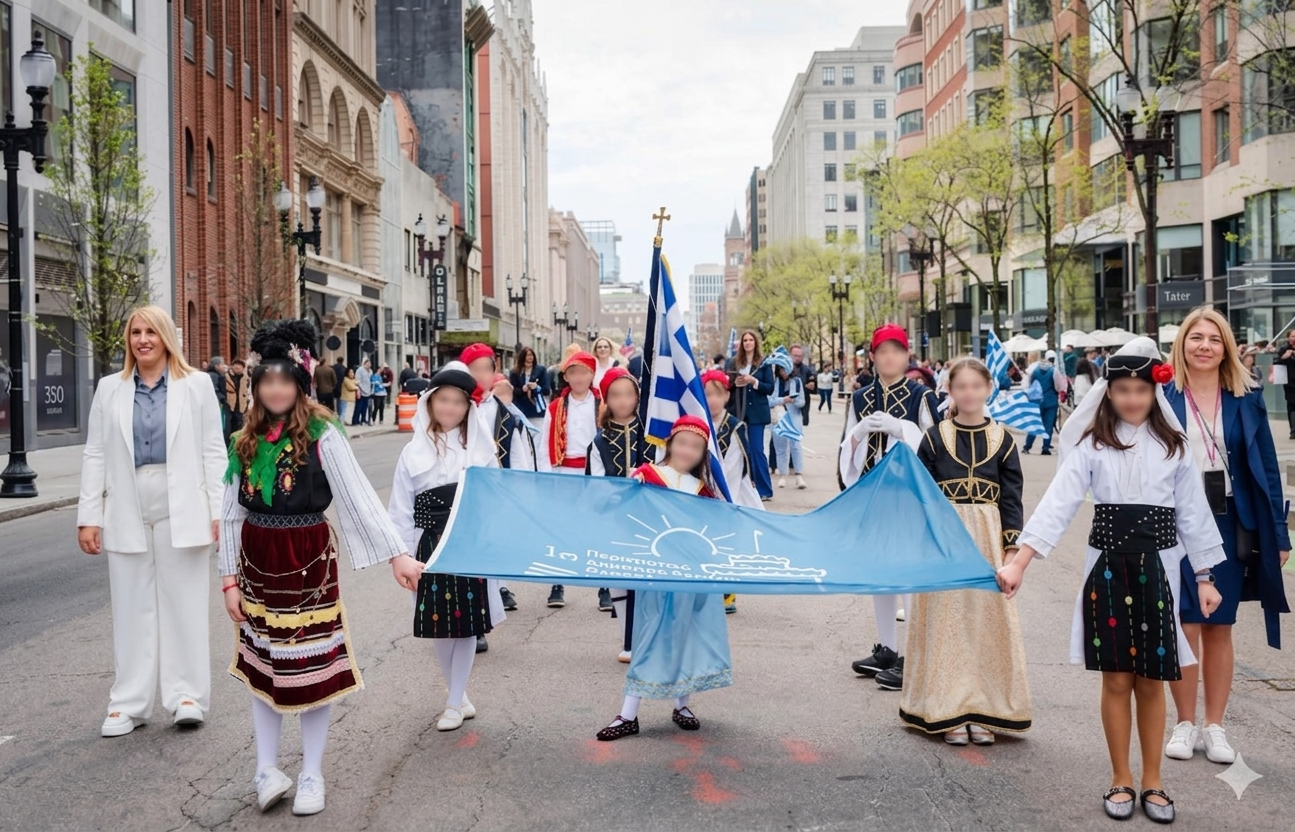
Eleven-year-old Constantine, who joined the other children in the celebration of the National Day of Independence and participated in the 30th annual Boylston Street parade dressed in a Cretan uniform, describes his entire experience in the United States as unreal. “Our peers who are children of members of the expatriate community, when they see something Greek, like a Greek wing in a museum, they go crazy! They really want to learn the Greek language and that’s why they go to two schools, the Greek one in the afternoon and the American one in the morning,” he tells APE-MPA. “The parade was very nice because the street was very big, there were so many Greeks and they were all very happy, we were smiling all the time and they were smiling at us too!” he recounts, describing how enthusiastic the atmosphere was later on, when the children, dressed in traditional costumes, mainly from the region of Macedonia, danced five Greek dances – Kalamatian, sirtaki, Macedonian sirto, Vlach and Hashaposerviko – on a platform in a nearby park. Describing the general experience of the visit to the United States, he adds that in New York, which they also visited, he was impressed by Central Park and the view of the city, not so much the panoramic one, from the windows of the skyscrapers, but the one he saw from the bus or boat as they approached Manhattan or the Brooklyn Bridge.
Ten-year-old Danae “loved” the March 25th parade, which takes place in Boston at the end of April, because it wasn’t strict like in Greece, but more of a joyful celebration. Many of her peers she talked to have already come to Greece and love it, she observes. “I want to go to America again,” she notes, and from her experiences in the two cities, she singles out how bright New York is at night with all those illuminated skyscrapers, the view of the Statue of Liberty as seen from the boat, and the activities she participated in at the Boston Science Museum. The children donated some of their books in Greek to their peers in the United States, for which there was even a literacy activity, including drawing with the heroes of the books and puzzles.
The students’ schedule in the US was packed. Among other things, they attended the praise service at the Cathedral of the Immaculate Conception in Boston, attended by a section of the National Guard and chaired by Metropolitan Methodios. This was followed, on April 26, by the parade and musical and dance events organized by the Greek expatriate community and with the participation of many expatriates. The next day, the school delegation visited the Consulate General of Greece in Boston, at the invitation of the Consul General, Simeon Tegos, and the children had the opportunity to learn about the role and importance of our country’s diplomatic mission abroad. In a simple and understandable way, Mr. Tegos spoke to them about the work of the Consulate, its responsibilities, as well as the importance of preserving Greek identity and culture in the expatriate Greek community.
“Particularly impressive for the children was the Consul General’s personal attitude towards the potential for development of every Greek in the global arena, an attitude that was positively discussed by the children and seems to have been a positive role model for them. The students actively participated in the discussion, asking questions and expressing queries about the functioning of diplomatic services, the life of Greeks abroad and the challenges facing modern Greece. This experience contributed substantially to the expansion of the children’s knowledge and the cultivation of their social consciousness, offering them valuable stimuli for thought and reflection,” Ms Koutli says.
The 12 students of the 1st Experimental Primary School of Thessaloniki also visited the Greek School of Saint Nektarios, where they had the opportunity to exchange experiences with students from the Greek Diaspora and participate in joint activities, strengthening the bonds of communication and cooperation.