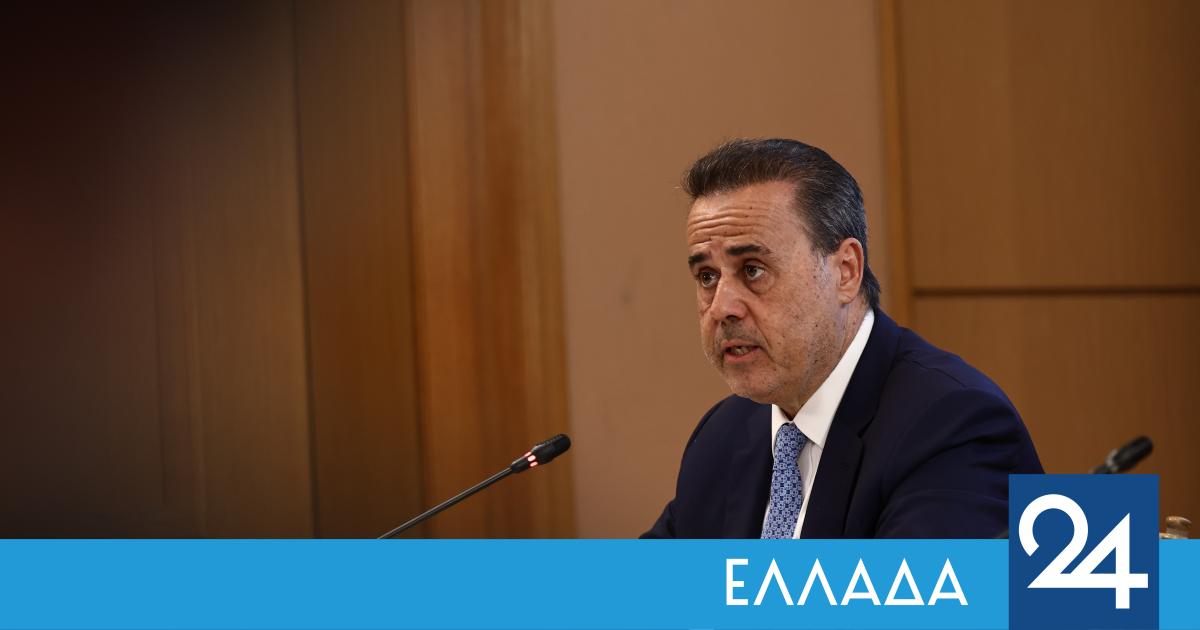
The role of the Eastern Mediterranean as a strategic energy corridor linking the Middle East, Europe and Africa was highlighted at the 10th Ministerial Meeting of the East Med Gas Forum (EMGF), which took place on Monday in Washington DC under the chairmanship of Minister of Environment and Energy Stavros Papastavrou.
The meeting, which was held at the joint invitation of Mr. Papastavrou and U.S. Energy Secretary Chris Wright, resulted in the adoption of a unanimous joint communiqué explicitly recognizing that gas development in the Eastern Mediterranean is only within the framework set by international law.
This report takes on particular political significance at a time of geopolitical turbulence, when energy security, critical infrastructure and the resilience of energy systems are at the heart of regional cooperation.
The meeting was attended, along with the Greek and US Energy Ministers, by the Minister of Energy, Trade and Industry of the Republic of Cyprus, Michael Damianos, and the Minister of Petroleum and Mineral Resources of Egypt, Karim Badawi, the Minister of Energy and Mineral Resources of Jordan, Saleh Ali Al Karabsheh, heads of government delegations from Israel, Italy and Palestine, as well as representatives of the European Union and the World Bank.
The Ministers and Heads of Delegations discussed current developments in the Eastern Mediterranean, energy security and cooperation, critical infrastructure, as well as the strategic planning of the Organization. According to the declaration of the meeting, the EMGF is a critical platform for dialogue and cooperation to ensure energy security in the Eastern Mediterranean, as well as to promote a framework of common understanding and development based on international law.
The Ministers also examined ways in which Member States can build on the Forum to develop interconnected and resilient energy systems in the Eastern Mediterranean, with natural gas as a foundation. In the same context, the region was presented as a strategic energy corridor connecting the Middle East, Europe and Africa.
In addition, the Ministerial Meeting was preceded by a working lunch attended by representatives of major US and Eastern Mediterranean energy companies.
According to the declaration, discussions on the Forum’s revised long-term strategy are continuing in the Executive Council, with the support of the Secretariat, with the aim of reaching a common understanding among Member States on the future strategic direction of the EMGF.
During the session, Israel’s Minister of Energy and Infrastructure Eli Cohen was appointed chair of the Ministerial Meeting for the period from 1 August 2026 to 30 June 2027, while Italy’s Minister of Environment and Energy Security Gilberto Pizzetto Frattin was appointed deputy chair. Meanwhile, Yossi Dayan of Israel was appointed chairman of the Executive Council for the same period.
The Ministers and Heads of Delegations expressed their appreciation to the United States for hosting the Ministerial and thanked President Donald Trump and Energy Secretary Chris Wright for their contributions. They underlined that the initiative demonstrates the common will to promote constructive cooperation to enhance energy security and resilience of energy systems.
The Minister of Environment and Energy, St. Papastavrou said after the conclusion of the Summit: “Greece is honored and responsible to chair the Ministerial Meeting on Natural Gas of the Eastern Mediterranean Countries, organized by the United States of America Secretary of Energy Chris Wright. At a time of intense geopolitical turmoil and conflict, it is of particular importance that the Energy Ministers of Greece, Cyprus, Jordan, Egypt, and the United States, along with representatives of the governments of Israel, Palestine, Italy, the European Union, and the World Bank are sitting around the same table to discuss energy developments for natural gas in the Eastern Mediterranean. Greece’s presidency highlights the leading role we are recognised as playing in the energy sector in the Eastern Mediterranean. We are building a framework of cooperation in full respect of international law, with mutually acceptable principles and trade rules that enhances stability and discourages unilateral and revisionist behaviour. We all share a common goal. For the energy security and prosperity of our peoples, we must move forward decisively.”