Further accelerating the processing of pension claims, reducing waiting times, and comprehensively improving service for insured individuals are key priorities of the initiatives currently being implemented as part of the digital transformation of e-EFKA, according to officials from the agency.
The new Integrated Information System (IIS) of e-EFKA and the digitization of insurance records are the central pillars of this transition, aiming to simplify procedures, improve service, and make daily life easier for citizens.
These projects are part of a broader strategy to upgrade the agency, with an emphasis on both modernizing services for citizens and enhancing the effectiveness of the human resources of e-EFKA, while also helping to strengthen trust in public administration.
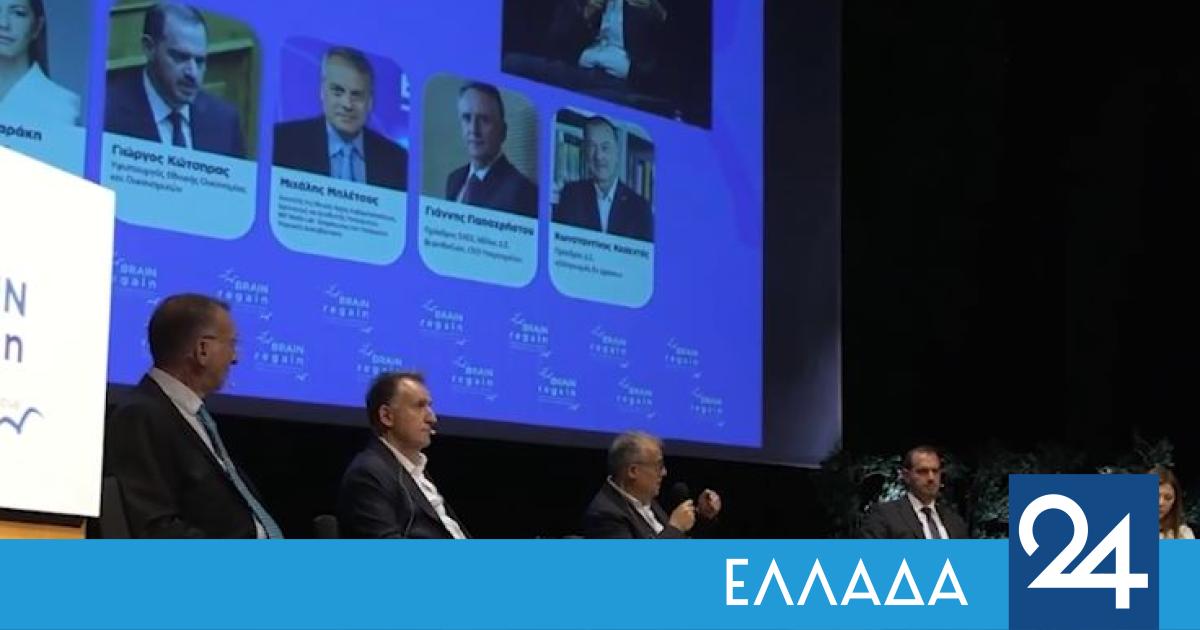
As recently mentioned during the presentation of the two digital projects, in the presence of the Minister of Labor and Social Security, Niki Kerameos, the agency is entering a new phase of operation with a people-centered orientation, where digital transformation is not viewed as a technological upgrade, but as a deeper shift in mindset and operations.
According to e-EFKA executives themselves, these two flagship projects, combined with the continuous development of new electronic services, are shaping a simpler, faster, and more reliable organization, in which technology serves as a tool to enhance the transparency, efficiency, and accessibility of the services provided.
Central to the design of e-EFKA is the new Integrated Information System (O.P.S.), through which all of the agency’s core information systems are integrated into a unified and interoperable digital environment.
The new digital architecture enables the unified management of contributions and insurance history, the automation of critical processes, particularly in the area of pensions, as well as the enhancement of transparency and control mechanisms.
At the same time, it offers the ability to adapt more quickly to changes, while interfacing with critical agencies such as the Independent Authority for Public Revenue (IAPR) and the General Commercial Registry (GEMI).
According to e-EFKA, the project offers multiple benefits.
Insured individuals will benefit significantly, as their requests and transactions with the social security agency will be processed faster and more efficiently.
Additionally, the need for them to physically visit service offices will be reduced, saving time and cutting down on red tape.
Through the centralization and digital management of their data, citizens will have a comprehensive and unified view of their insurance status, their contributions, and their overall insurance history. Furthermore, they will have immediate, easy, and secure access to information, certificates, and electronic services, utilizing modern digital tools such as dashboards and mobile apps, which will allow them to monitor their insurance matters in real time.
For employers, the new O.P.S. is expected to substantially enhance digital services, through the automation of declarations and submissions, reducing the administrative burden and the time required to complete procedures.
At the same time, a unified interface is being introduced, which replaces the existing multiple communication channels with the agency, offering greater simplicity and functionality.
Particular emphasis is placed on reducing errors during data submission through automated procedures, while the system supports automatic cross-checking and verification of data with other systems, with the aim of enhancing data accuracy and reducing the need for manual checks.
For e-EFKA itself, the implementation of the new MIS leads to the integration of individual information systems and the consolidation of data into a single database.
Through this architecture, a significant acceleration in the processing of requests is achieved, with more efficient and automated workflows.
At the same time, errors resulting from manual management are significantly reduced, while dependence on physical and paper-based records is gradually decreased, contributing to a more modern and digitized operating environment.
The organization’s overall internal operations are upgraded, with better coordination of processes and greater efficiency.
Finally, the MIS offers the ability to adapt more quickly to regulatory changes, which can be implemented immediately in practice, with reduced administrative costs and increased operational flexibility.
As noted by e-EFKA officials, the completion of the project marks a milestone for citizens’ digital experience with social security.
The second project, concerning the digitization of insurance records, follows the same approach.
The project involves the digitization of 42,708,333 pages of insurance history from former primary and supplementary insurance agencies, with the aim of accelerating pension payments and creating a unified digital archive of insurance data.
The implementation is based on Intelligent Document Processing (IDP) technologies, which enable the digitization and enrichment of documents with metadata, the automatic extraction and verification of data, as well as the integration of human review, where necessary, to ensure data accuracy.
This approach enables faster pension award processes, reduces bureaucratic red tape, and ensures immediate access to the complete insurance history.
e-EFKA officials emphasize that citizens will see faster pension payments in practice, a significant reduction in bureaucracy, a complete picture of their insurance history, as well as a reduction in delays and pending issues.
As for e-EFKA, the project leads to the elimination of reliance on physical records and a transition to a unified digital view of insurance information, accelerating internal processes and enhancing operational efficiency. At the same time, the infrastructure is being created for future data utilization through analytics and Artificial Intelligence (AI & analytics).