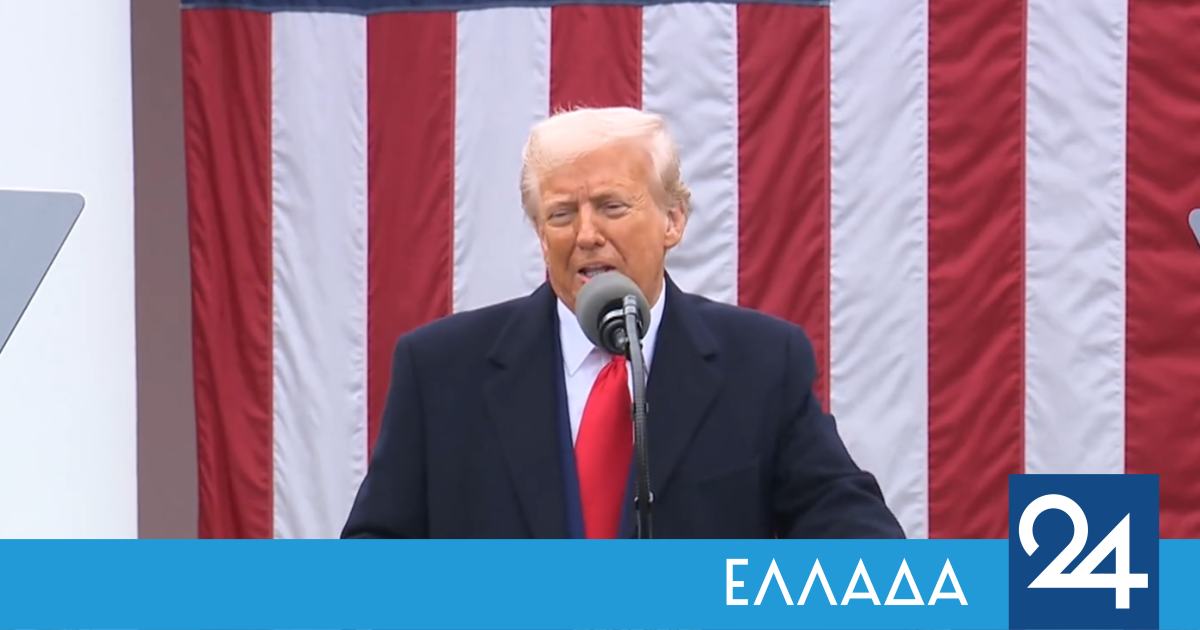
Donald Trump reinvigorated his threat to annihilate Iran yesterday Sunday, two and a half months after the US and Israel launched a war against the Islamic Republic, while a drone crashed near a nuclear facility in the United Arab Emirates–developments that are boosting oil prices in the early hours of today.
“There will be nothing left” of Iran if its government does not quickly strike a deal with the US, the US president threatened yesterday via Truth Social, as the two sides have not held direct talks since their first–unsuccessful–meeting in Pakistan in mid-April.
“On Iran, the clock is ticking,” Donald Trump asserted. The Iranians “better act quickly or there will be nothing left of them,” added the Republican tycoon, who had already threatened in early April to wipe out “an entire civilization” before announcing a ceasefire.
After more than a month of ceasefire, the prospect of a settlement to the armed conflict that erupted on February 28 seems remote, with the US President on May 10 calling Tehran’s latest proposal to end the war “totally unacceptable”.
As G7 finance ministers meet today and tomorrow Tuesday in Paris to try to reach a convergence of views on the economic impact of the war, oil prices rose again after Asian markets opened, with a barrel of North Sea Brent, the international benchmark variety, topping $110 (+1.28%).
Ahead of Donald Trump’s message, Tehran issued a warning to Washington.
“The American President should know that if (…) Iran is attacked again, his country’s resources and military will face unprecedented, aggressive, surprising and turbulent scenarios,” Iranian armed forces spokesman Abulfazl Shekarchi said.
Iranian parliament deputy speaker Hamidreza Haji-Babai asserted that if Iranian oil facilities are targeted, Iran will hit oil facilities in the region in retaliation.
“Terrorist” attack
On the other side of the Gulf, a fire broke out yesterday after a drone strike near a nuclear power plant in Baraka, United Arab Emirates.
The strike caused no injuries and no rise in radiation levels were found, but authorities called it a “dangerous escalation” and Saudi Arabia a “threat to the security and stability of the region”.
Another two drones were intercepted, according to the UAE Ministry of Defence.
An adviser to the Emirati president denounced the “terrorist” attack, appearing to imply involvement by Iran, which has repeatedly struck states in the region since the war began, but without blaming it by name.
The International Atomic Energy Agency (IAEA) expressed its “deep concern”
“Source of insecurity”
Despite the tensions, diplomacy has not yet at least been completely set aside; Pakistani Interior Minister Mohsin Naqvi, whose country is trying to play a mediating role, met in Tehran with the main Iranian negotiator, the speaker of the Islamic Republic’s parliament–formerly the Revolutionary Guards’ top officer–Mohammad Bayr Galibaf.
But this latter had no soothing words to say after the meeting.
“Some states in the region think that the US presence provides them with security, but recent events show that this presence is not only incapable of providing security, but is on the contrary a source of insecurity,” he said. Galibaf.
.
Iranian media reported yesterday Sunday that the US government had made “no tangible concessions” in its response to the latest Iranian proposals.
Washington “also demanded very strict, long-term restrictions on Iran’s nuclear energy sector,”
the MEHR news agency said.
According to the FARS news agency, Washington has presented a five-point list demanding in particular that Iran not maintain more than one operating nuclear facility and accept the delivery and transfer of its stockpile of highly enriched uranium in the US.
On the other front of the war, in Lebanon, despite the extension of a rather theoretical month-and-a-half truce announced by the US on Friday, new Israeli bombardment killed seven people, including two children, in the south and east of the country.
Among the victims were a leading member of the Palestinian Islamic Jihad and his 17-year-old daughter.
An Israeli army official said Hezbollah launched some 200 “missiles” against Israel or Israeli troops in Lebanon over the weekend.