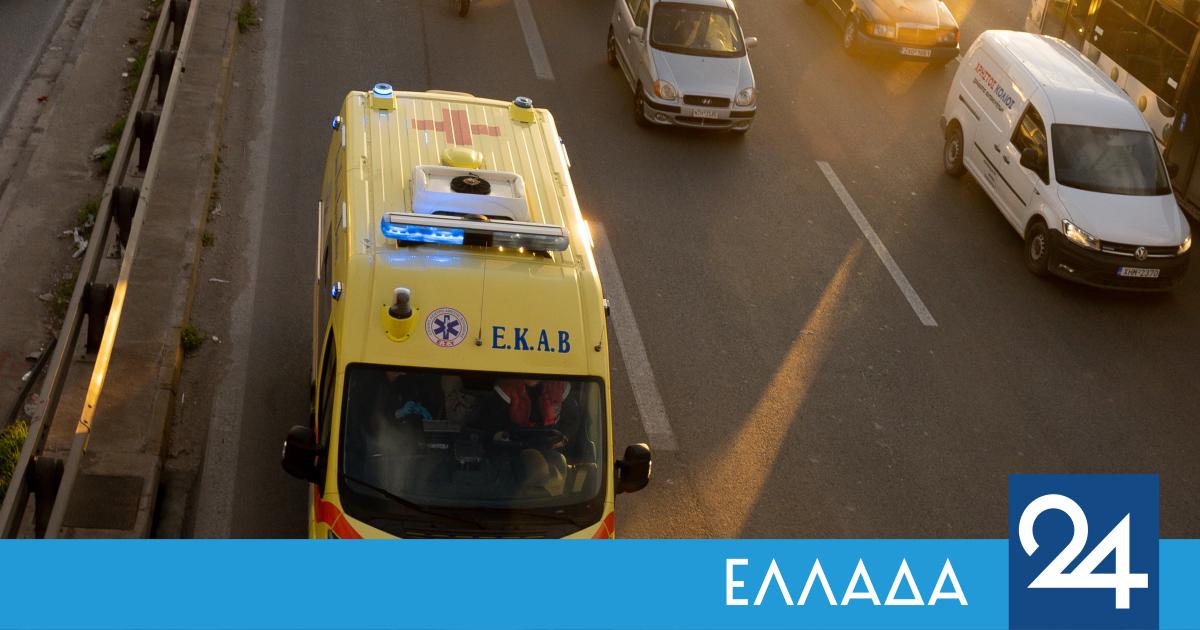
A decades-old injustice for nurses, nursing assistants, drivers, rescuers and ambulance crews of the NHS and the EKAB is rectified by a new regulation contained in the Ministry of Labour and Social Security’s bill on equal pay between men and women for similar work or work of equal value.
For the first time, the specific categories of workers hired before 2011 and covered by the public pension protection are included in the heavy and unhealthy occupations, acquiring equal insurance and pension rights with their colleagues performing exactly the same work.
The regulation comes to correct a long-standing distortion in the insurance status of NHS and EHAB employees, putting an end to the “two-speed” system that applied to employees with the same specialties and exactly the same working conditions.
Until now, new recruits in the specific specialties of the NHS and the EHIC were included in the heavy and unhealthy professions through the regulation of the former IKA.
In contrast, their colleagues who had been recruited earlier and were included in the State pension scheme remained outside and were insured under the ordinary provisions, even though they were performing exactly the same duties and working under the same conditions.
Thus, within the same hospital or ambulance, a de facto unequal treatment regime was formed, with employees who, despite working identically, had different insurance and pension rights.
In addition, the retirement conditions are now similar to those applicable to corresponding specialisations of the former IKA-ETAM.
The Minister of Labour and Social Security, Niki Kerameos, has stated in public statements that the legislative initiative rectifies a decades-old injustice against a critical professional group that is on the front line of the public health system every day and performs work of great responsibility and demands.
Unified rules and early retirement option
This provision ensures the inclusion of these workers in heavy and unhealthy occupations for both the main and supplementary insurance, with the aim of establishing uniform rules and providing the possibility of full retirement up to five years earlier, i.e. at the age of 62, subject to specific insurance conditions and the payment of additional contributions.
Retirement Requirements
Specifically, it is possible to retire on completion of 15 years of insurance, of which 12 years in the specific occupations and three years within the last 17 years before reaching the age limit or applying for retirement.
Integrated regulation for main and supplementary insurance
Integrated regulation for main and supplementary insurance
In addition, for the first time, a comprehensive framework is introduced that includes:
– eligibility for supplementary insurance,
– the ability to recognize and redeem prior insurance time,
– the single procedure for main and supplementary insurance, as well as the overall administrative and implementing framework of the regulation.
Ability to recognize and buy back insurance time
The possibility is also provided for voluntary inclusion in the new scheme, upon application by the employee, as well as the possibility of recognising and buying back previous employment time in the specific specialisations, either as a lump sum or in instalments, so that the necessary pension conditions can be established.
Note that the credited time is counted as actual insurance time and does not count towards the maximum credited insurance time limits.