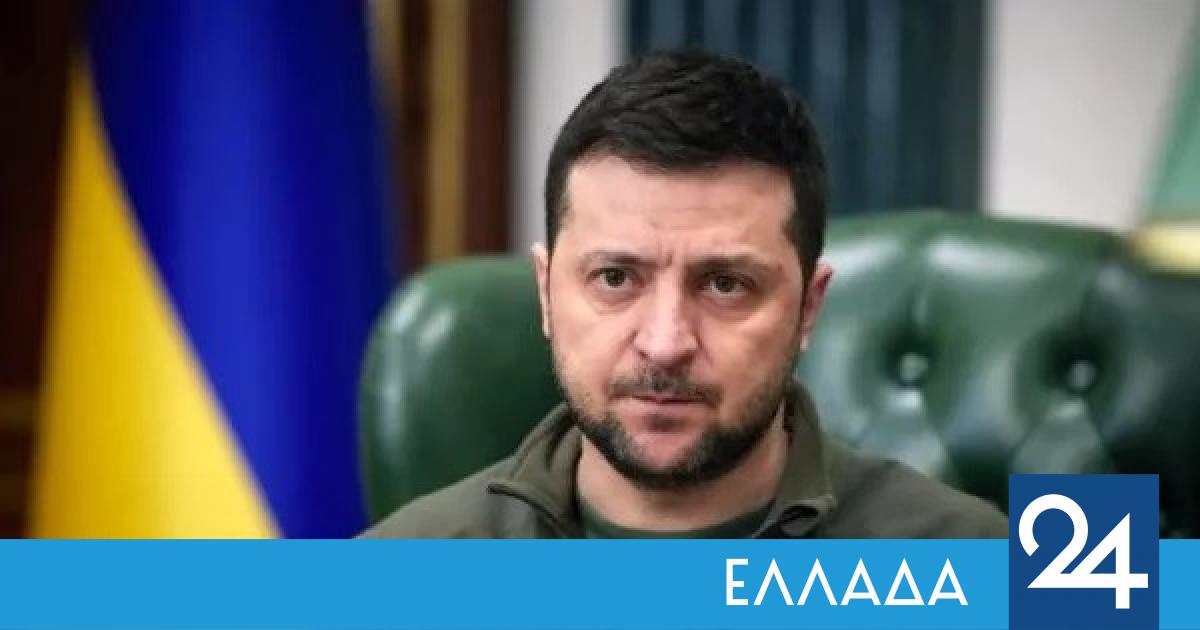
European leaders today dashed Ukraine’s hopes for swift EU membership, despite urgent pleas from the country’s president, Volodymyr Zelensky.
“It is clear to everyone that an immediate accession of Ukraine to the EU is certainly not possible,” German Chancellor Friedrich Murch summed up in remarks after the informal leaders’ meeting in Nicosia.
The accession of a country is “a long, very difficult process, but we cannot try to set artificial timetables, saying that it will happen in three months or in ten years”, Antonio Costa, the President of the European Council, stressed. In other words, Brussels is not discussing the possibility of granting “preferential treatment” or withdrawing from the strict accession rules. European leaders, not wanting to be accused of favoritism by other candidate countries, insist that each of them earns its membership “on its own merits.”
“This process must be respected so that both sides know what they can rely on,” European Commission President Ursula von der Leyen reminded.
Ukrainian President Volodymyr Zelensky, who arrived in Cyprus on Thursday night to again call for “full membership”, will have to arm himself with patience.
“It took my country nine years to negotiate all this,” recalled Costa, Portugal’s former prime minister.
European leaders at the same time do not want to give up on Ukraine and are looking for ways to facilitate its accession without calling into question the accession rules. “I have to say clearly that Ukraine, especially in the last month, has worked very hard and made very important reforms. (…) And this should be rewarded on our part,” said von der Leyen. The president did not specify what that “reward” would be, but other European leaders mentioned some possibilities. Chancellor Merts, for example, spoke of Kiev’s participation in European sessions “without the right to vote.” European officials also said Ukraine could participate in some ministerial meetings or the customs union to facilitate its future accession.
Zelensky, however, said his country did not want “symbolic advantages.”
Ukraine was granted candidate status in December 2023. Despite pressure from Zelensky, Viktor Orbán’s Hungary, which has strained relations with Kiev, has so far refused to formally start accession negotiations, chapter by chapter, thus blocking the process. Ukraine hopes that Orban’s defeat in the parliamentary elections on 12 April will change the situation. However, the winner of these elections, Peter Mayer, has already ruled out the possibility of approving EU membership for a country in a state of war. He could, however, approve the opening of the first formal negotiations.
Ukraine, with the help of the European Commission, has already made some of the reforms requested without waiting for the formal opening of negotiations, hoping that the process will take a shorter time.