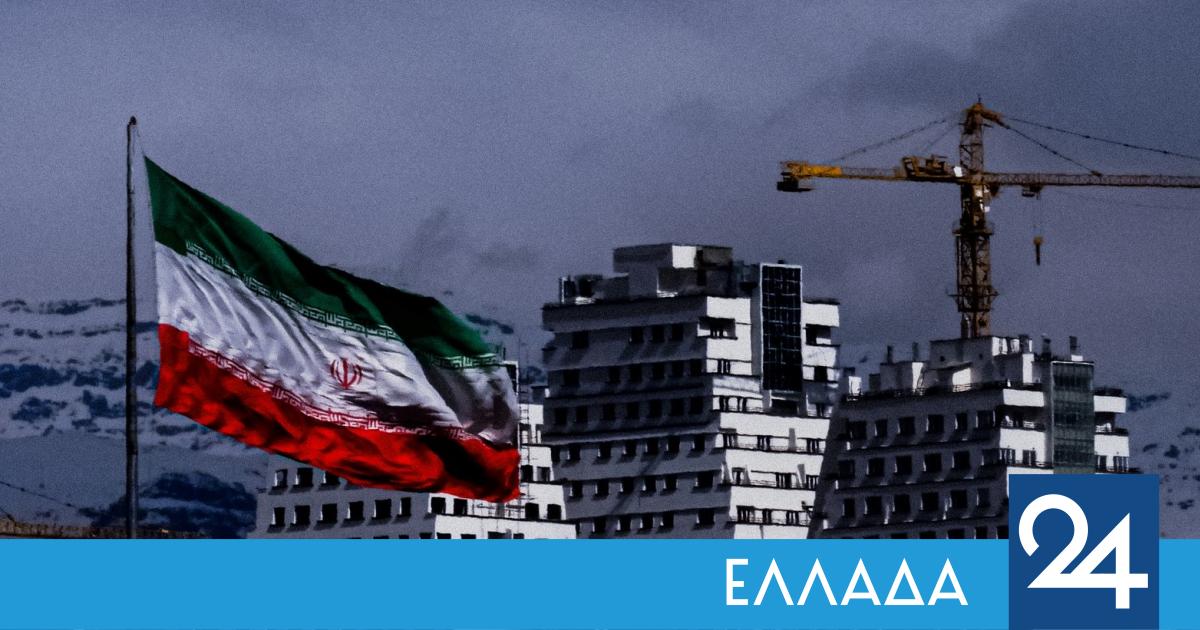
The Iranian leadership is showing a united front despite US President Donald Trump’s assurances of “division” within its ranks, even if there are disagreements and the absence of some senior officials may be causing problems, analysts say.
In announcing the extension of the ceasefire with Iran on Tuesday, Trump cited “serious divisions within the Iranian government” as justification for the decision.
Since the start of the US-Israeli attack on Iran on February 28, the Iranian leadership has been recording significant losses: Supreme Leader Ali Khamenei and Revolutionary Guards chief Mohammad Pakpour were killed in the first hours of the war. A few days later, in March, Ali Larijani, the head of the Security Council, was killed.
Mojtaba Khamenei, who succeeded his father, has not appeared in public since the war began. The new head of the Guards, Ahmad Wahidi, and security chief Mohammad Bayr Zoliyadr, are limited to publishing only text messages. Other senior officials, such as Parliament Speaker Mohammad Bayr Galibaf, Foreign Minister Abbas Araghchi and President Massoud Pezzekian, support a policy of diplomatic contacts with the US, but without accepting concessions.
“I imagine there are some disagreements between the different centres of power and political currents,” Farzan Chabette, a researcher at the Graduate Institute in Geneva, Switzerland, told Agence France-Presse. “But these disagreements and internal disputes do not necessarily mean that the Iranian government is the scene of a serious conflict or that it is divided,” the Iran expert added: its members “seem to maintain their cohesion and their ability to take decisions and implement them effectively.”
“There is no evidence of a deep rift in Iran’s leadership at present, so we should take this statement” by Trump with a grain of salt,” Shanam Vakil, director of the Middle East and North Africa program at the British think tank Chatham House, also noted.
“It makes sense that Wahidi and Mojtaba Khamenei are not appearing in public, given Tehran’s fear of being assassinated by Israel,” she stressed. “This (Iranian political) system is governed by discord among factions (…) which, however, generally do not appear in public,” he added.
One of the most prominent leaders in recent weeks is Galibaf, a former Revolutionary Guards commander and police chief. He was the head of the Iranian delegation that went to Islamabad on April 11 for direct negotiations with U.S. Vice President J.D. Vance, an event unprecedented since the 1979 Islamic Revolution, even though those talks ended without agreement.
Galibaf, who also rarely appears in public, was interviewed last week on state television to defend his choice of diplomacy. It was possibly a response to criticism of him by advocates of a “hard line.”
The political landscape in Iran has never been monolithic since the Revolution, which led to a theocratic regime headed by a life-long supreme leader, but also a president and a parliament elected by universal suffrage.
There is no evidence that the Iranian government is “seriously divided,” said Tomas Zinot, a professor at the University of Ottawa. But “I am sure that serious and difficult discussions are going on behind the scenes, both about next steps and succession issues” in a world where secrecy is the norm, he added. All the more so as “extreme suspicion probably reigns in the wake of the Israeli intelligence infiltration” that led to the assassination of leading figures.
Ali Khamenei’s decisions, in his 36-plus years in power, were imposed on the rest of the leadership. “Mojtaba Khamenei seems to retain control of decisions, but not at the level of day-to-day management as his father did, which is no doubt a result of the security measures taken and his physical incapacity,” Sabet said, referring to the fact that the new supreme leader is injured.
This means that the Revolutionary Guards, the ideological army of the Islamic Republic, “are clearly wielding even more power,” he assessed.