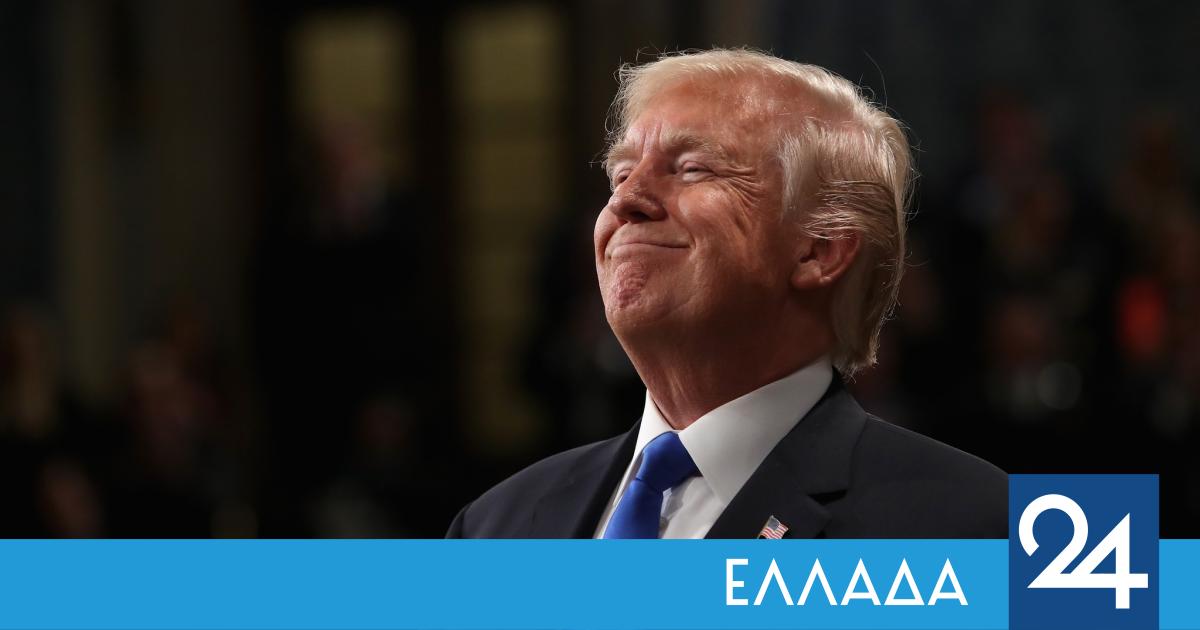
Hours before the countdown came to an end, Donald Trump announced yesterday (Tuesday) that he was extending, until further notice, the ceasefire in the US-Israeli war against Iran, but added that the blockade of Iranian ports would continue to be enforced.
Two weeks after the ceasefire began to be implemented on April 8th, Iran said the ceasefire would end at midnight Tuesday into Wednesday, while the US President said it would end on Wednesday night Washington time (the early hours of Thursday morning Tehran time).
However, no serious incidents were reported overnight in the area.
Citing the divisiveness he sees in Iran’s leadership, the Republican billionaire announced via Truth Social that he is extending the ceasefire until further notice at the request of Pakistan, which has taken a mediating role. It will wait until Iran “presents a proposal” to end the war, he wrote.
Just a day earlier he had said he found it “very unlikely” that the ceasefire would be extended.
However, in anticipation, the blockade of Iran’s ports continues, he stressed yesterday.
Pakistani Prime Minister Shabaz Sharif praised the extension of the ceasefire.
“I sincerely hope that both sides will continue to observe the ceasefire and that they will be able to reach a comprehensive ‘Peace Agreement’ during the second round of talks scheduled to take place in Islamabad, to bring a definitive end to the armed conflict,” he said. Sharif viaX.
The Secretary-General of the UN Antonio Guterres also praised the announcement and referred to an “important step towards de-escalation”, according to a press statement released by his spokesman Stéphane Dujaric.
“Abandonment” to oil;
U.S. Vice President J.D. Vance, who is expected to again head the U.S. delegation to negotiate with Iran, did not depart for Pakistan as expected yesterday, according to the White House. Unless things change, Tehran has no plans to send a delegation to the Pakistani capital Islamabad.
Before Donald Trump’s announcement, Tehran threatened that if US-Israeli strikes resumed, it would retaliate by hitting neighboring Gulf monarchies even harder, endangering global oil supplies.
“Our southern neighbors should know that if their territory and facilities are used by enemies to attack the Iranian nation, they can kiss oil production in the Middle East goodbye,” the Revolutionary Guards have asserted.
Before these threats, oil prices, already pushed up by the impasse over the closure of the Strait of Hormuz, through which a fifth of the world’s hydrocarbons normally pass, were rising by about 3%.
Foreign Minister Abbas Araghchi said, again denouncing the blockade of the Islamic Republic’s ports by the US armed forces as an “act of war” and therefore “a violation of the ceasefire”.
Iranes on the gallows;
Before announcing the extension of the truce, Donald Trump demandedTehran move to “free” eight women he says are threatened with execution by hanging. That would be a “great start to the negotiations,” he added.
The AFP notes that it was unable to verify either whether they were threatened with execution or who the women were whose photographs the US president reproduced when he made his claim. Iran has denied that any women are to be executed.
In Tehran, where the main airports reopened the day before yesterday, Monday, for the first time in weeks, life seems to have returned to a somewhat more normal rhythm.
Mobina Rasulian, a 19-year-old student, is breathing more freely thanks to the respite from the war. “I go out without stress (…) I go to cafes, restaurants, here and there,” the young woman said on a Tehran street.
But for 39-year-old Sagar, who spoke to the French News Agency, “there is no light at the end of the tunnel” as “the economic situation is terrible and “they (s.(The authorities) are arresting people for nothing. The executions are multiplying.”
On the other front of the war, new direct talks between Israel and Lebanon are expected to be held tomorrow (Thursday) in Washington, US diplomats said. Like the first, on April 14 14, they will be held at the ambassadorial level.
A fragile 10-day ceasefire went into effect on Friday between the Israeli armed forces and the Hezbollah movement, but the parties have accused each other of continuous violations since the beginning.
The Israeli military announced yesterday that it struck a position in southern Lebanon in retaliation for rocket launches against elements deployed there.
The Iranian-affiliated Shiite movement, for its part, said it had launched an attack on northern Israel in retaliation for Israeli “flagrant” ceasefire violations.
According to an Israeli army statement, sirens sounded in two communities in the north of the country possibly due to a “false” alarm after an unmanned aerial assault vehicle launched from Lebanon was intercepted “before” crossing the border.
According to the latest official account, at least 2.454 people have died in Lebanon in the six weeks of the war.