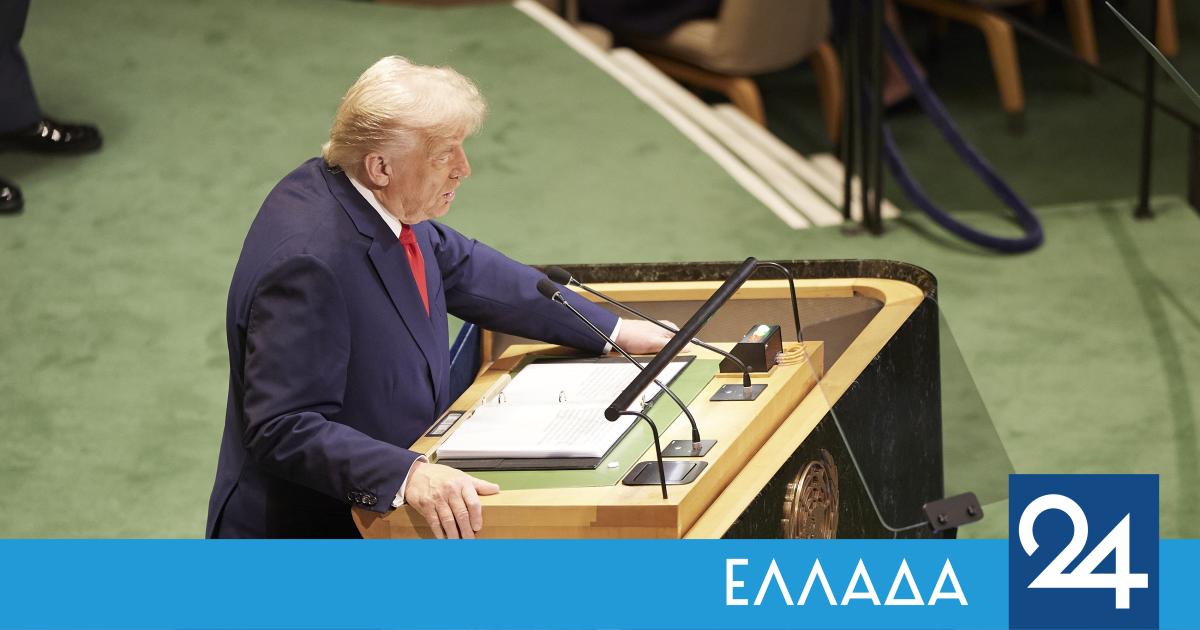
US President Donald Trump has pressed US allies and China to join in an operation to make navigation and therefore the transport of hydrocarbons through the Strait of Hormuz safe, just as major economies are now beginning to release quantities of oil from their strategic reserves to prevent market shortage shocks.
On the 17th day of the war that has set the Middle East ablaze, Israel’s army continued to bomb Lebanon and the Iranian capital, Tehran, at night. In the United Arab Emirates, Dubai International Airport, one of the world’s main hubs of air traffic, was temporarily closed after a fire broke out in a fuel tank due to a drone strike.
Reiterating that the armed forces have been “decimated” after more than two weeks of aerial bombardment, US President Trump claimed that his administration is holding talks with Tehran but no deal to end the armed conflict is yet on the agenda.
“Yes, we are in talks with them. But I don’t think they are at all ready” to strike a deal, he told reporters accompanying him on the presidential jet, referring to the Iranian leaders, adding “they are not very far away.”
He did not explain exactly with whom negotiations were being held or what their content was.
In an interview with the Financial Times published yesterday (Sunday), the US president stepped up pressure on his allies and China, demanding that they send warships to the Strait of Hormuz, through which a fifth of the hydrocarbons destined for international markets normally pass, and on which the Asian and European economies are heavily dependent.
“It is entirely appropriate that those who benefit from this strait should help guarantee that nothing bad happens there,” said the US president, who days ago assured that the US navy would “very soon” begin “escorting” oil tankers through the strait.
Trump has warned that there will be “very bad consequences for the future of NATO” if alliance members do not comply with this demand, and also threatened to postpone his visit to China from March 31 to April 2.
According to a report yesterday by the news website Axios, President Trump’s administration is seeking to form a “coalition for the Strait of Hormuz” and is also weighing options to seize Harg Island, Iran’s critical oil export hub.
Japan and Australia’s rejections
The responses he has received so far are not very encouraging.
Japan, which – in theory at least – has renounced war involvement forever in its pacifist constitution ratified in 1947, “does not foresee” such a deployment, according to Defence Minister Shinjiro Koizumi. For her part, Prime Minister Shanae Takayichi felt that any such operation would be “extremely difficult from a legal point of view.”
“We will not send a (war) ship into the Strait of Hormuz,” Australian Transport Minister Catherine King said at the same time.
Iran’s Foreign Ministry warned countries intending to respond to Washington’s claim, urging them to “refrain from any action that could lead to an escalation and spread of the conflict.”
Oil prices, which took off after the war broke out on February 28, looked rather stable – but around $100 a barrel – earlier in trading on Asian markets.
Member countries of the International Energy Agency (IEA) decided last week to release a combined 400 million barrels from their strategic reserves. The amount is unprecedented in the institution’s 50-year history.
Today Japan, which is almost entirely dependent (about 95%) on Middle Eastern crude imports, confirmed that it has begun to make some of its reserves, among the largest on the planet, available to the market.
On the ground, the war shows no sign of abating.
Israel bombs Tehran and Lebanon
The Israeli military announced at dawn that it had begun conducting a new “wave of large-scale strikes” in Tehran, targeting “infrastructure of the terrorist Iranian regime”, and also continued airstrikes in the southern sector of Beirut, a stronghold of the Shiite movement Hezbollah, which is close to the Islamic Republic.
Iranian diplomatic chief Abbas Araghchi, on the other hand, denounced in the early hours of the morning that Israel’s armed forces were causing untold damage to Iran’s natural environment, that they were committing “ecocide” after repeated bombings of oil storage facilities in Tehran in recent days.
“Residents are facing long-term damage to their health” as “soil and water contamination underground could have consequences for generations” of people, Mr. Araghchi said via X.
In Israel, an alert was declared for a short time in the early hours of the morning after missiles were detected fired from Iran.
Since the war began, Iran has also been hitting US military bases and economic interests in neighbouring Gulf countries, as well as civilian infrastructure such as airports, ports and oil facilities.
Iran’s Foreign Minister Araghchi justified these attacks by pointing to the “ample evidence” he said documented that US bases in the Gulf were being used to launch attacks against his country.
Dubai International Airport temporarily suspended operations today after a fire in a fuel tank caused by a drone raid, according to the emirate’s authorities.
Five people were injured at the same time when rockets struck Baghdad International Airport, the Iraqi capital, which is also home to a U.S. diplomatic facility, according to sources close to Iraqi security forces.