Iranian Foreign Minister Abbas Araghchi has announced that Iran agrees to fully open the Strait of Hormuz as part of a two-week truce, on condition that US and Israeli aerial bombardment stops.
“If the attacks against Iran stop, our powerful armed forces will halt their defence operations,” he said. Araghchi via X, on behalf of Iran’s Supreme National Security Council.
“For a period of two weeks, safe passage through the Strait of Hormuz will be possible in coordination with the Iranian armed forces and taking into account technical limitations,” he added, just hours after it was announced by both sides that the US and Iran had agreed to negotiate a two-week end to the war.
“It was decided at the highest level that Iran will hold, for a period of two weeks” negotiations “with the US side in Islamabad,” according to a statement from the Supreme National Security Council.
“This does not mean the end of the war” and the Islamic Republic will not accept a definitive cessation of hostilities until “after” negotiations are completed, the same source said, clarifying that the duration of the ceasefire could be extended if there is “agreement between the two sides” on this.
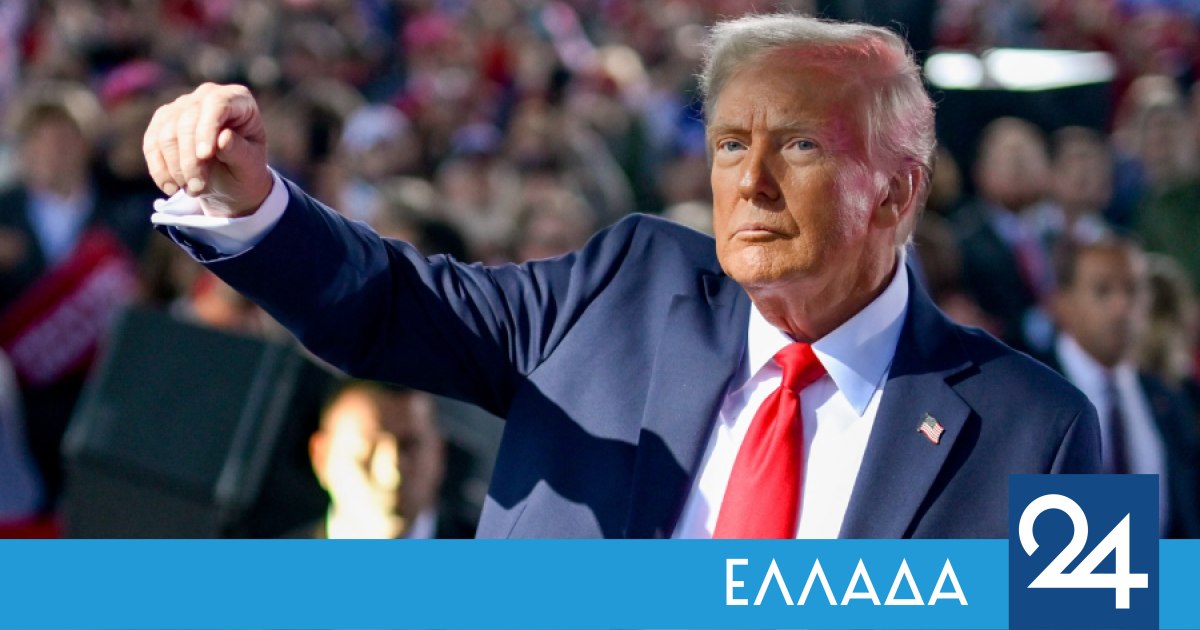
Dr Trump is calling it a “complete and total victory” after the ceasefire deal struck with Iran
U.S. President Trump assured Agence France-Presse last Tuesday night (local time; early this morning Greek time) that the U.S. had scored a “complete and total victory” by concluding a ceasefire agreement, in principle for two weeks, with Iran.
It was “a complete and total victory. 100%. I have no doubt about that,” the Republican said in brief remarks made by telephone to AFP.
He also assured that Iran’s uranium issue would be “fully resolved”
“It will be fully resolved, otherwise I will not accept” the end of the war, he said when asked how the issue of uranium highly enriched by nuclear scientists of the Islamic Republic will be resolved.
Oil: Prices retreat below $100 a barrel
The price of a barrel of West Texas Intermediate (WTI), a US benchmark variety in international crude markets, continued its spectacular fall in the early hours of the morning, down by almost 18%, after US President Donald Trump and the government of Iran announced a two-week ceasefire and the start of negotiations between them in Pakistan to end the war.
Some time before the Asian markets opened, around 02:30 (GMT), the price of WTI was down 17.64%, at $93.03.
Before the announcements, the price of WTI had risen by about 70% since the outbreak of war on February 28.